

Umbria · Terni
Lugnano in Teverina
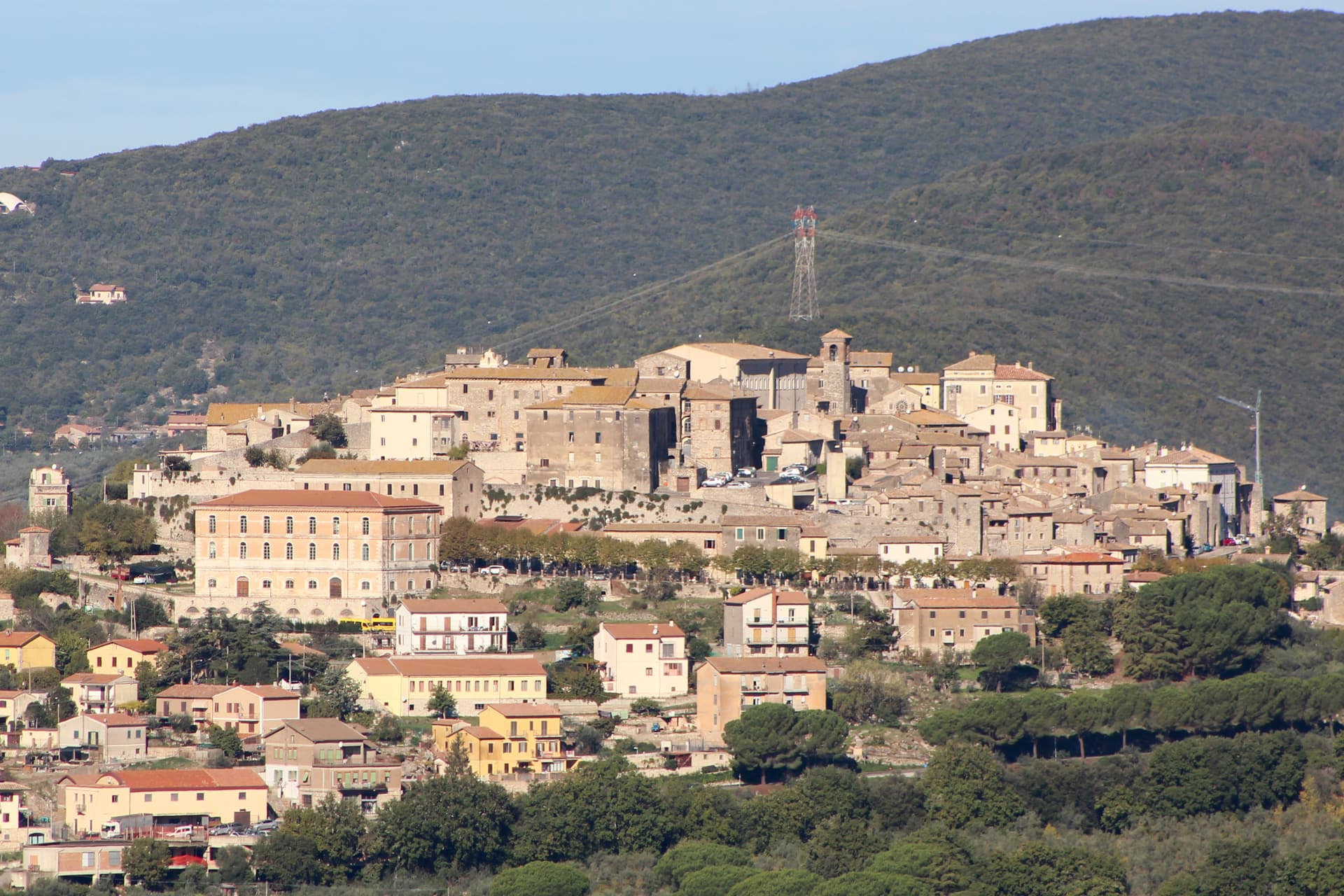
A ridge town above the lower Tiber valley, with a 1230 Romanesque collegiata and a late-Roman infant cemetery on the hill below.
Known for
THE COLLEGIATA
Romanesque parish church of 1230 in Tiber travertine, with cosmatesque pavement and a paired-column portico across the façade.
POGGIO GRAMIGNANO
Augustan Roman villa with a late-fifth-century infant cemetery of 47 burials, the largest of its kind in Roman Italy.
OLEA MUNDI
World olive collection of 1,200 trees from 23 countries, planted in 2014 on the slopes below the centro storico.
When to visit
Best · Apr–Oct
- J
- F
- M
- A
- M
- J
- J
- A
- S
- O
- N
- D
- Best
- Hot or crowded
- Quiet
- Mostly closed
The festa: Assunzione di Maria, 1 August
Why come
Lugnano in Teverina sits on a ridge above the Tiber, sixty kilometers south of Perugia and twenty-five west of Terni. The town traces its origins to the seventh century, when inhabitants fleeing barbarian invasions sought refuge on the spur after the destruction of nearby Luchiano. The Collegiata di Santa Maria Assunta, dated 1230 on the inscription of its façade, is built in travertine from quarries by the Tiber, a Romanesque parish church layered over a Lombard-era predecessor, with a cosmatesque pavement and a portico of paired columns.
On the hill below, the Villa Romana di Poggio Gramignano, built around the 10s BC, was excavated through the 1980s and again from 2016. Beneath its collapsed roof archaeologists found a late-fifth-century cemetery of 47 infant and fetal burials, the largest set of child burials in Roman Italy, interpreted as a catastrophic die-off from Plasmodium falciparum malaria. The Olea Mundi olive collection, planted in 2014, holds 1,200 trees from 23 countries.
The Sunday letter
We haven’t written Lugnano in Teverina’s letter yet.
One town every Sunday, with the photo, the food, the festa. Be there when this one comes up. Free, by Peter & Sophia from Pietrasanta.
By subscribing you agree to Substack’s Terms of Use, our Privacy Policy and our Information collection notice.
What to see
Collegiata di Santa Maria Assunta
Romanesque parish church dated 1230 in travertine from Tiber quarries, with cosmatesque pavement and a paired-column portico.
Villa Romana di Poggio Gramignano
Augustan villa with a late-fifth-century cemetery of 47 infant burials, interpreted as a catastrophic malaria die-off.
Palazzo Farnese-Ridolfi
Sixteenth-century palace known as the Pennone for its mast-like profile rising above the lower town.
Convento di San Francesco
Franciscan convent at the edge of the borgo, restored and now a quiet stop on the Cammino dei Protomartiri Francescani.
Olea Mundi
World collection of olive trees planted in 2014, 1,200 specimens from 23 olive-growing countries, set on the slopes below town.
The slow-trip planner
Building a trip? Find where Lugnano in Teverina fits in a slow Italy circuit.
Answer five questions. We will shape a geographically coherent slow trip from the 1,000 Italian towns most travelers skip. Yours to save and share.
Living here
- Population 1,428
- In-betweeni
- Pharmacy in town
- High school within a 30-minute drive
- Nearest airport Rome, 1 h 54 min drive
- Regional capital Perugia, 1 h 26 min drive
Thermal baths in town: Terme di Ramici.
Tags & datadesignations · numbers · sources
Recognised as
The numbers
- Elevation: 441 m
- Population: 1,428
- Surface area: 29.83 km²
These figures were compiled from public directories — ISTAT, OpenStreetMap, Wikidata — and from the official listings of the guides named on this page. Town details change; verify with official sources before you travel.
Featured on
Lugnano in Teverina appears on this themed pick from our Collections:
Close by
More towns near Lugnano in Teverina
Amelia
Province: Terni
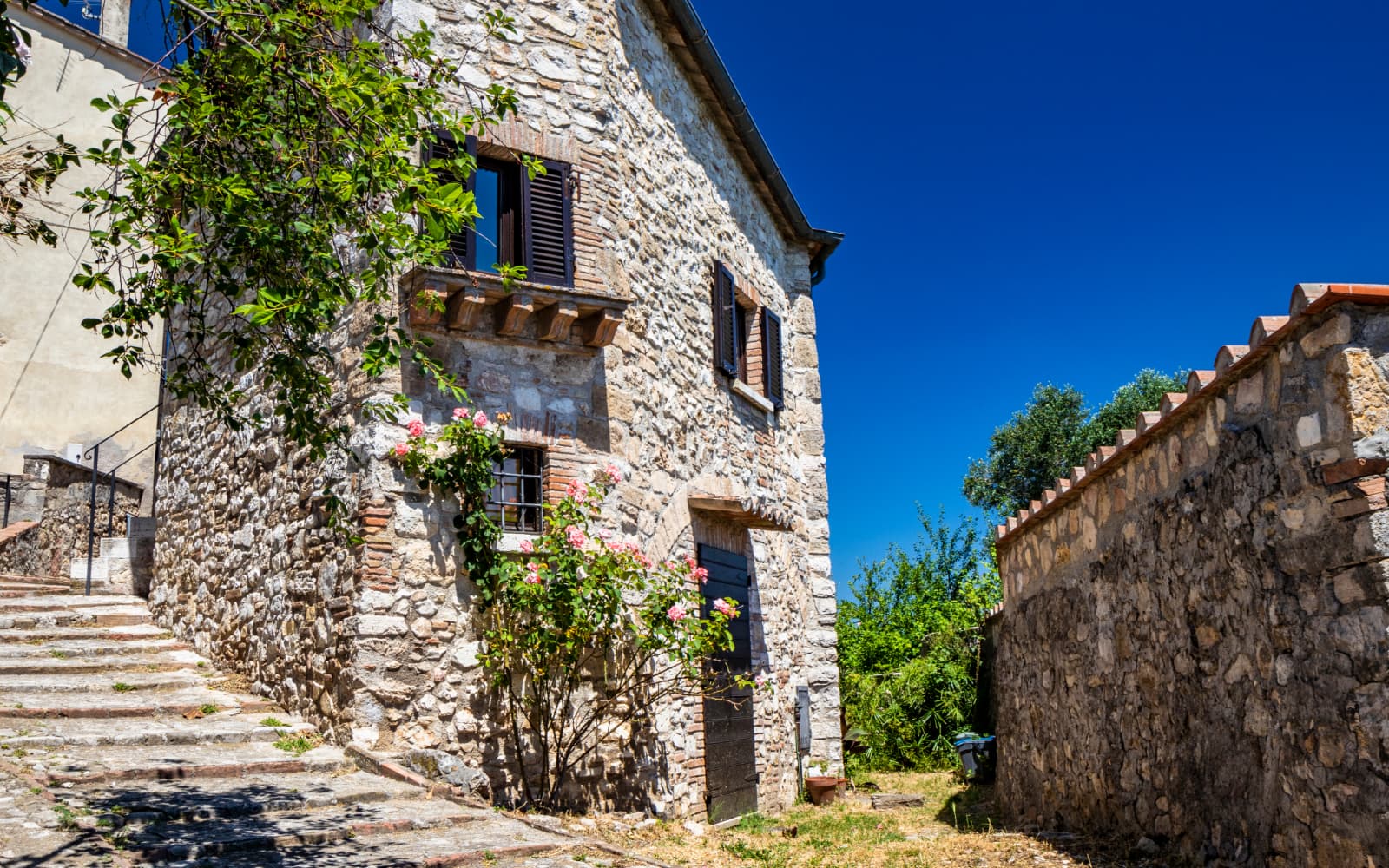
A pre-Roman hilltown at 406 meters ringed by polygonal walls of the fourth century BC, with ten barrel-vaulted Roman cisterns under the main square.
Montecchio
Province: Terni
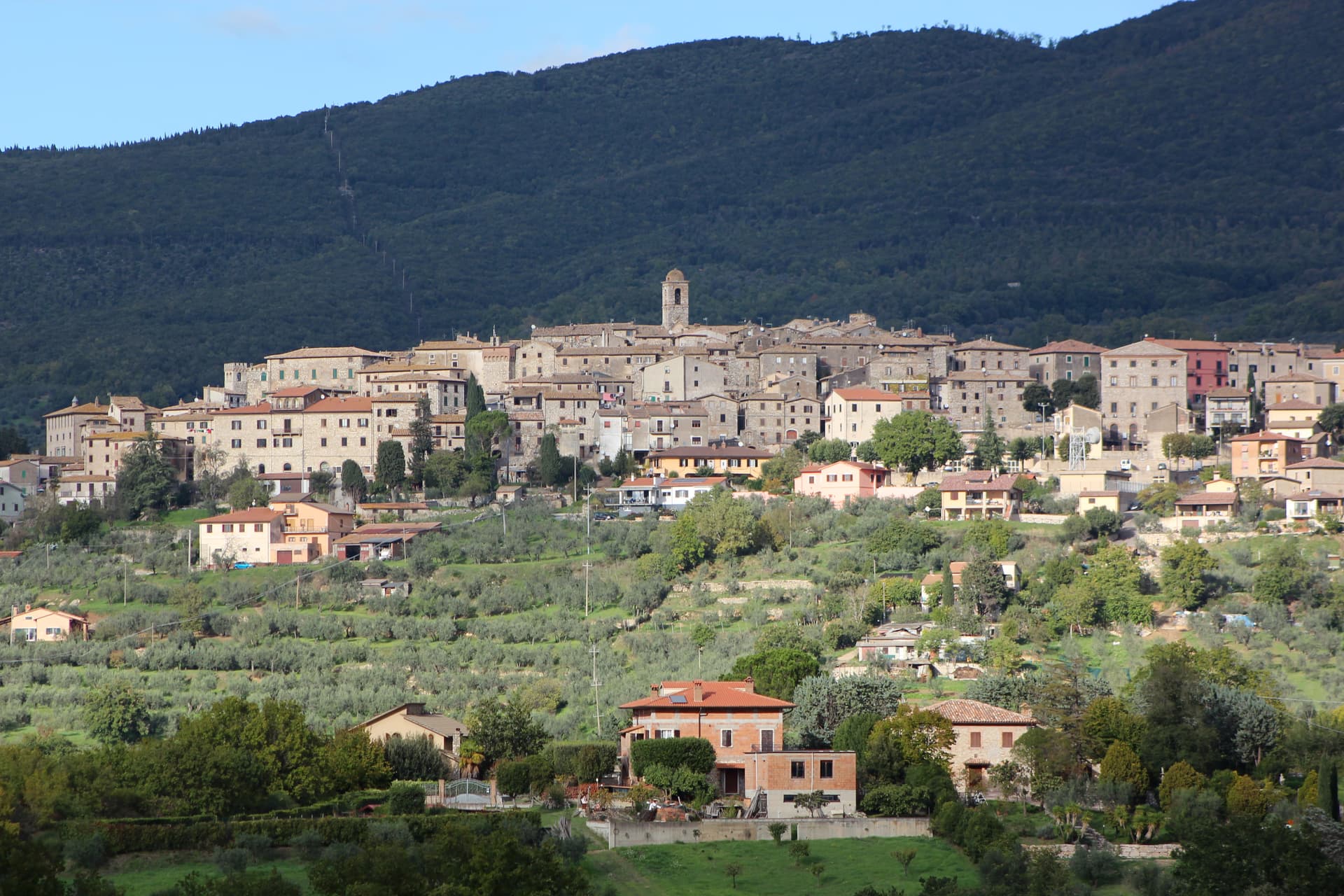
A small hill commune at 377 meters above the Tiber, sitting on top of one of Umbria's largest Etruscan-tied necropolises.
Bomarzo
Province: Viterbo
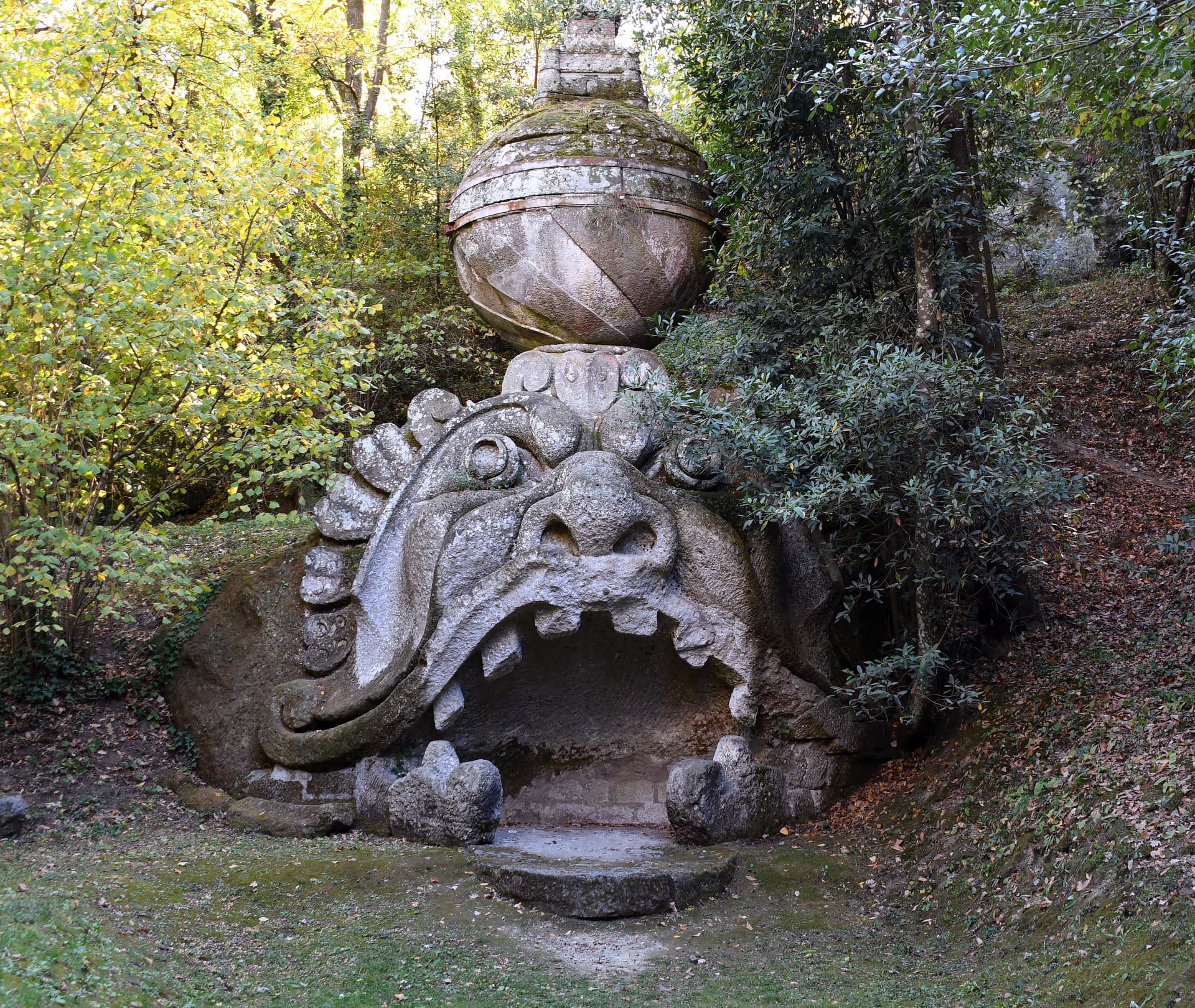
The Tuscia village below the Sacro Bosco, the 16th-century stone-monster garden built by a grieving condottiero for his dead wife.
Narni
Province: Terni
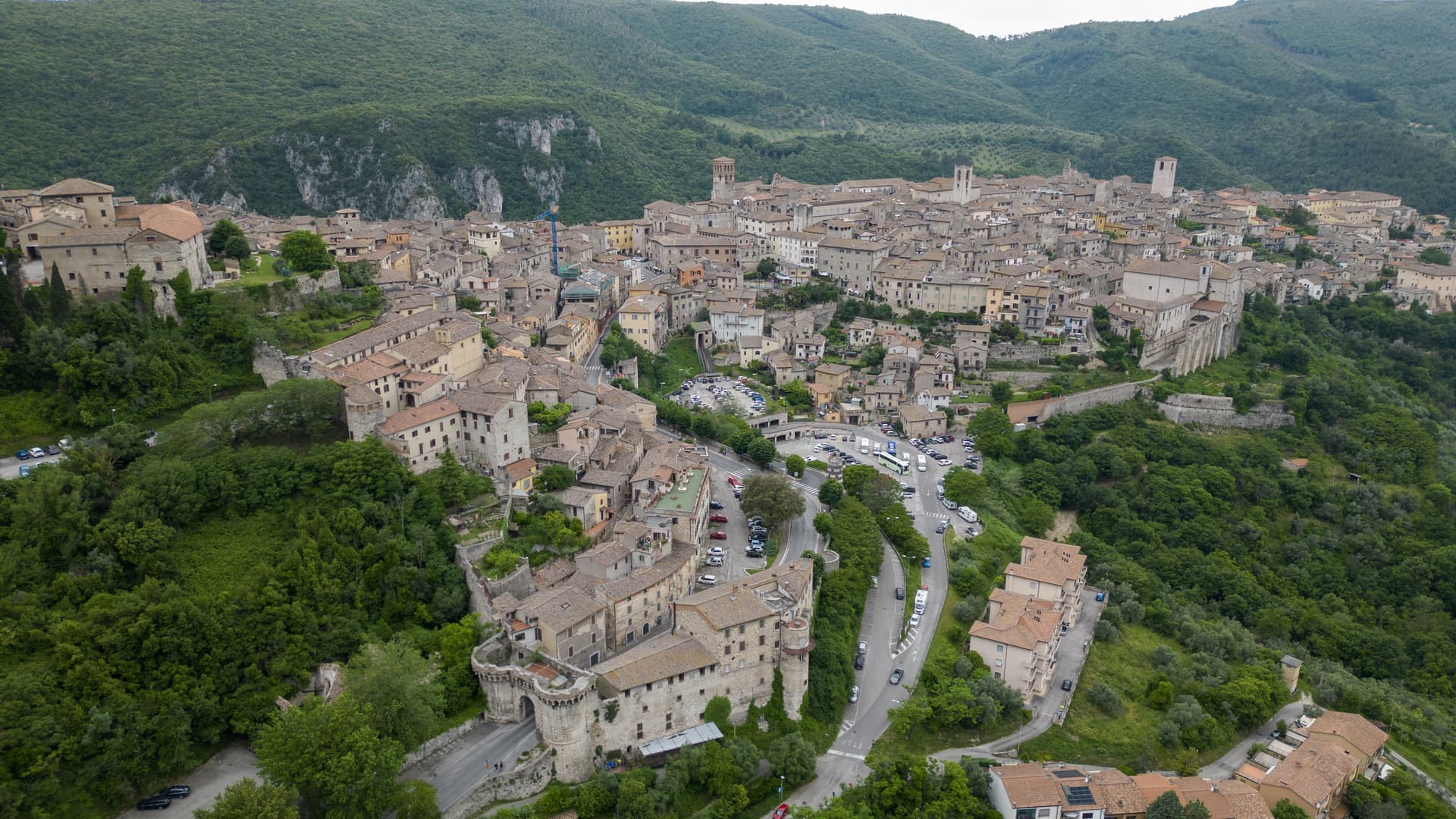
Italy's geographical centre and the etymological 'Narnia' — a 17,900-resident hilltop town on a travertine outcrop above the Nera valley, with the Rocca Albornoz papal fortress, a 30m Roman arch of the Ponte d'Augusto, a hidden underground complex containing a 13th-c Inquisition cell with original prisoner graffiti, and the documented Latin name (Narnia) that C.S. Lewis lifted for his fictional kingdom.
Bassano in Teverina
Province: Viterbo
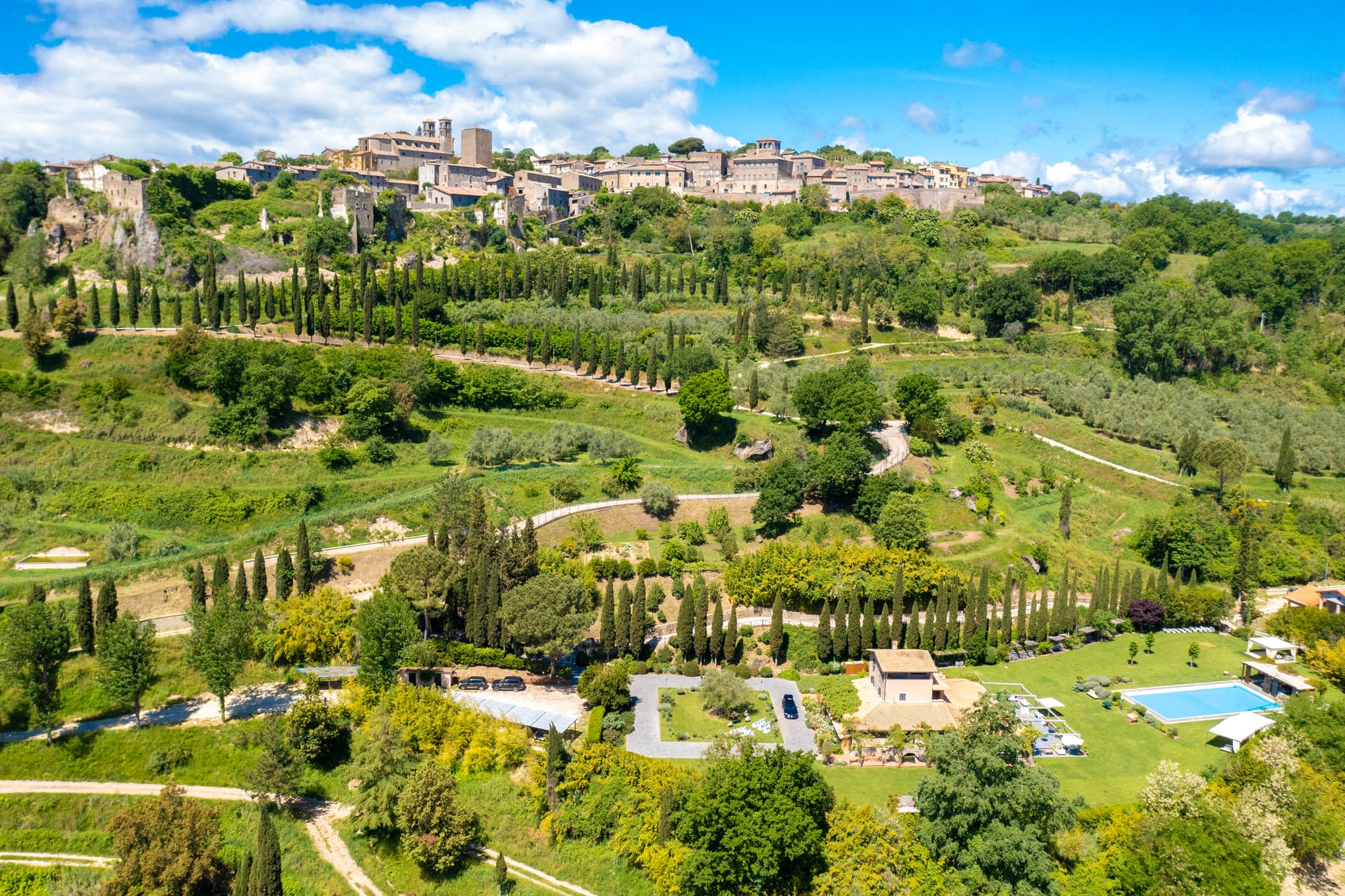
A tufa-spur borgo of 1,260 above the Tiber valley between Lazio and Umbria, with a clock tower that hides an eleventh-century animated bell tower.
🎨 Borghi più belli d'Italia
More Borghi più belli d'Italia towns in Umbria
Acquasparta
Province: Terni
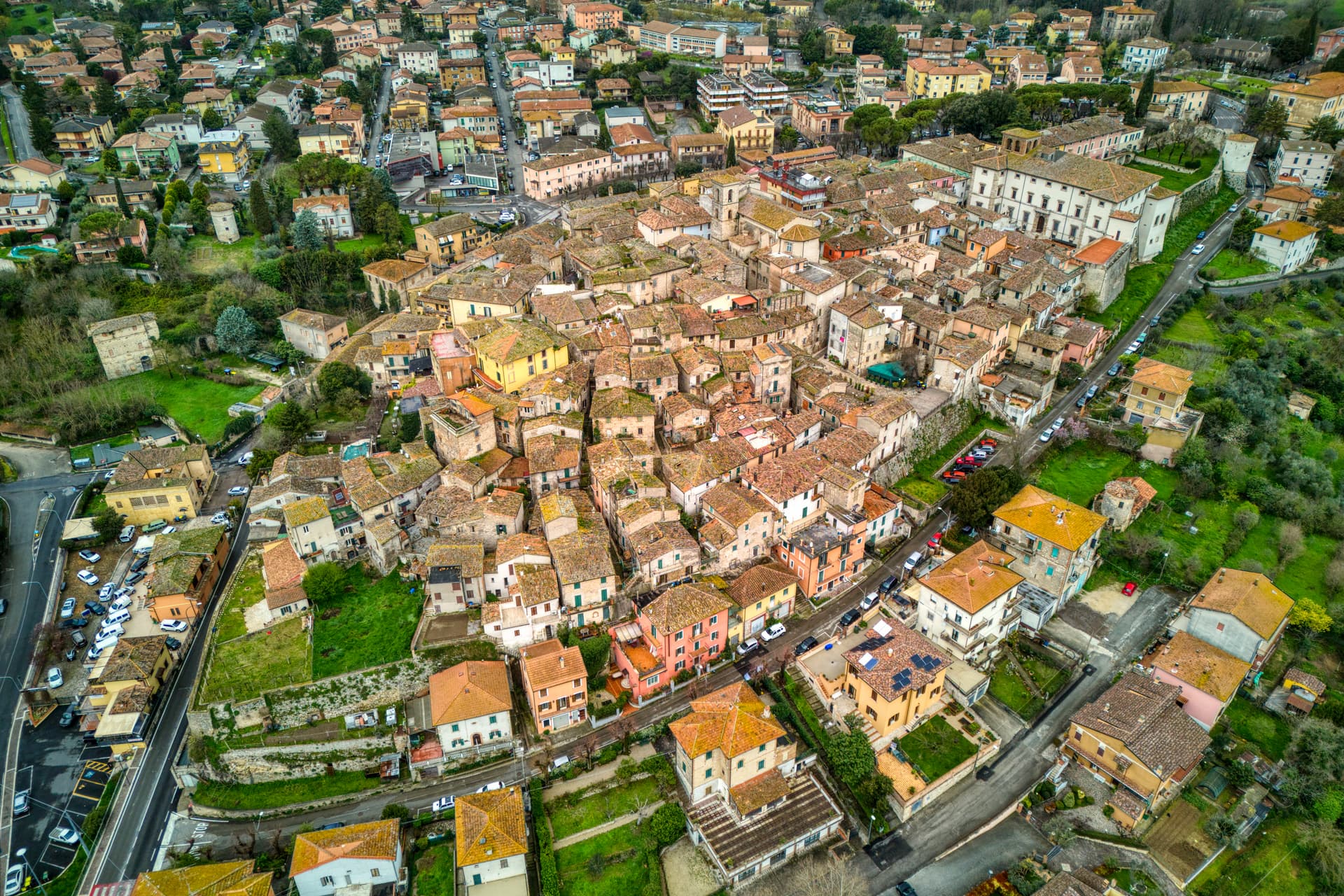
A hill town at 350 meters above the Naia valley, where Federico Cesi convened the first Accademia dei Lincei in his Palazzo Cesi in 1603.
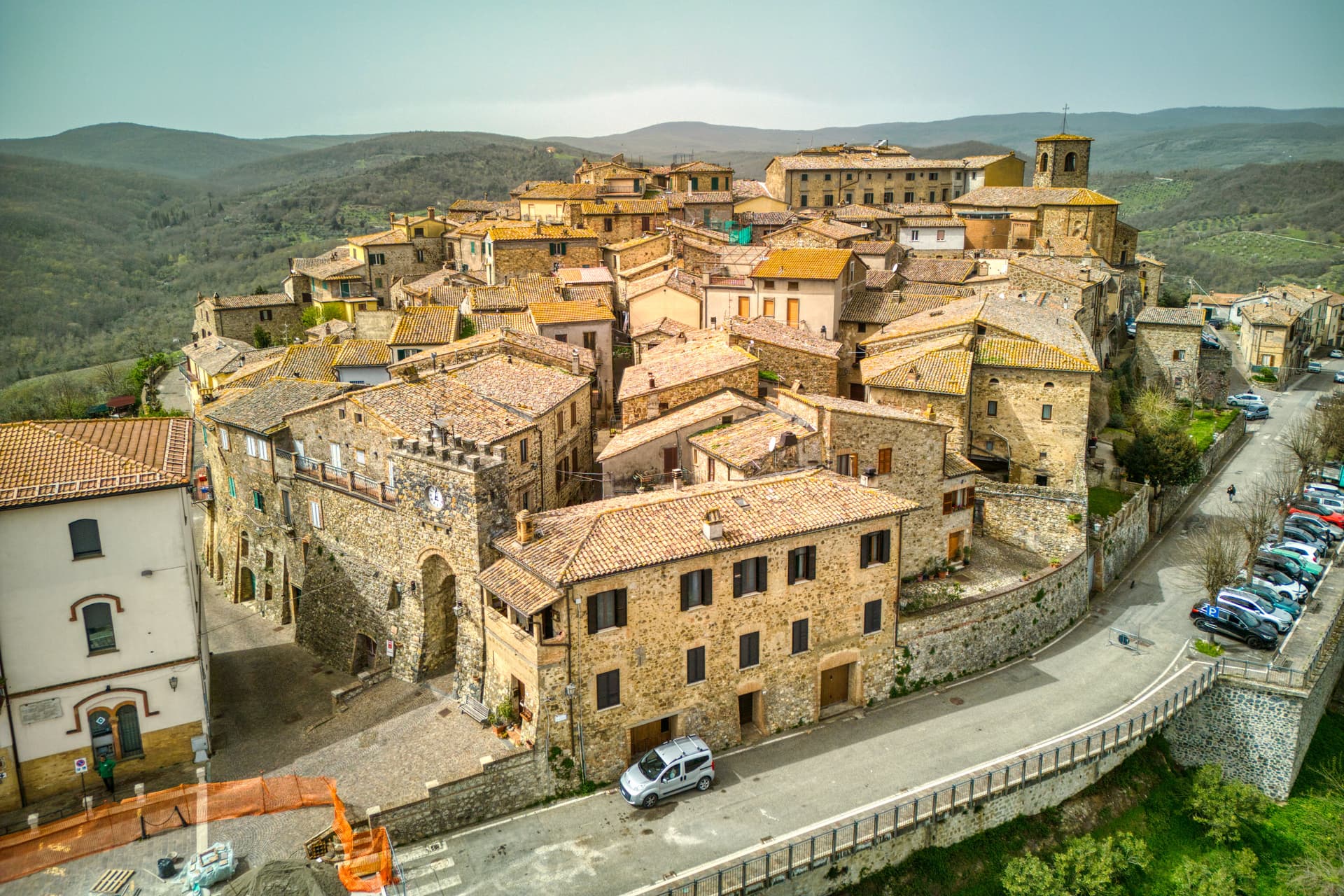
Allerona
Province: Terni
A stone borgo at 472 meters between the Paglia valley and the Valdichiana, an Orvieto outpost whose Monaldeschi castle fell to Charles V.
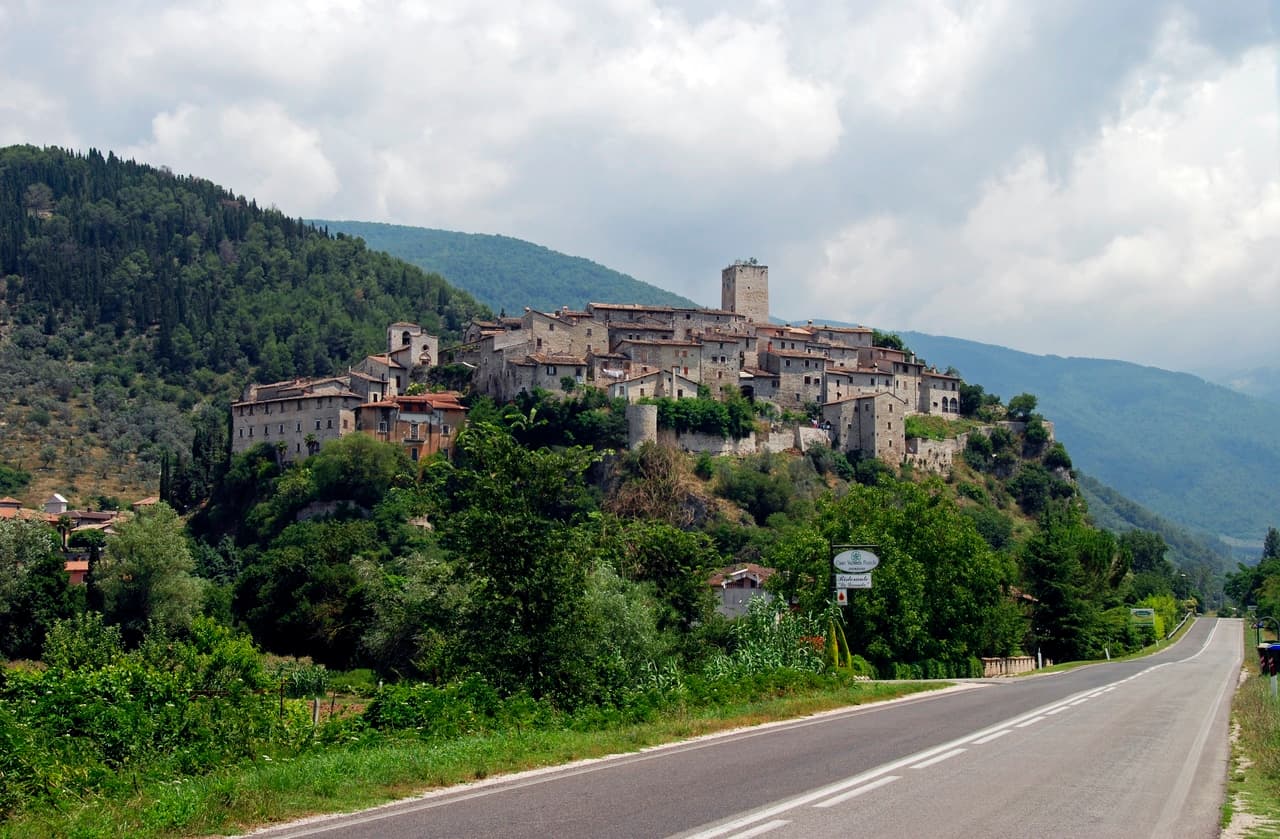
Arrone
Province: Terni
Medieval castle village on the left bank of the Nera at 243 meters, upstream from the largest man-made waterfall in the world.
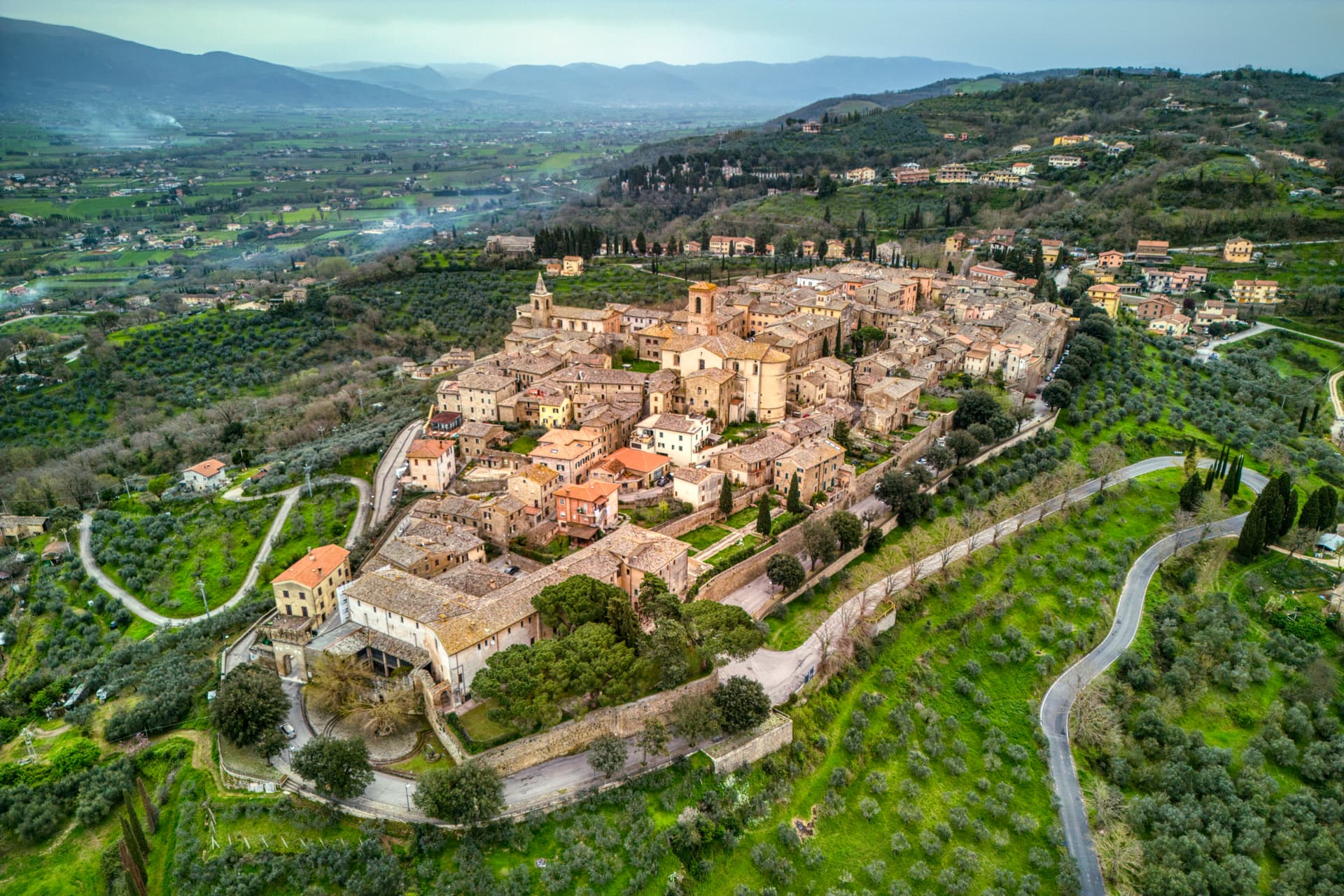
Bettona
Province: Perugia
A hill town at 353 meters between the Topino and Chiascio rivers, the only Etruscan settlement ever built east of the Tiber.
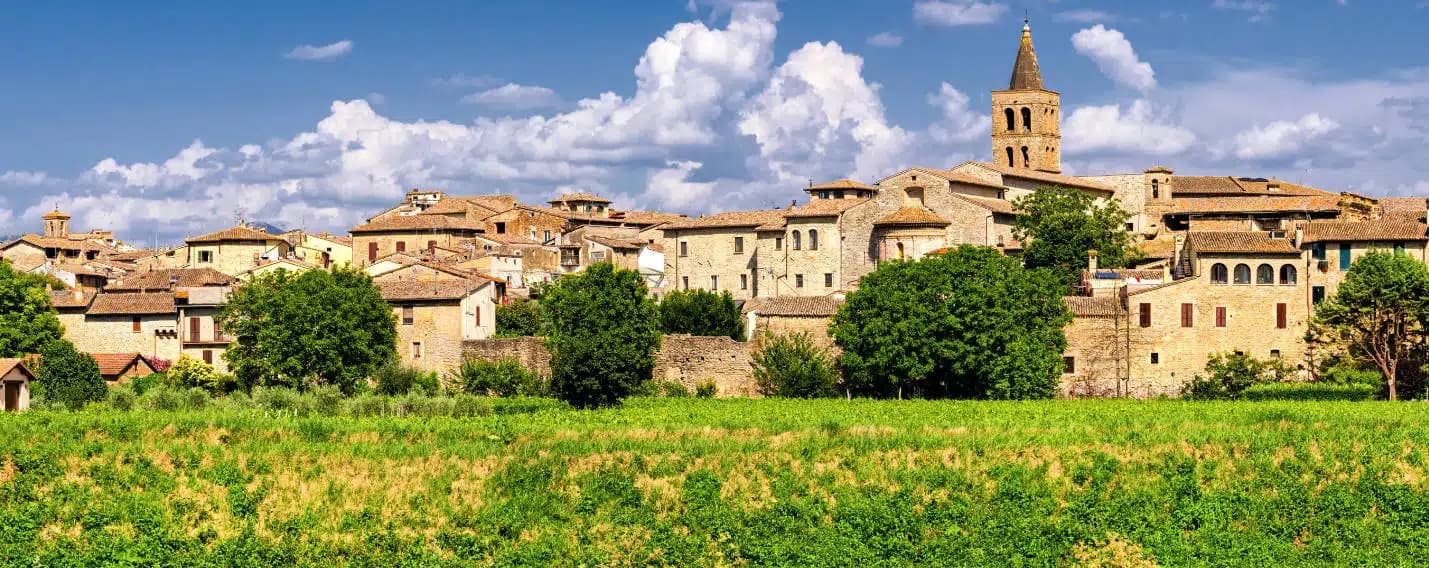
Bevagna
Province: Perugia
Roman Mevania on the Umbrian plain at 225 meters, four medieval quarters that compete every June in a reconstructed market of the 13th century.