

Apulia · Taranto
Martina Franca
Puglia's second Baroque city after Lecce, on the Itria ridge, with an opera festival in its ducal courtyard since 1975.
Known for
MARTINESE BAROQUE
The densest concentration of Rococo and late-Baroque architecture in Puglia after Lecce, mostly rebuilt after the 1743 earthquake.
FESTIVAL DELLA VALLE D'ITRIA
Summer opera festival founded in 1975 in the Palazzo Ducale courtyard, focused on rare and unjustly forgotten works.
CAPOCOLLO IGP
Dry-cured pork neck of Martina Franca, IGP-protected, paired locally with Martina Franca DOC white wine from the Itria plateau.
When to visit
Best · Apr–Oct
- J
- F
- M
- A
- M
- J
- J
- A
- S
- O
- N
- D
- Best
- Hot or crowded
- Quiet
- Mostly closed
The festa: Martino di Tours, 11 November
Why come
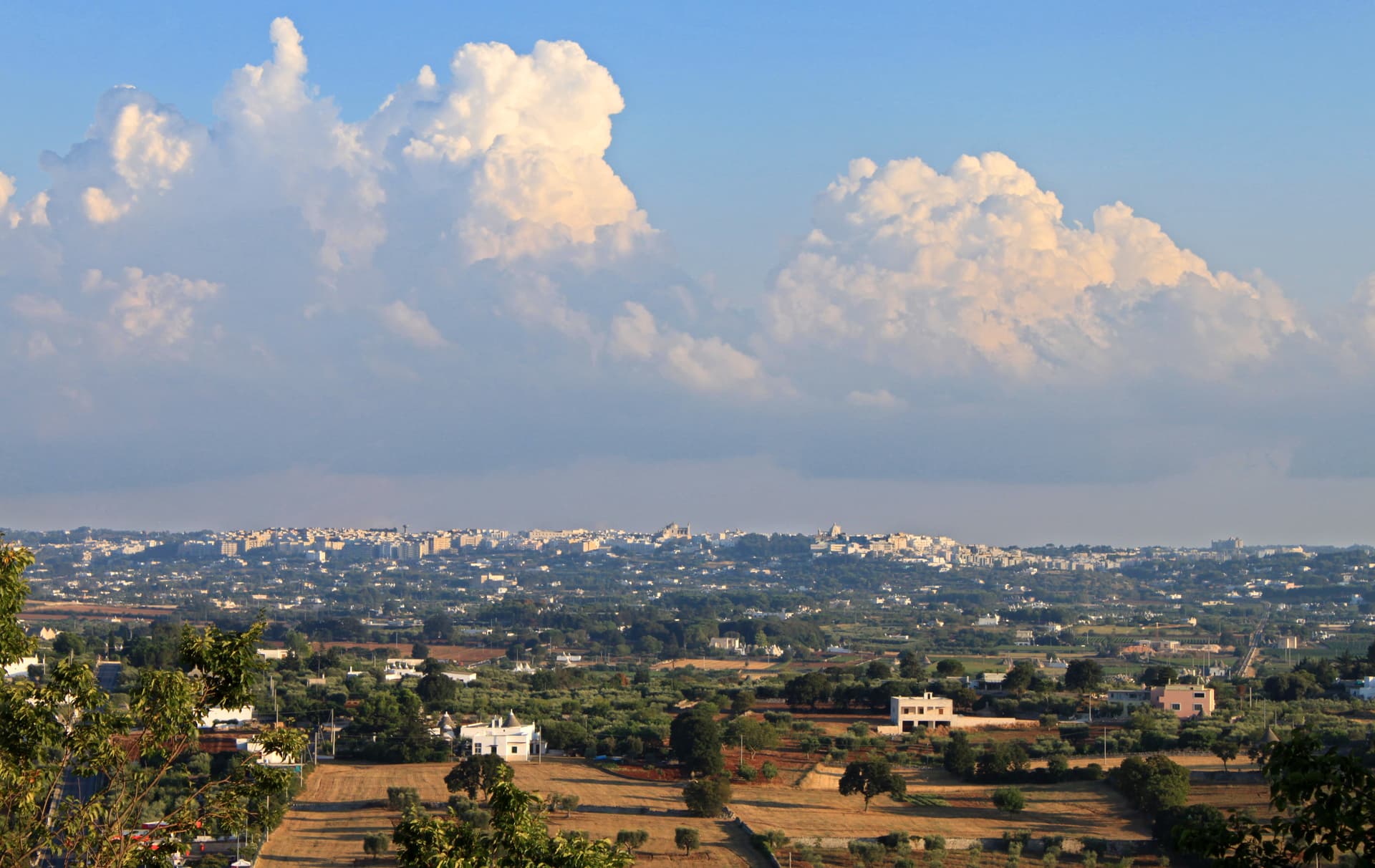
Martina Franca sits on the southern edge of the Valle d'Itria, on the border between the provinces of Taranto, Bari and Brindisi. The town was founded in 1310 by Philip I of Anjou, Prince of Taranto, who granted franchigie, tax exemptions, to settlers willing to repopulate the hill, hence Franca in the name. The centro storico is the densest concentration of Rococo and late-Baroque architecture in Puglia after Lecce: wrought-iron balconies, carved stone portals, churches built or rebuilt after the 1743 earthquake.
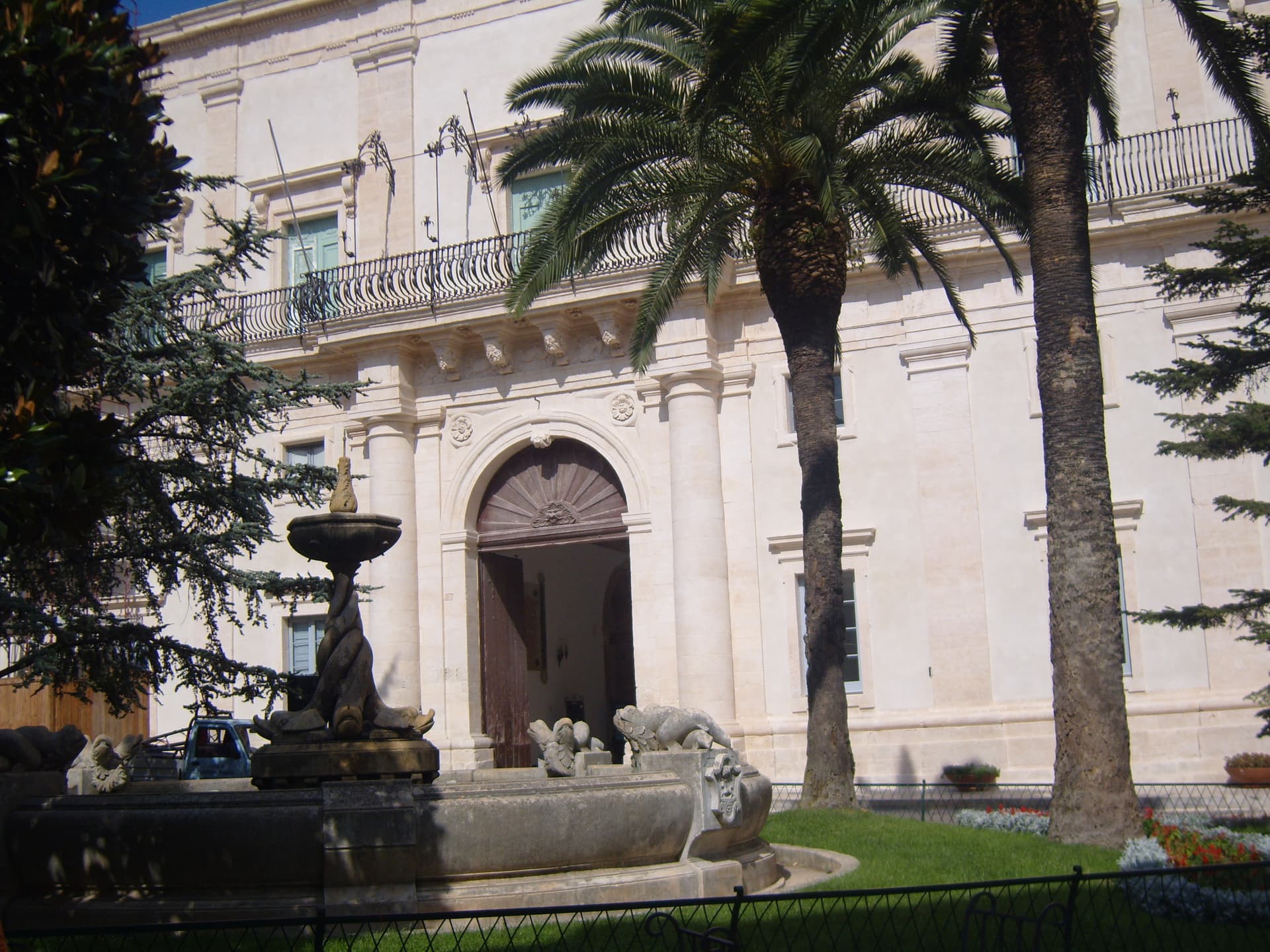
The Palazzo Ducale of 1668, raised on the foundations of a 1338 medieval castle, is the seat of the municipal offices and the open-air courtyard where the Festival della Valle d'Itria has been performed every July and August since 1975, founded specifically to recover rare and forgotten operas. The Basilica di San Martino, begun in 1747, is the most complete example of Martinese Rococo. The surrounding plateau makes a Martina Franca DOC white wine and a strong dry-cured capocollo IGP.
The Sunday letter
We haven’t written Martina Franca’s letter yet.
One town every Sunday, with the photo, the food, the festa. Be there when this one comes up. Free, by Peter & Sophia from Pietrasanta.
By subscribing you agree to Substack’s Terms of Use, our Privacy Policy and our Information collection notice.
What to see
Palazzo Ducale
Built in 1668 on the foundations of a 1338 medieval castle, town hall and home of the Festival della Valle d'Itria summer opera courtyard.
Basilica di San Martino
Eighteenth-century basilica begun in 1747 after the 1743 earthquake, the most complete Martinese Rococo monument and museum of liturgical art.
Piazza Roma and Piazza Maria Immacolata
The two main squares of the centro storico, linked by Via Cavour, lined with eighteenth-century palazzi and the town's main passeggiata.
Festival della Valle d'Itria
Opera festival founded in 1975, performed in July and August in the Palazzo Ducale courtyard, dedicated to rare and rediscovered repertoire.
Centro storico Baroque quarter
Whitewashed stone old town with wrought-iron balconies and carved portals, the second-largest Baroque concentration in Puglia.
The slow-trip planner
Building a trip? Find where Martina Franca fits in a slow Italy circuit.
Answer five questions. We will shape a geographically coherent slow trip from the 1,000 Italian towns most travelers skip. Yours to save and share.
We recommend
Where to eat and stay
Not our picks, but places the guides put their name to — a Michelin star, a Gambero Rosso fork, a Slow Food snail, a Michelin Key for the hotels. Worth a table, a counter, or a night when you pass through.
Bros'Ristorante
Bros' holds two Gambero Rosso forks (86/100) and a spot in the Michelin Guide.
Bros' TrattoriaRistorante
Bros' Trattoria has a Michelin Bib Gourmand to its name.
Four SeasonsRistorante
Two Gambero Rosso forks (80/100), at Four Seasons.
Gaonas Officine del GustoRistorante
Gaonas Officine del Gusto holds one Gambero Rosso fork (79/100).
Relais Villa San MartinoHotel
Relais Villa San Martino carries a place in the Michelin hotel guide.
Living here
- Population 46,900
- In-betweeni
- Pharmacy in town
- High school within a 30-minute drive
- Train station in the comune
- Nearest airport Bari / Brindisi, 1 h 25 min drive
- Regional capital Bari, 1 h 14 min drive
Tags & datadesignations · numbers · sources
Recognised as
The numbers
- Elevation: 431 m
- Population: 46,900
- Surface area: 299.72 km²
These figures were compiled from public directories — ISTAT, OpenStreetMap, Wikidata — and from the official listings of the guides named on this page. Town details change; verify with official sources before you travel.
Close by
More towns near Martina Franca
Locorotondo
Province: Bari
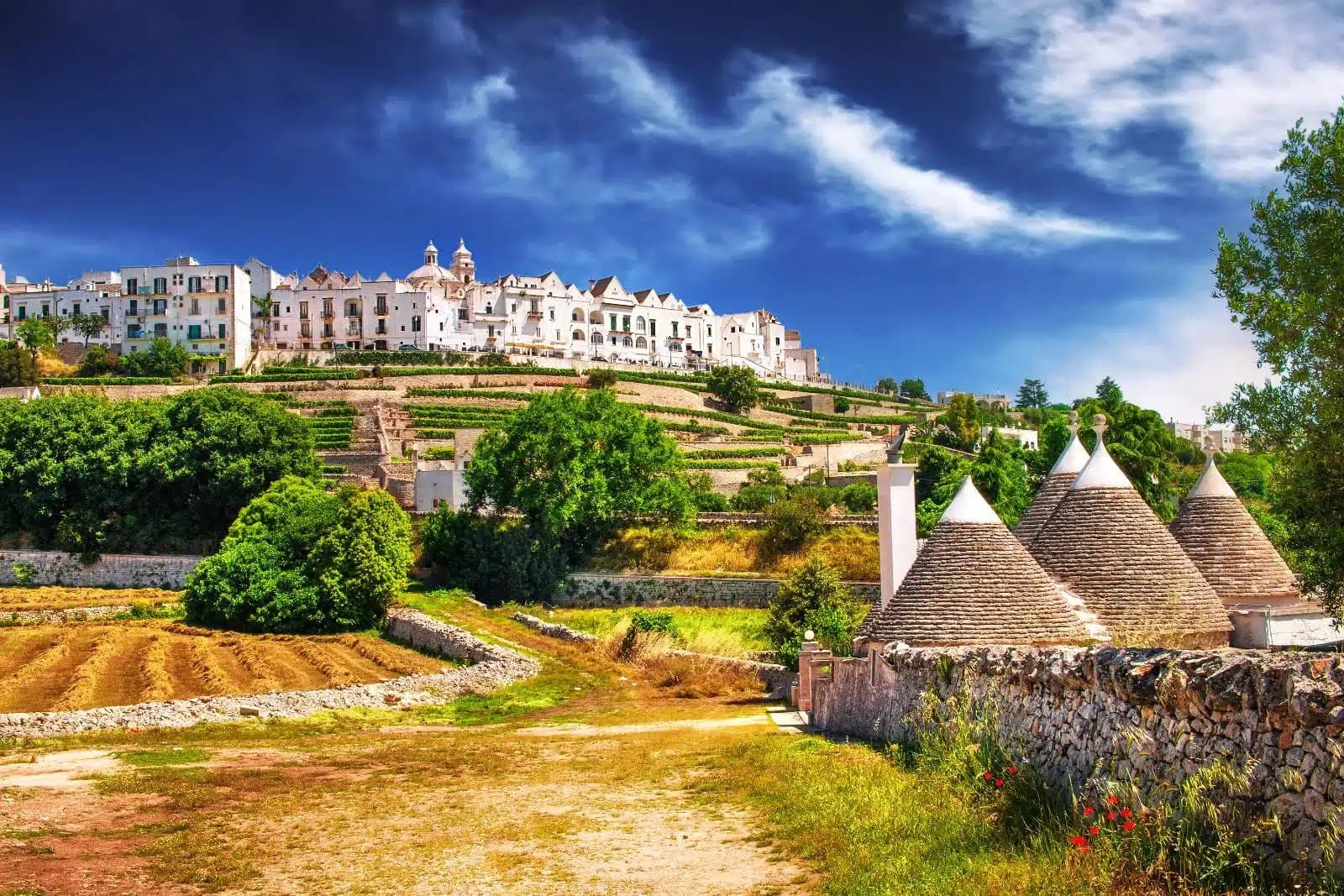
The round white town on the Itria valley ridge at 410 meters, with cummerse roofs the rest of Puglia does not have.
Cisternino
Province: Brindisi
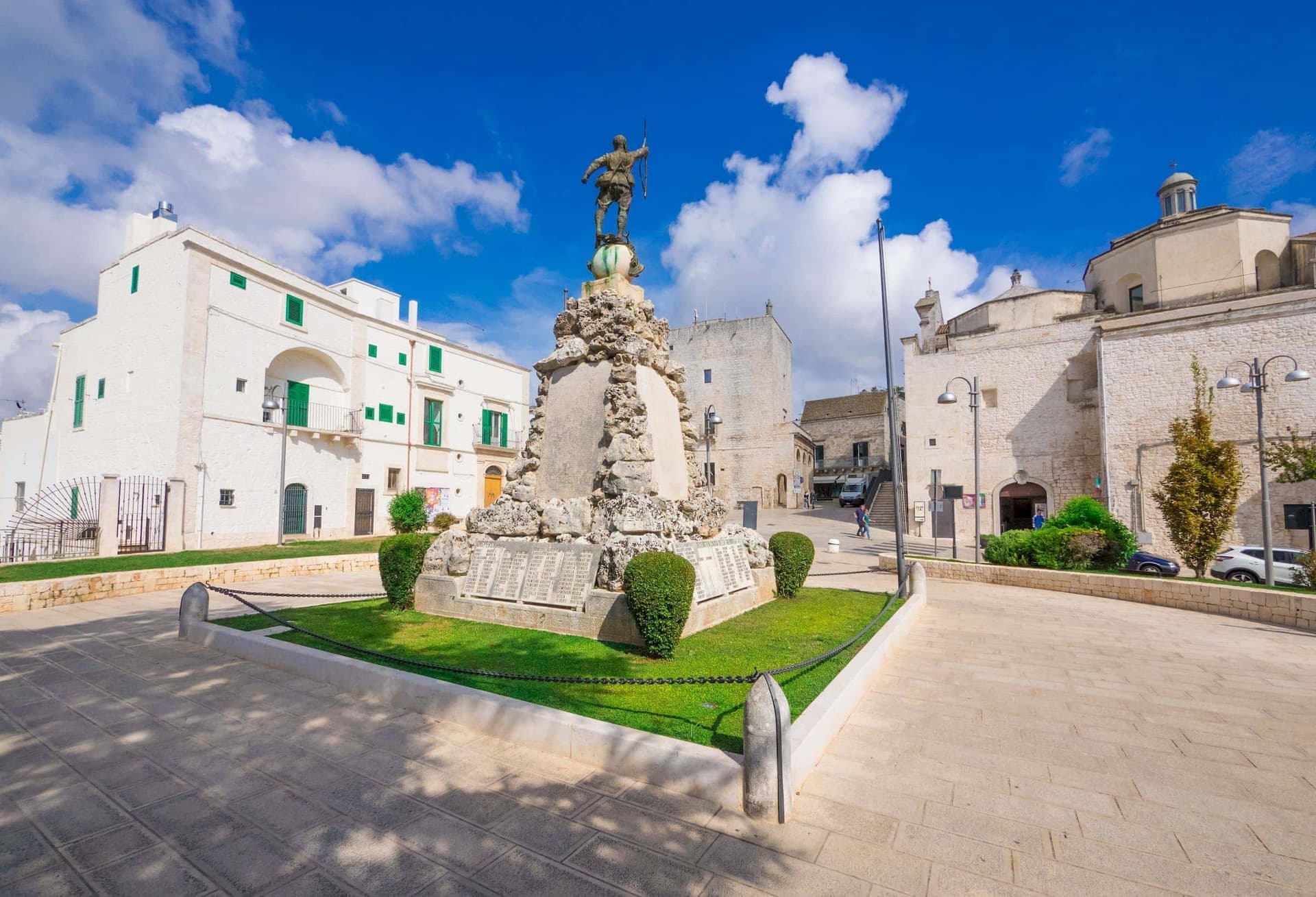
An Itria valley borgo on the southern Murgia at 394 meters, whitewashed, Cittaslow since 2003 and Cittaslow City of the Year in 2014.
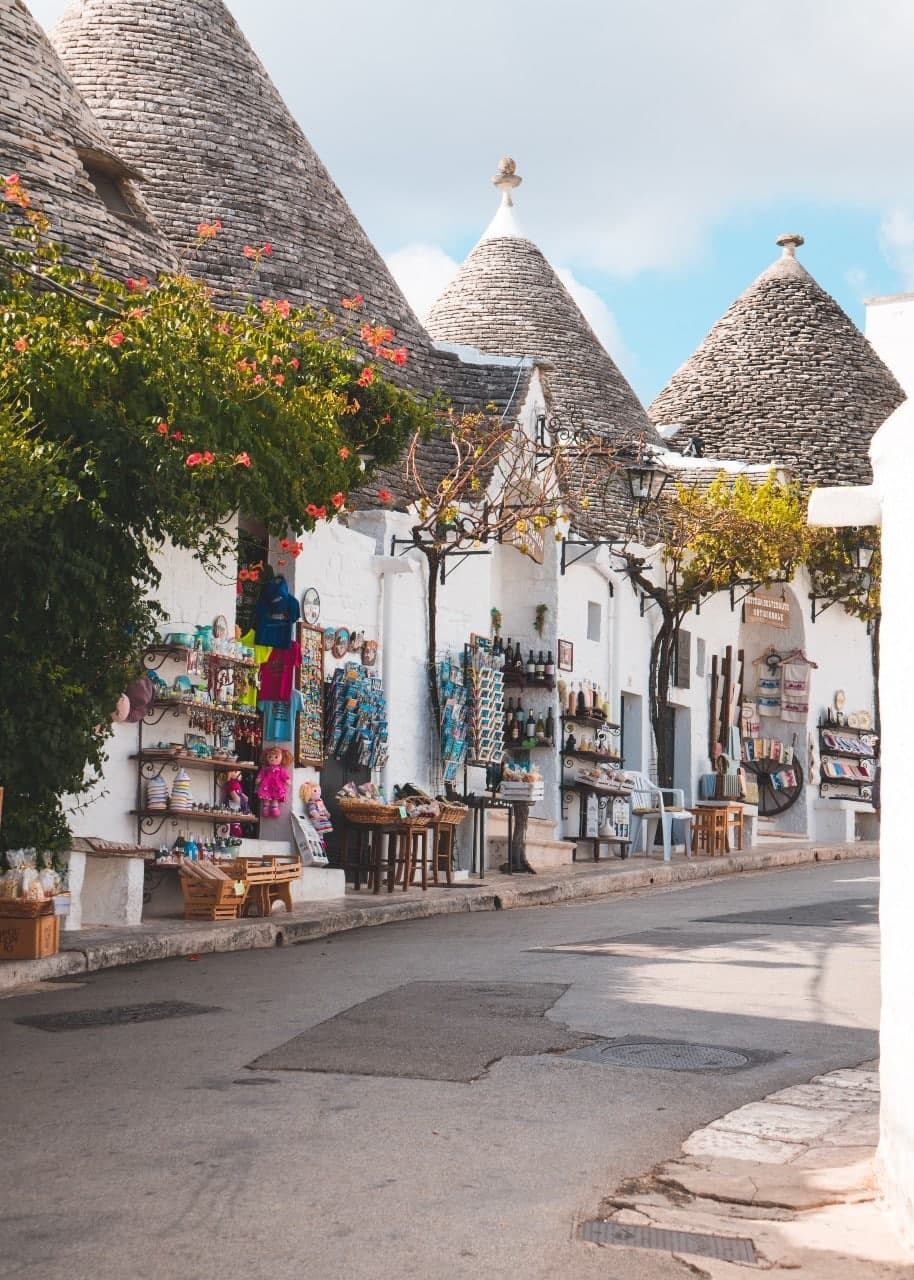
Alberobello
Province: Bari
The Itria valley town built entirely of trulli, 1,500 corbelled limestone cones in two quarters, UNESCO since 1996.
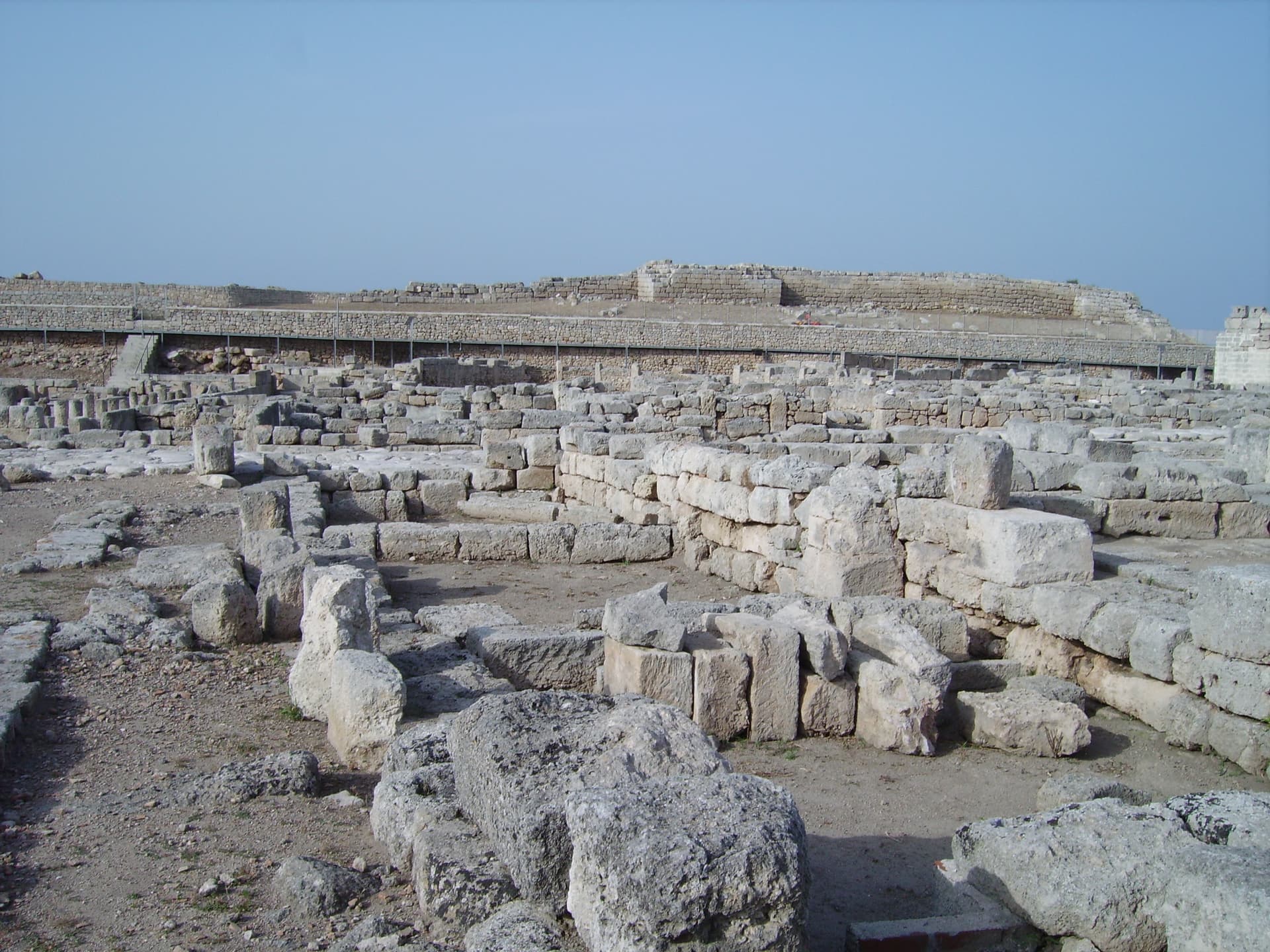
Fasano
Province: Brindisi
A Brindisi-province town from the Adriatic up to the Itria escarpment, holding the Roman ruins of Egnazia, the Selva, and Europe's second-largest safari park.
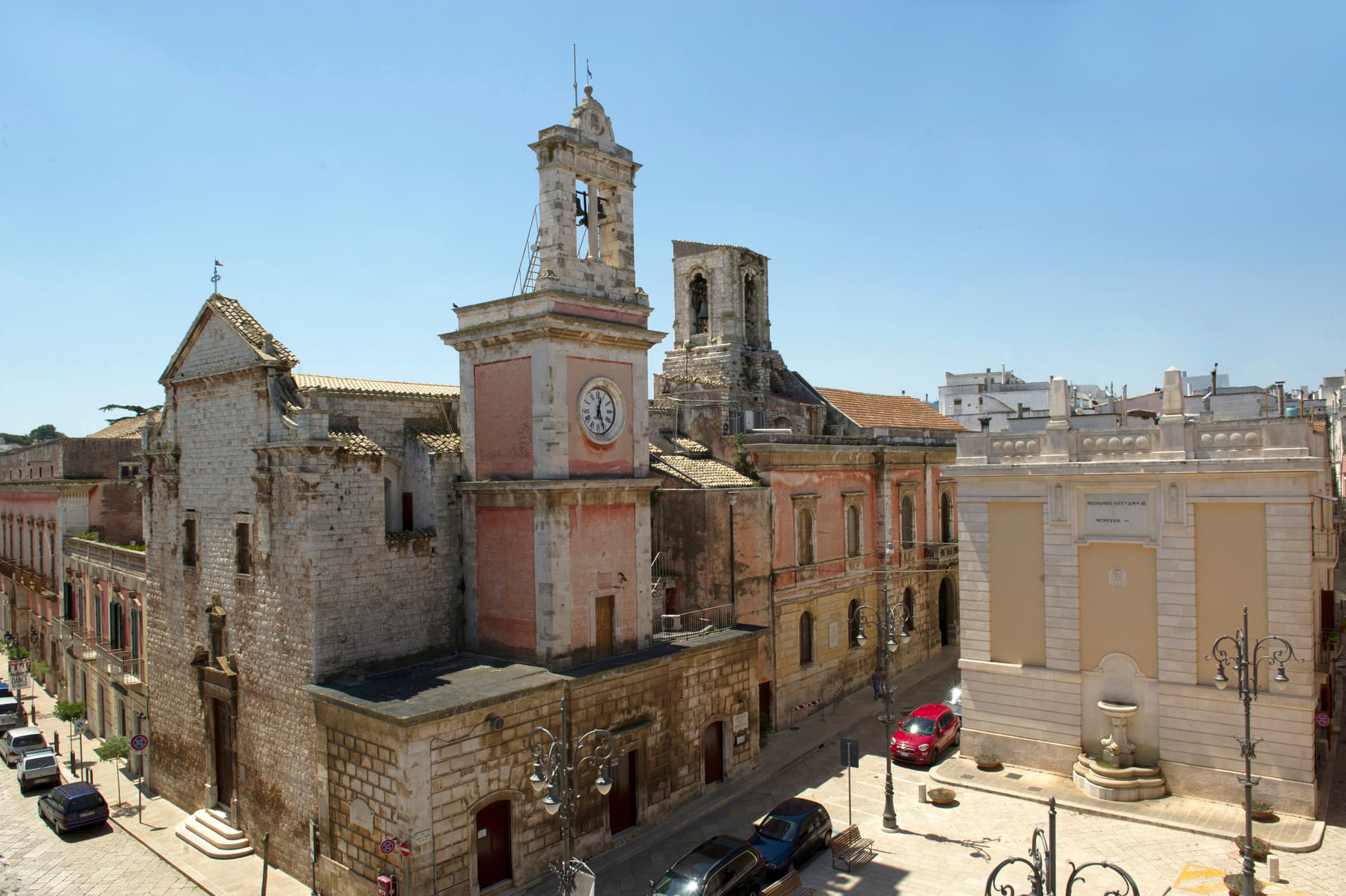
Castellana Grotte
Province: Bari
A Murge town at 290 meters above the karst cave system discovered in 1938, with a 3-kilometer subterranean route 60 meters deep.
🌳 Parco Regionale
More Parco Regionale towns in Apulia
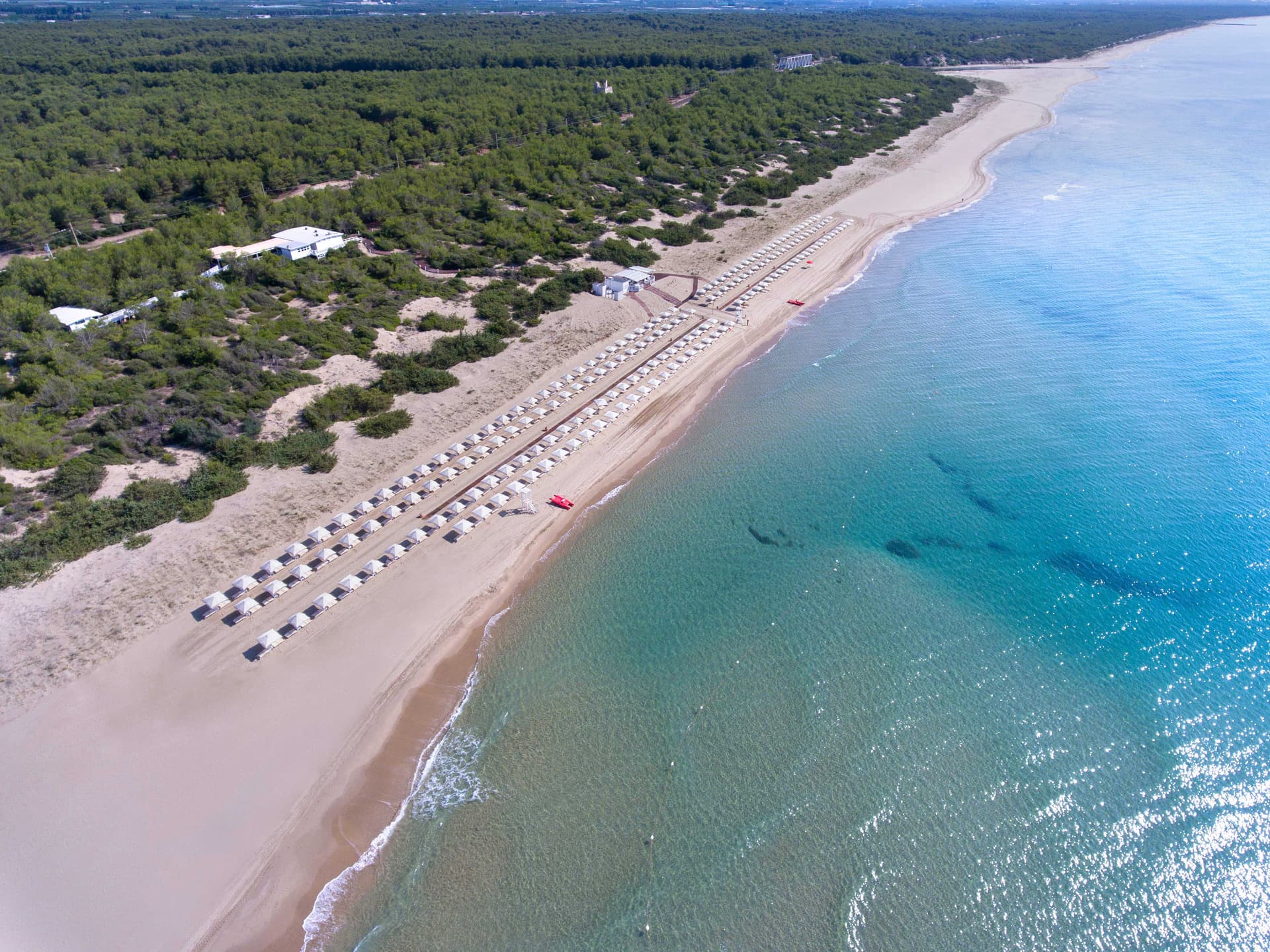
Castellaneta
Province: Taranto
A cliff-edge Murge town at 235 meters above the Gravina Grande canyon, birthplace of Rudolph Valentino in 1895, with a Bandiera Blu Ionian marina.
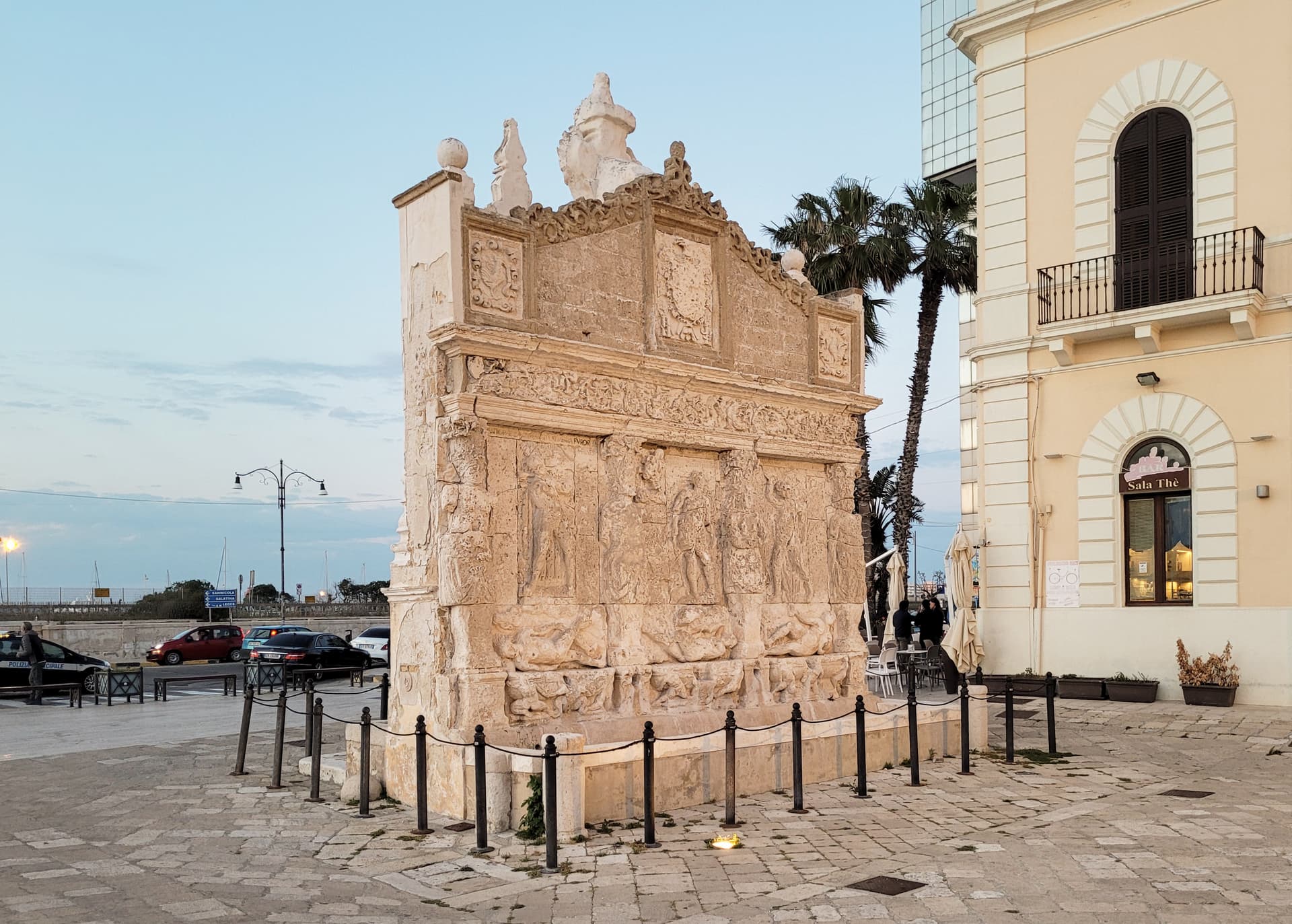
Gallipoli
Province: Lecce
The Ionian beach city on a limestone island, Greek Kallipolis meaning beautiful city, tied to the mainland by a seventeenth-century bridge.
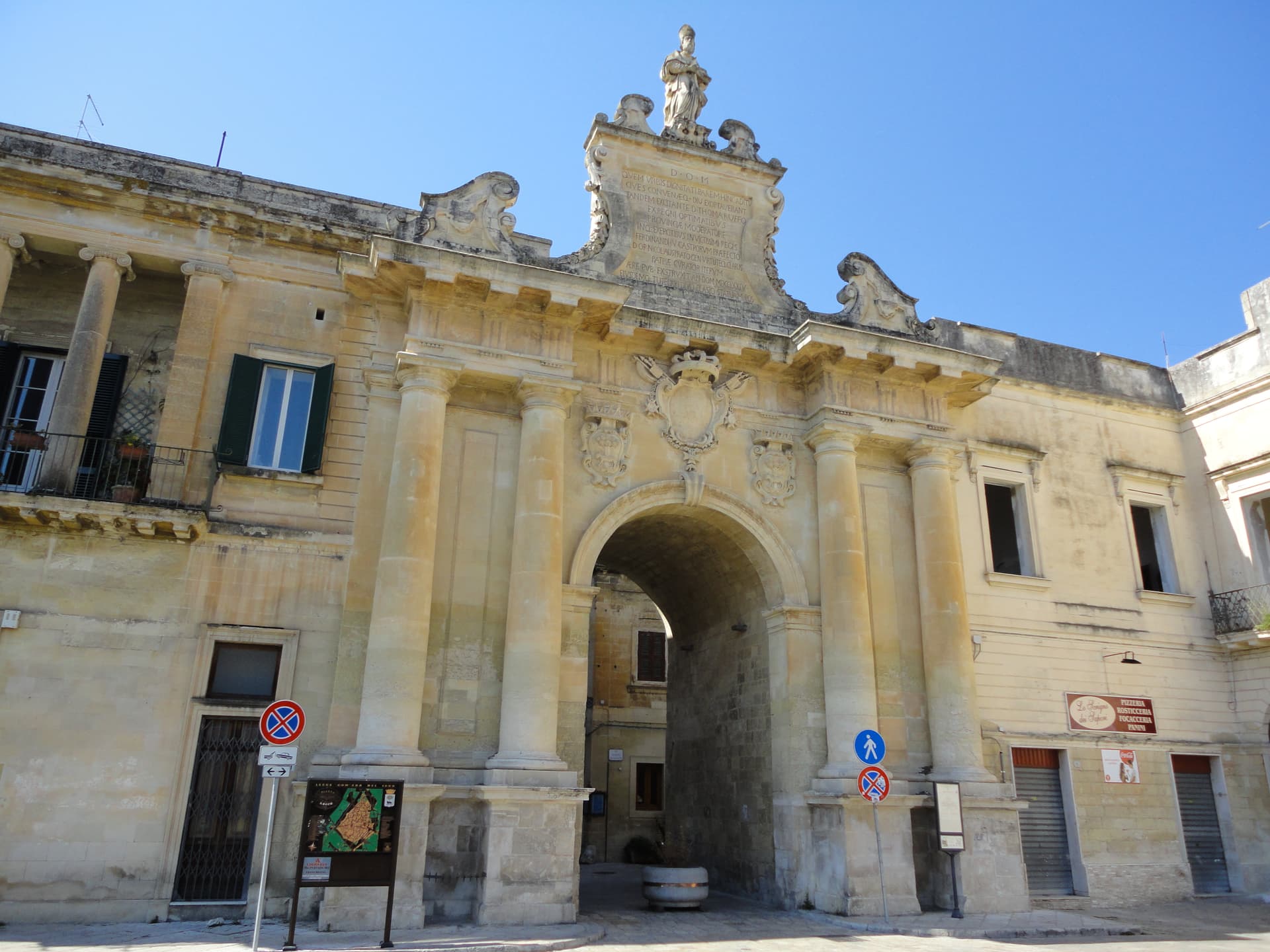
Lecce
Province: Lecce
The Baroque capital of the Salento, ninety-four thousand people on the Lecce-stone plain, carving its façades in honey limestone since 1500.
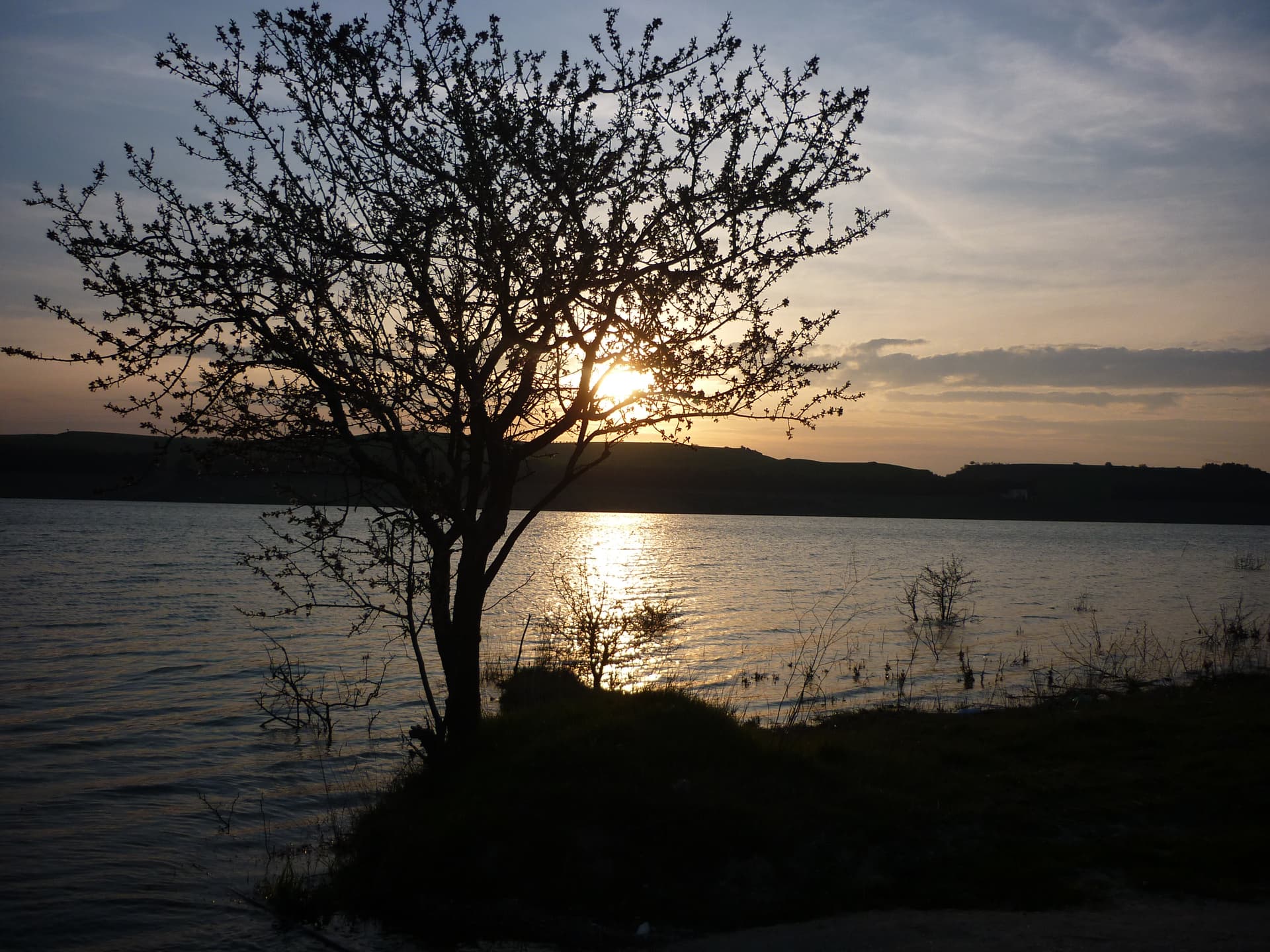
Minervino Murge
Province: Barletta-Andria-Trani
The Balcone di Puglia at 445 meters on the Alta Murgia, between the Ofanto valley and Monte Vulture, inside the national park.
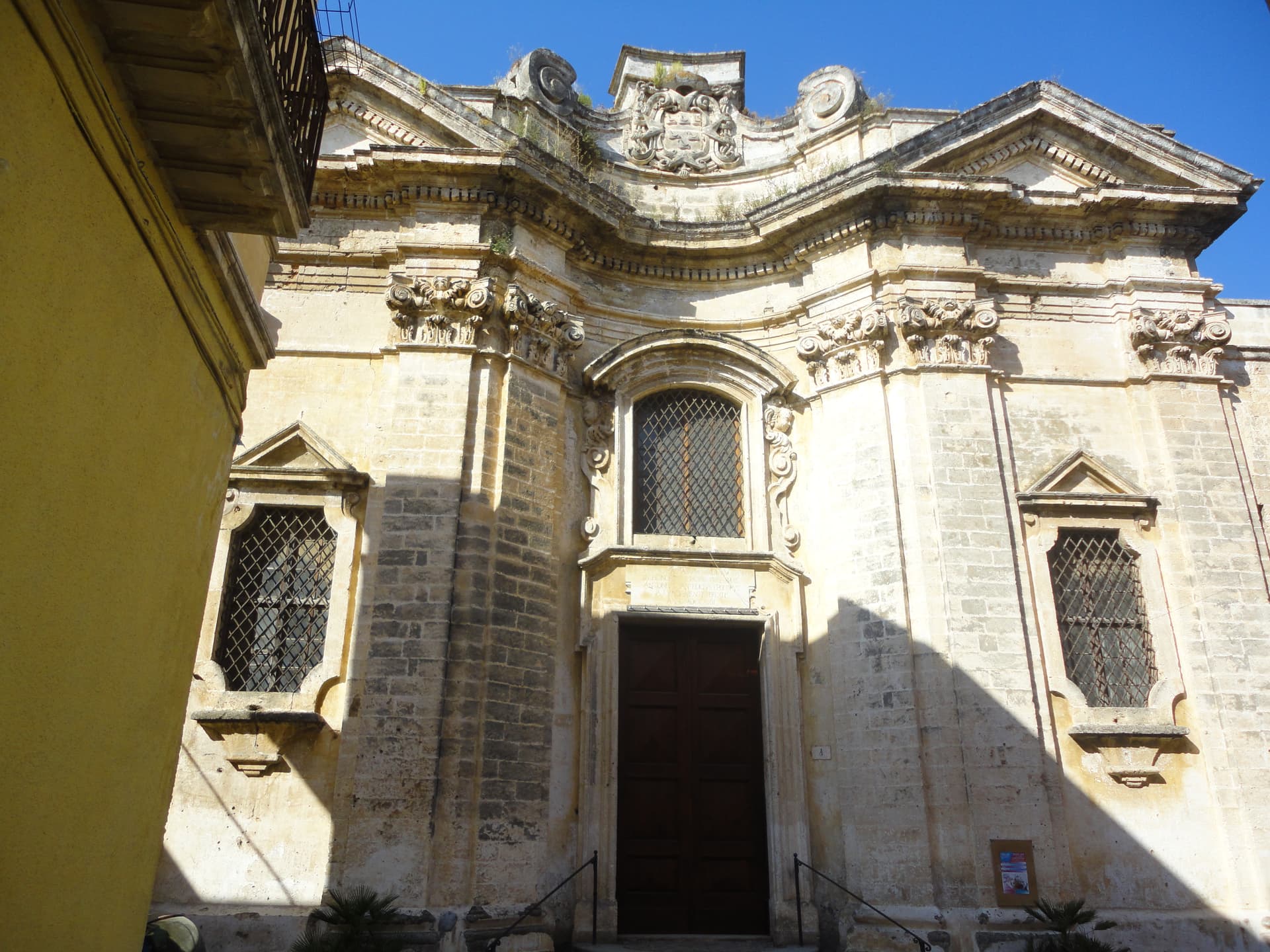
Nardò
Province: Lecce
The second city of Salento after Lecce, a Baroque inland capital twenty-five kilometers from Lecce with a Ionian coastline behind it.