

Emilia-Romagna · Rimini
San Leo
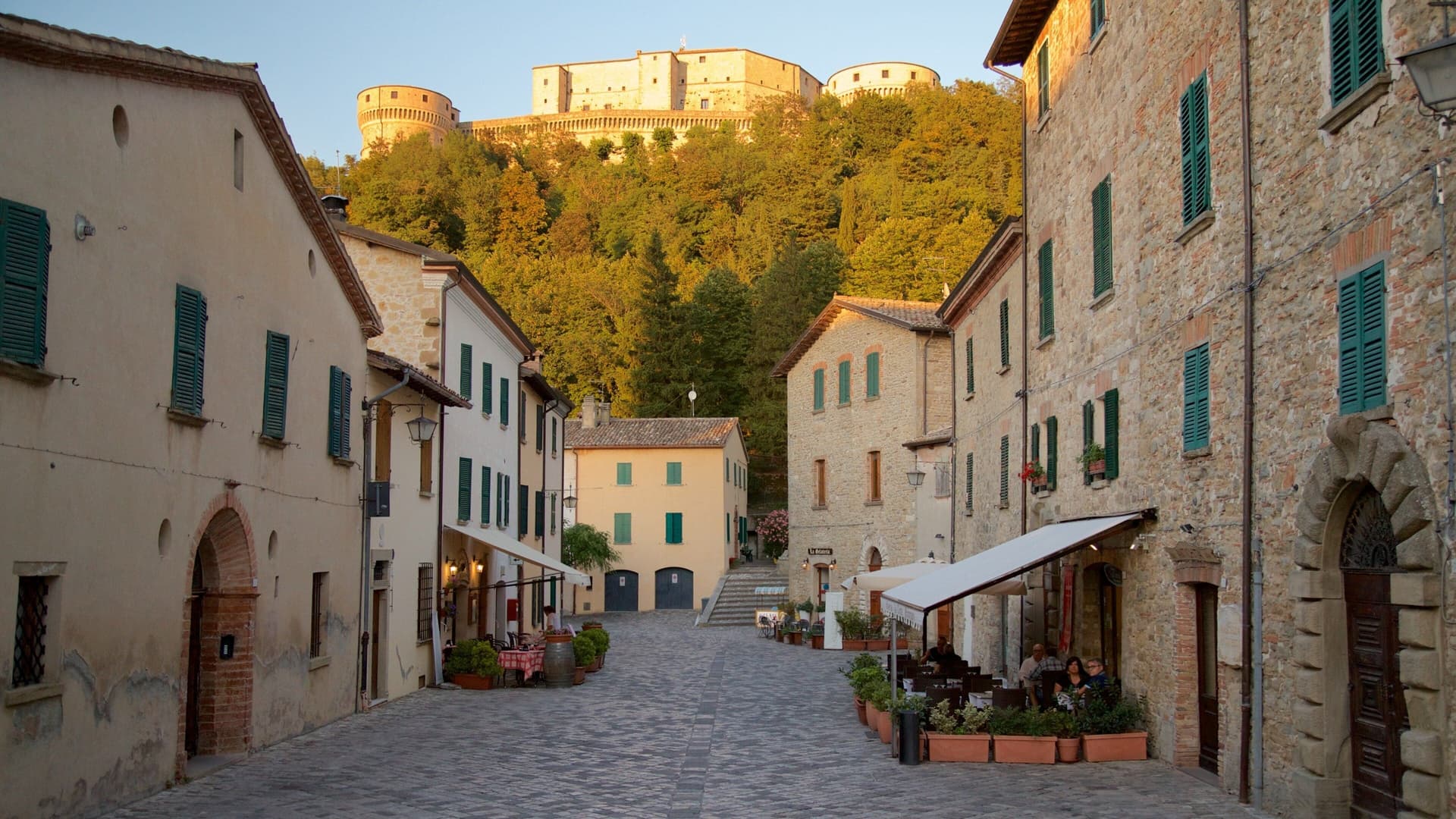
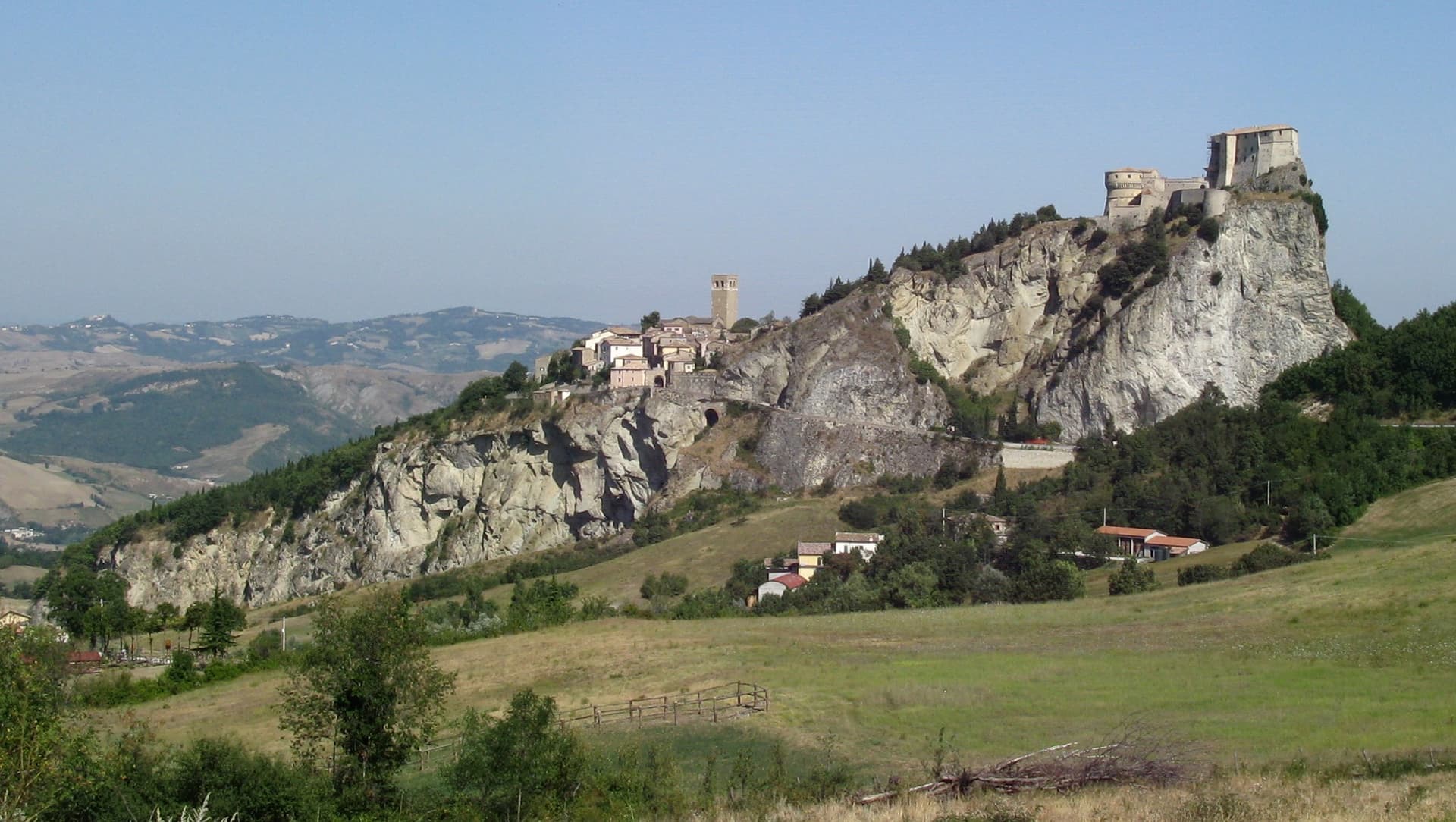
Italy's most dramatic hilltop fortress town — a 2,820-resident borgo on a vertical 583m limestone outcrop in the Montefeltro, 35 km from Rimini, with the Renaissance Forte di San Leo (where Cagliostro was imprisoned and died in 1795), the 9th-c Pieve, the 12th-c Duomo, and the Romagna/Marche frontier panorama from every wall.
Known for
FORTE DI SAN LEO
Renaissance fortress on a vertical 583m limestone outcrop. Francesco di Giorgio Martini rebuild, 1479–1502. Dante's canonical impossible-fortress in Purgatorio.
CAGLIOSTRO'S PRISON
Count Cagliostro (the talk of late-Enlightenment Europe) imprisoned here by the Papal States 1791–95, killed in his cell under mysterious circumstances. Cell intact.
BORGHI PIÙ BELLI + BANDIERA ARANCIONE
Both major Italian small-town quality marks — the Borghi più belli d'Italia inscription and the Touring Club's Bandiera Arancione.
OLDEST ROMANESQUE IN ROMAGNA
9th-c Pieve di Santa Maria Assunta with reused Roman columns + adjacent 12th-c sandstone Duomo over a Lombard crypt.
When to visit
Best · Apr–Jun, Sep–Oct
- J
- F
- M
- A
- M
- J
- J
- A
- S
- O
- N
- D
- Best
- Hot or crowded
- Quiet
- Mostly closed
Why come
San Leo is one of those places that doesn't quite look real from below — a small medieval town built on top of a single vertical limestone outcrop that rises 583m straight out of the rolling Montefeltro hills 35 km southwest of Rimini, accessible only by a single switchback road carved into the cliff face. The geography is the entire historical reason: Dante mentioned the rocca in the Purgatorio as the canonical example of an impossible-to-take fortress ('Vassi in San Leo'), Saint Francis came in 1213 and received the gift of Mount La Verna from Count Orlando Cattani as a hermitage, the Hohenstaufen rebuilt the original fortress in the 13th c, and Francesco di Giorgio Martini (Federico da Montefeltro's military architect) rebuilt it again 1479–1502 as the Renaissance-era Forte di San Leo that survives today. The Forte's notoriety came in 1791 when the Papal States used it as a high-security prison for political dissidents — the most famous was Count Cagliostro (Giuseppe Balsamo, the alchemist + occultist + Freemason who was the talk of late-Enlightenment Europe), imprisoned here in 1791 by the Holy Office and killed in his cell in 1795 under mysterious circumstances.
His original cell (a windowless 4×4m hole with a single opening 6m above the floor used for food + waste delivery) is intact and visited as the dark-tourism highlight. Beyond the Forte: the 9th-century Pieve di Santa Maria Assunta (the oldest Romanesque parish church in Romagna, with reused Roman columns) and the adjacent 12th-c Duomo (sandstone Romanesque, single nave, raised over a Lombard-era crypt) anchor the central piazza. The Torre Civica (12th-c) gives the panoramic view.
San Leo holds both the Borghi più belli d'Italia inscription and the Bandiera Arancione mark. The town is in the historic Montefeltro region — a borderland between Emilia-Romagna, Marche, and the Republic of San Marino (which is 12 km east, visible from the Forte) — with a kitchen that mixes all three: piadina romagnola, passatelli in brodo, gnocchi al sugo di lepre, cappelletti, the local Sangiovese di Romagna, and the Albana DOCG white from the surrounding hills. Like all hilltop fortress towns, depopulation is real — 5,500 residents in 1951 to 2,820 today.
The Sunday letter
We haven’t written San Leo’s letter yet.
One town every Sunday, with the photo, the food, the festa. Be there when this one comes up. Free, by Peter & Sophia from Pietrasanta.
By subscribing you agree to Substack’s Terms of Use, our Privacy Policy and our Information collection notice.
What to see
Forte di San Leo (Francesco di Giorgio Martini, 1479–1502)
Renaissance fortress rebuilt by Federico da Montefeltro's military architect on top of the vertical limestone outcrop. Cagliostro's prison cell intact + visitable. The defining sight.
Pieve di Santa Maria Assunta + Duomo
9th-c Romanesque parish church (oldest in Romagna, reused Roman columns) + adjacent 12th-c sandstone Duomo over a Lombard crypt. Both on the central piazza.
Torre Civica + panorama
12th-c bell tower with the panoramic view across the Montefeltro toward the Adriatic + San Marino (12 km east, visible from the same terrace).
Cagliostro's cell + Forte museum
The 4×4m windowless cell where Count Cagliostro (Giuseppe Balsamo) was held 1791–95 and killed under mysterious circumstances. Dark-tourism highlight of the Forte's museum.
Romagna/Marche frontier kitchen
Piadina, passatelli in brodo, gnocchi al sugo di lepre, cappelletti, Sangiovese di Romagna, Albana DOCG white from the Montefeltro hills.
The slow-trip planner
Building a trip? Find where San Leo fits in a slow Italy circuit.
Answer five questions. We will shape a geographically coherent slow trip from the 1,000 Italian towns most travelers skip. Yours to save and share.
Living here
- Population 2,820
- Off the beaten pathi
- Pharmacy: none mapped
- High school within a 30-minute drive
- Nearest airport Rimini, 59 min drive
- Regional capital Bologna, 1 h 46 min drive
Tags & datadesignations · numbers · sources
Recognised as
The numbers
- Elevation: 583 m
- Population: 2,820
- Surface area: 53.14 km²
These figures were compiled from public directories — ISTAT, OpenStreetMap, Wikidata — and from the official listings of the guides named on this page. Town details change; verify with official sources before you travel.
Close by
More towns near San Leo
Verucchio
Province: Rimini
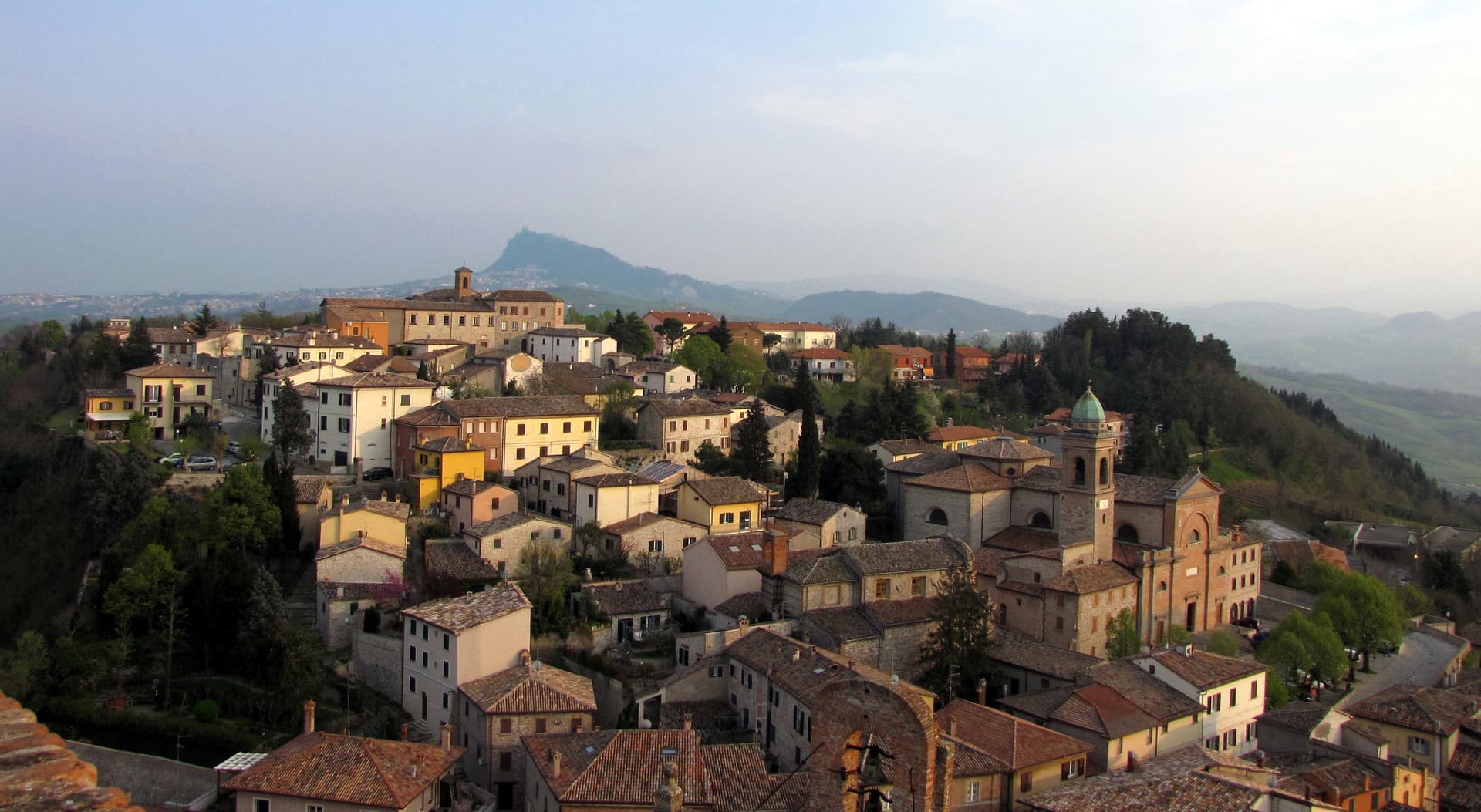
A spur over the lower Marecchia valley, cradle of the Villanovan civilization and birthplace of the Malatesta lordship of Romagna.
Santarcangelo di Romagna
Province: Rimini
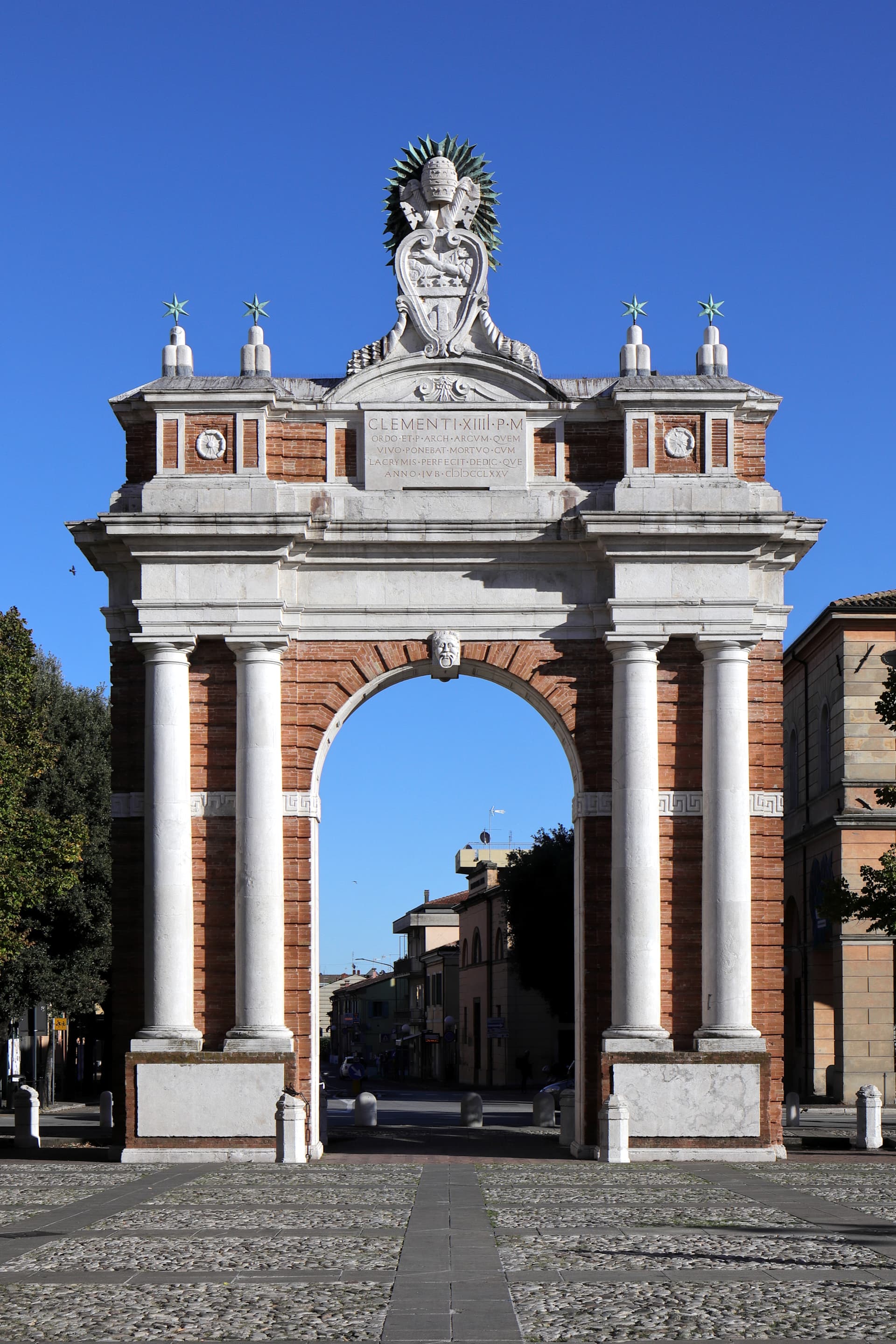
A Via Emilia hill town on the Marecchia plain, with over 150 tufa caves under the centro and a Malatesta fortress on its summit.
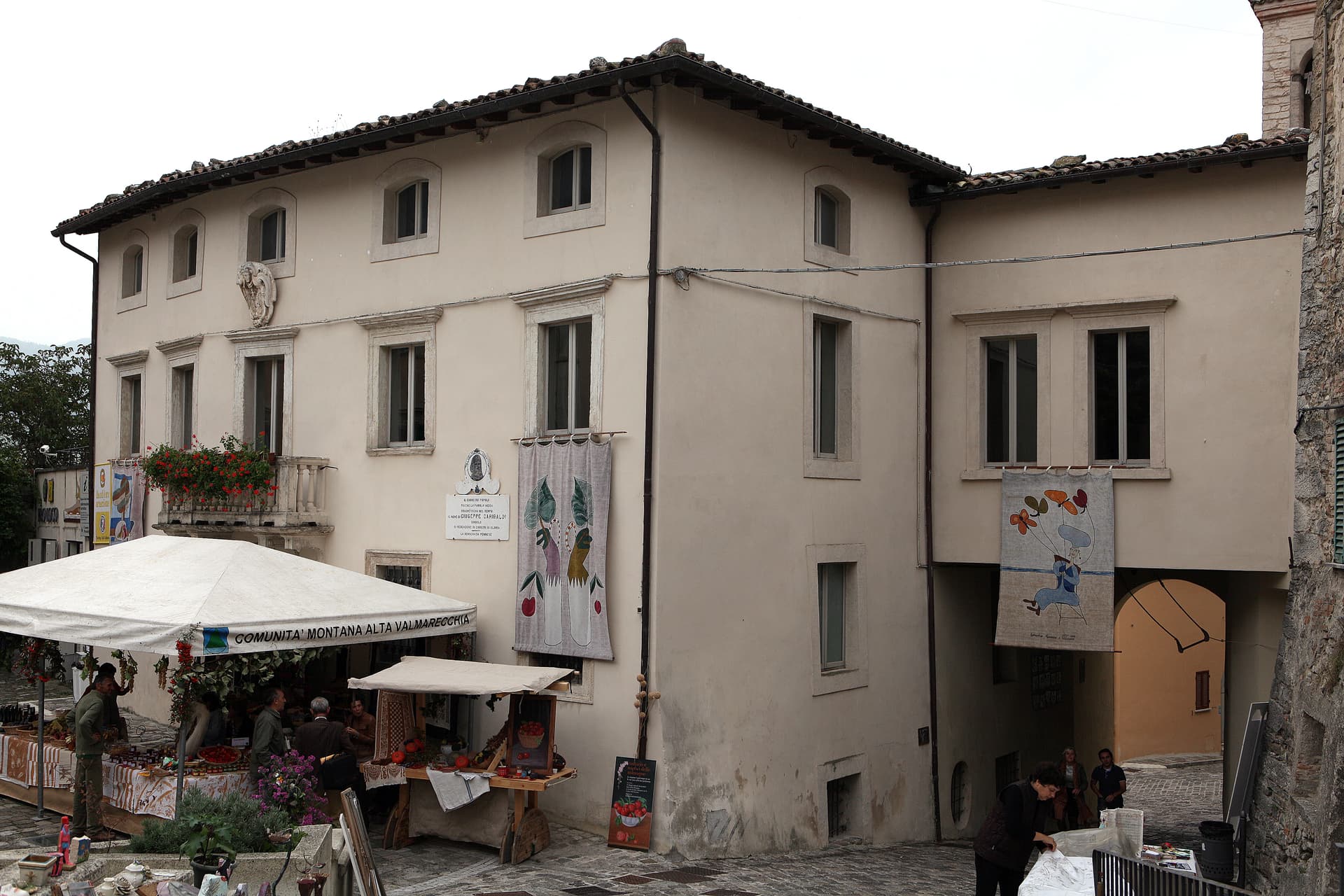
Pennabilli
Province: Rimini
A 629-meter Montefeltro borgo between the Roccione and the Rupe, rebuilt as a poet's open-air museum by Tonino Guerra after 1989.
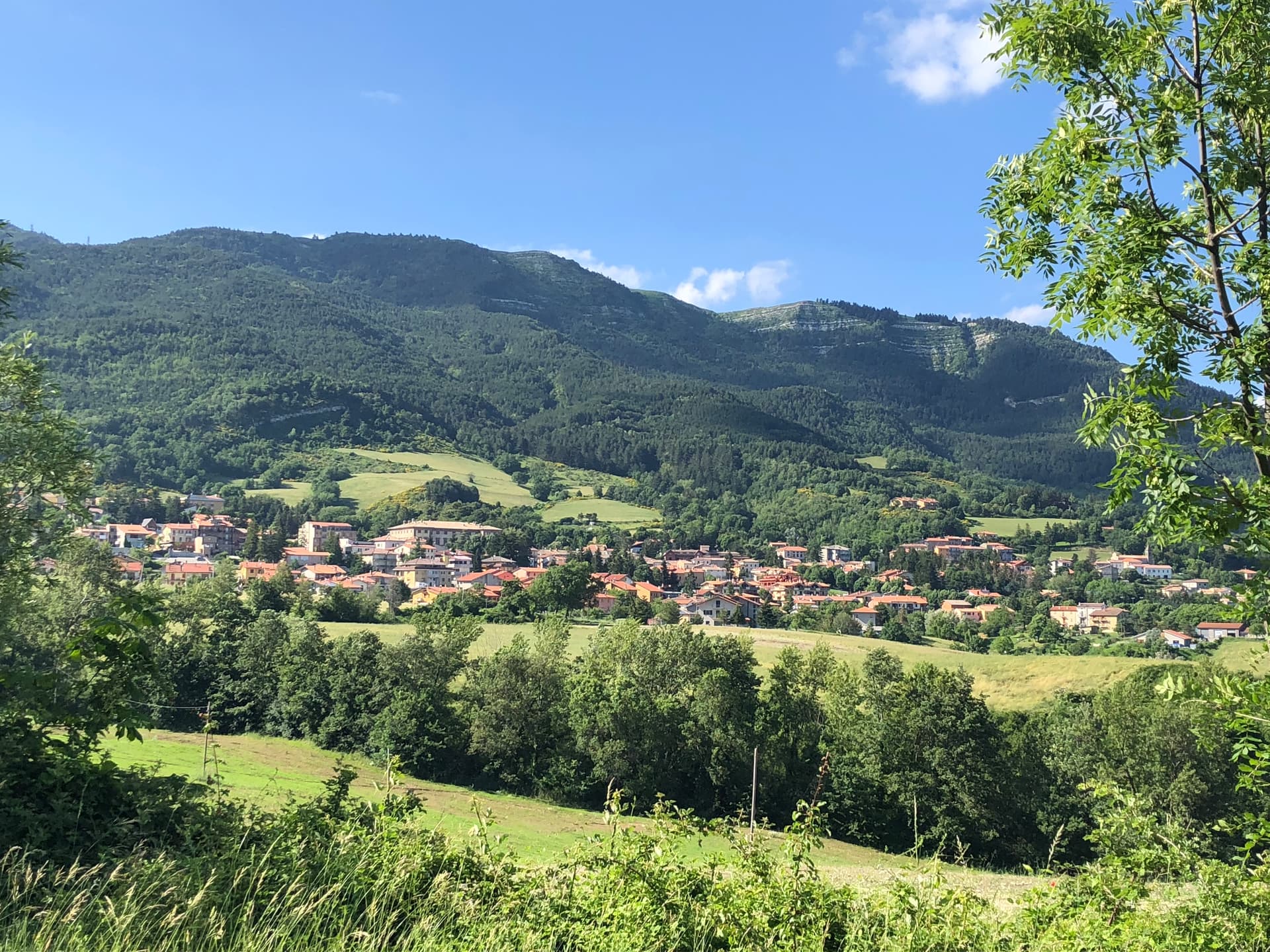
Carpegna
Province: Pesaro e Urbino
A Montefeltro mountain town at 748 meters under Monte Carpegna, home of the DOP prosciutto and the Carpegna family seat built in 1675.
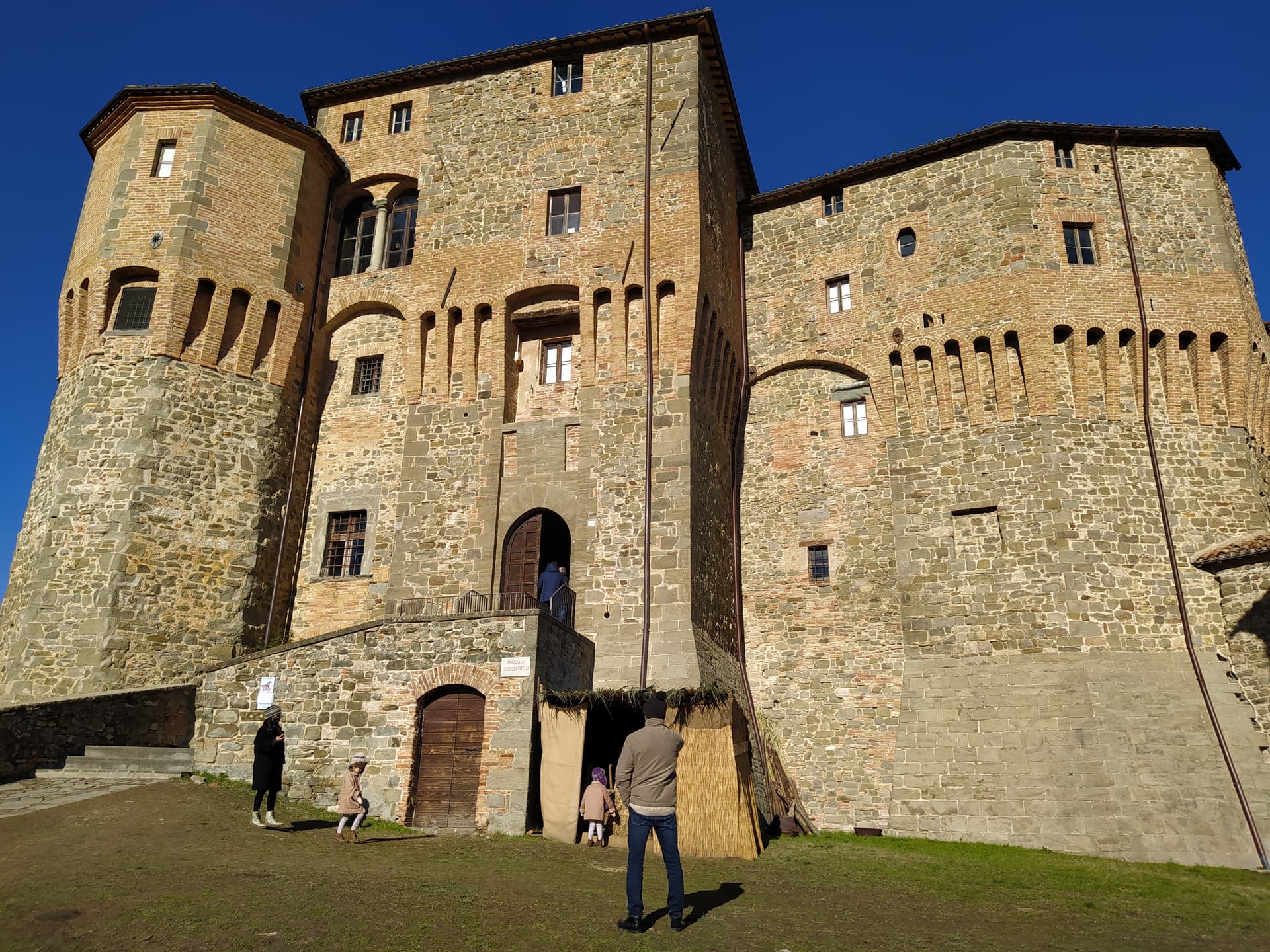
Sant'Agata Feltria
Province: Rimini
A 607-meter Montefeltro borgo crowned by the Rocca Fregoso on the Sasso del Lupo, host of the national white truffle fair since 1985.
🎨 Borghi più belli d'Italia
More Borghi più belli d'Italia towns in Emilia-Romagna
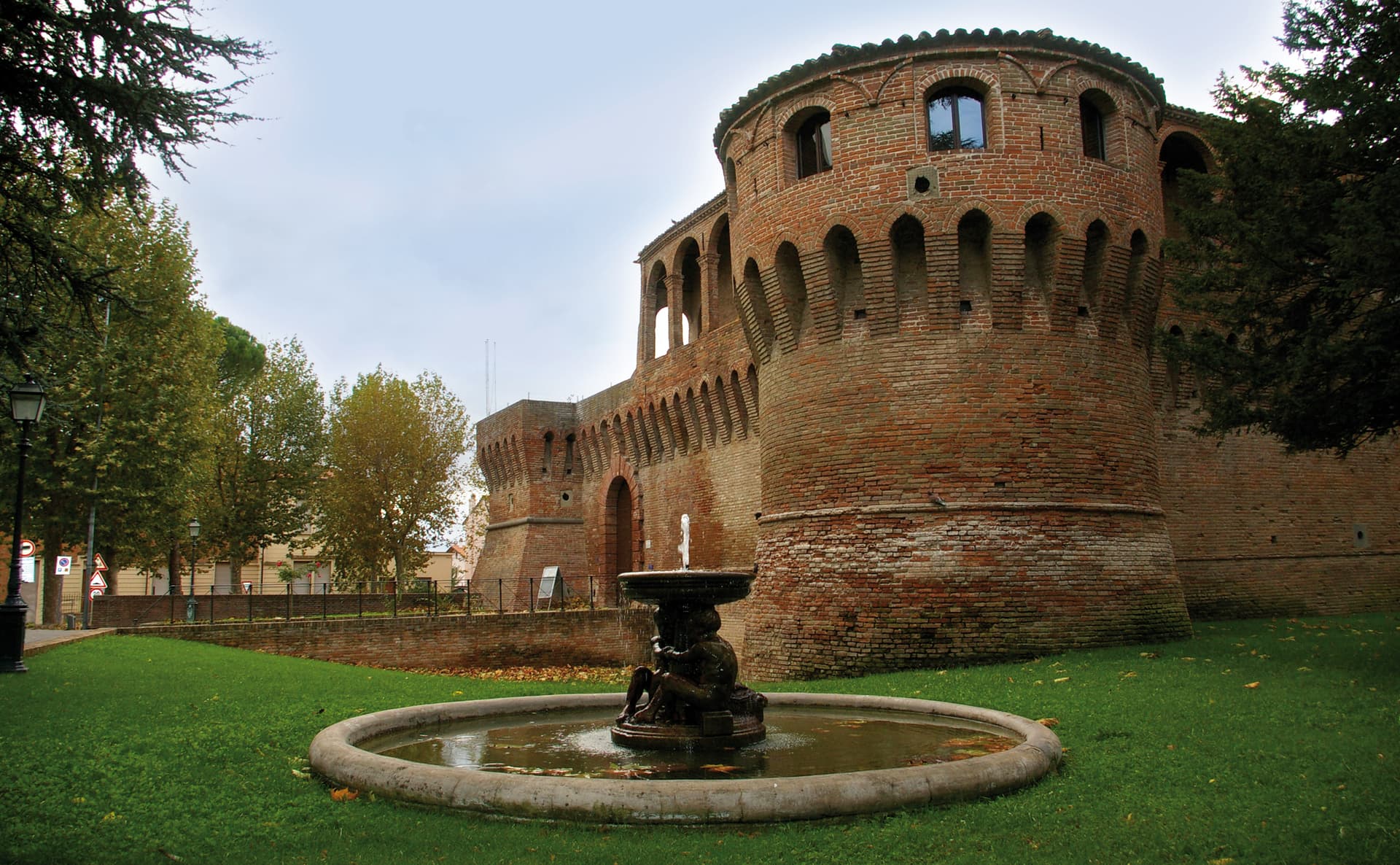
Bagnara di Romagna
Province: Ravenna
A 22-meter plain commune in the Bassa Romagna, the only fully preserved medieval castrum surviving in the Romagna lowlands.
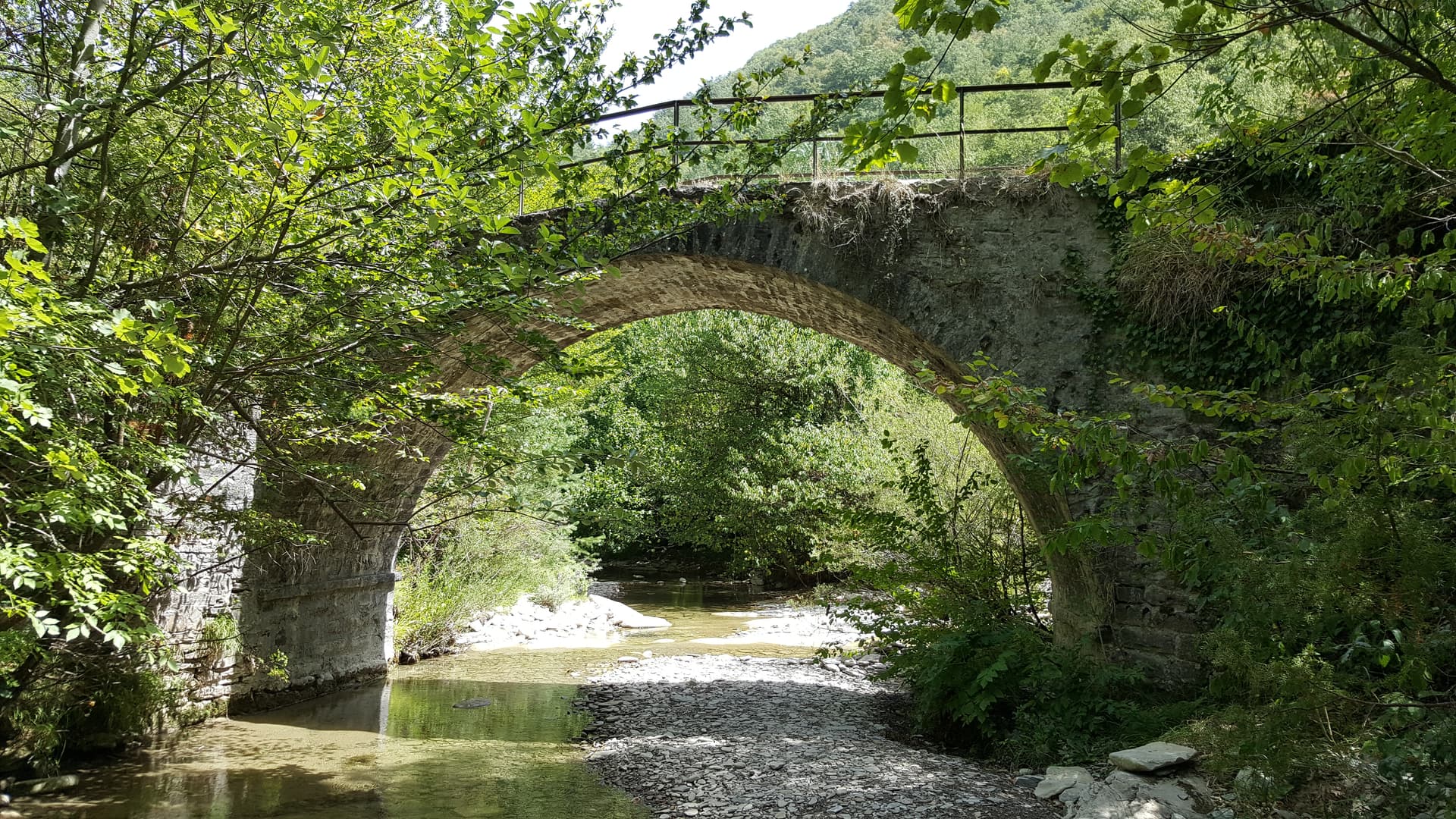
Bagno di Romagna
Province: Forlì-Cesena
A 491-meter thermal town at the head of the Savio valley, drawing on springs that have run at 47 degrees since Roman times.
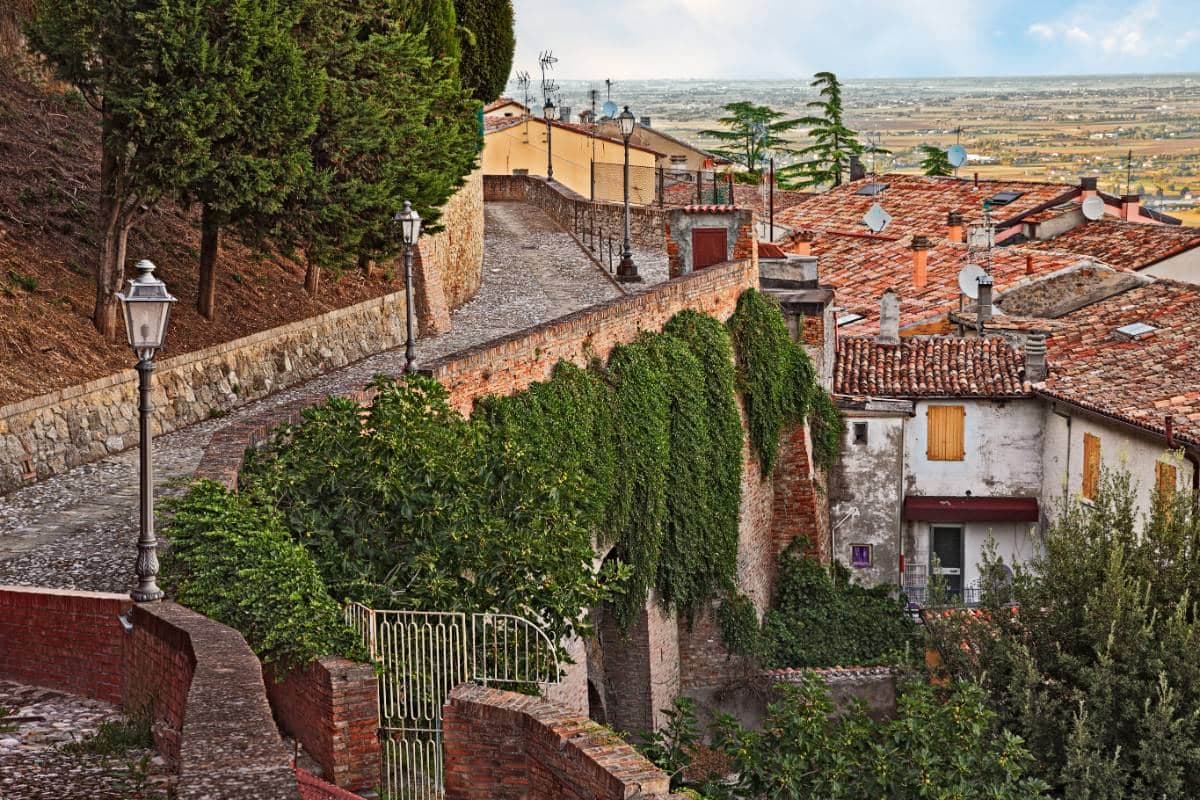
Bertinoro
Province: Forlì-Cesena
A 254-meter Romagna-hill borgo above the Via Emilia, with a twelve-ring hospitality column from 1300 and the slopes that grow Albana DOCG.
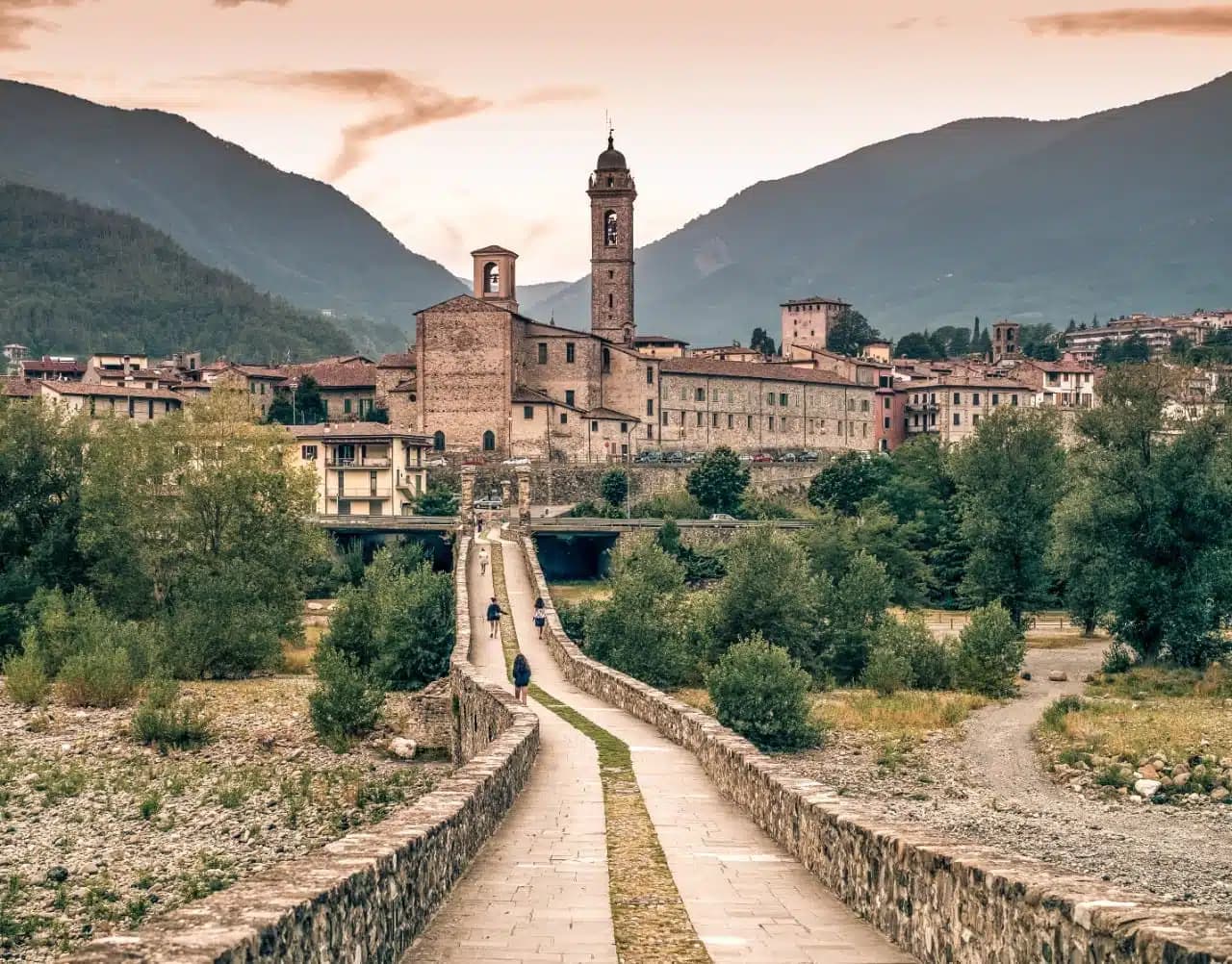
Bobbio
Province: Piacenza
A 272-meter Trebbia-valley town built around the abbey Saint Columbanus founded in 614, named Borgo dei Borghi by RAI in 2019.
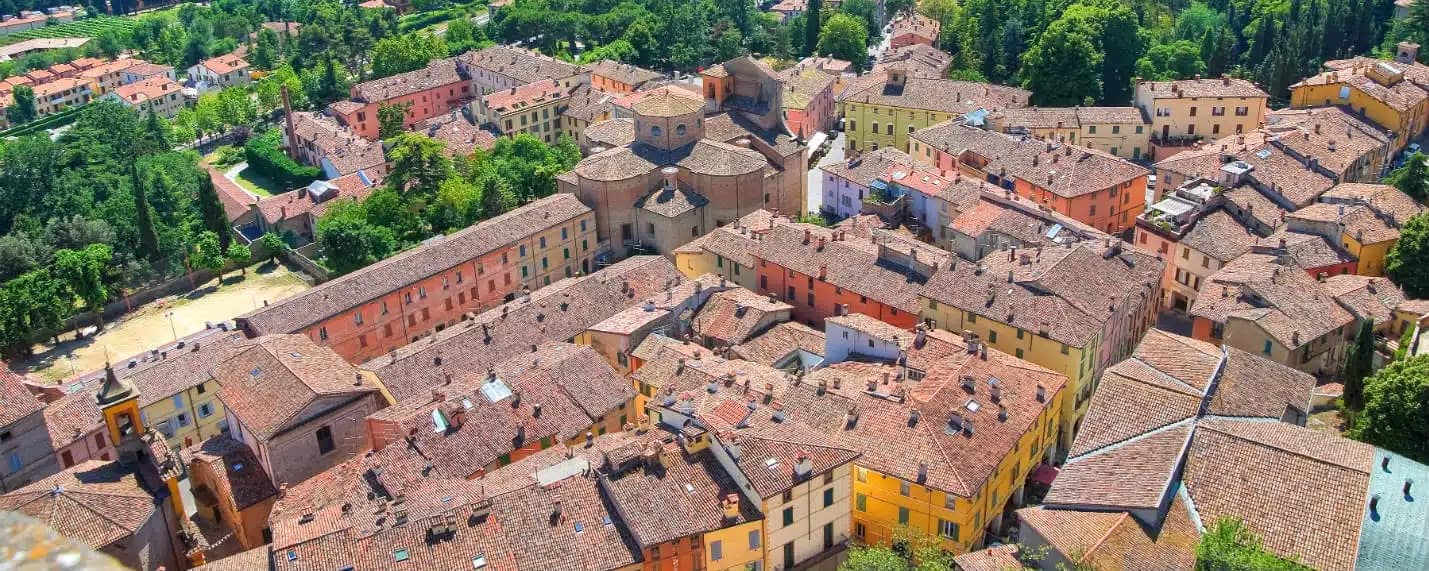
Brisighella
Province: Ravenna
A Lamone-valley borgo at 115 meters under three selenite hills crowned by a fortress, a clock tower, and a sanctuary.