

Tuscany · Siena
Chiusdino
A medieval village at 564 meters in the Val di Merse where Galgano Guidotti plunged his sword into a rock in 1180 and the roofless Cistercian abbey grew up below.
Known for
SWORD IN THE STONE
Galgano Guidotti drove his sword into a rock at Montesiepi on Christmas Day 1180; the blade is still embedded there.
ROOFLESS ABBEY
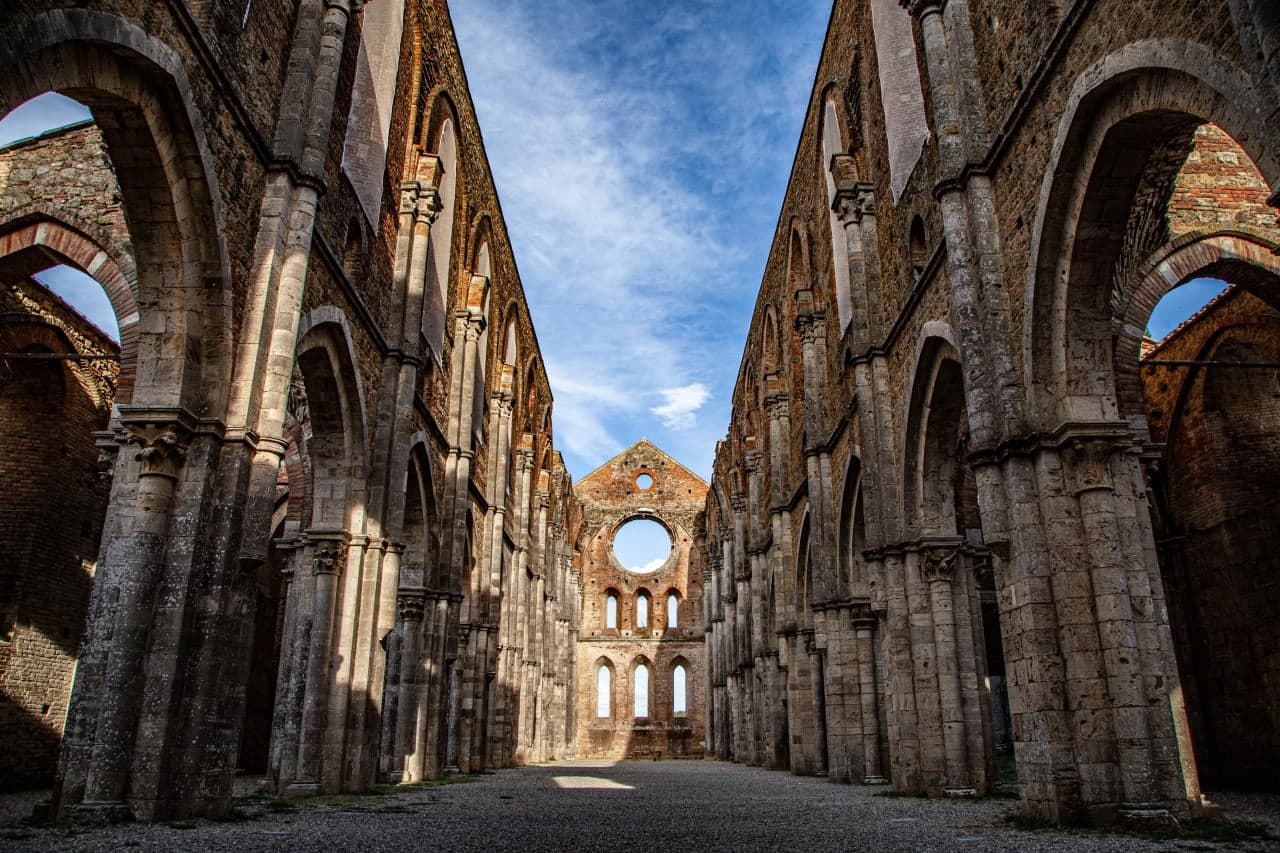
Thirteenth-century Cistercian church on the Merse valley floor, its roof gone since 1786, the walls and arches preserved open to the sky.
HONEY
Città del Miele member; the chestnut and acacia woods of the Merse valley feed the production of monofloral honeys.
When to visit
Best · Apr–Oct
- J
- F
- M
- A
- M
- J
- J
- A
- S
- O
- N
- D
- Best
- Hot or crowded
- Quiet
- Mostly closed
Why come
Chiusdino sits at 564 meters on a metalliferous hill between the Val di Farma and the upper Merse, founded under Lombard rule between 568 and 569. Galgano Guidotti was born here around 1148, a wealthy knight who turned hermit. On Christmas Day 1180 he climbed Monte Siepi, drove his sword into a rock as a cross and lived as a hermit until his death the following year.
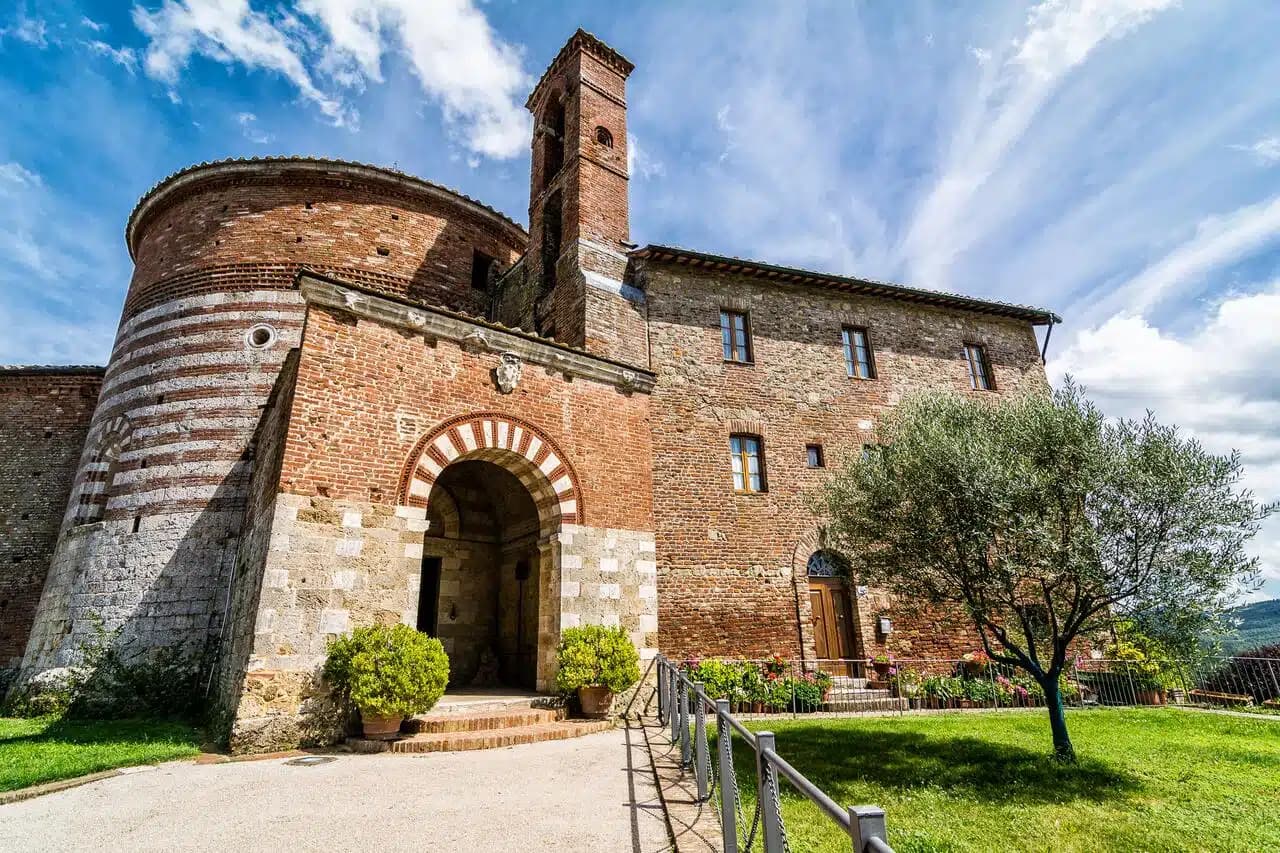
Pope Lucius III canonized him in 1185. The round Cappella di Montesiepi was built over the sword, which is still embedded in the stone and has been dated by metallurgical analysis to the late twelfth century. Five kilometers north, between the 1220s and the 1280s, the Cistercians built the Abbazia di San Galgano: a Gothic French-school church the length of a cathedral.
The roof collapsed in 1786 and was never rebuilt. The abbey stands roofless, the sky for a ceiling, on the floor of the Merse valley.
The Sunday letter
We haven’t written Chiusdino’s letter yet.
One town every Sunday, with the photo, the food, the festa. Be there when this one comes up. Free, by Peter & Sophia from Pietrasanta.
By subscribing you agree to Substack’s Terms of Use, our Privacy Policy and our Information collection notice.
What to see
Abbazia di San Galgano
Cistercian abbey built 1220s-1280s in French Gothic on the Merse valley floor, roofless since 1786, the largest open-air church in Italy.
Cappella di Montesiepi
Twelfth-century round chapel above the abbey, built over the sword Galgano drove into the rock on Christmas Day 1180.
Centro storico di Chiusdino
Medieval Lombard-foundation village at 564 meters, with the house of Galgano Guidotti and the Pieve di San Michele Arcangelo at its top.
Pieve di San Michele Arcangelo
Romanesque parish church holding a 1336 reliquary bust of San Galgano and a fourteenth-century panel of the saint by Ambrogio Lorenzetti's circle.
Colline Metallifere
Surrounding hills mined for iron and silver from Etruscan times into the twentieth century, now a UNESCO-recognized geo-mining park.
The slow-trip planner
Building a trip? Find where Chiusdino fits in a slow Italy circuit.
Answer five questions. We will shape a geographically coherent slow trip from the 1,000 Italian towns most travelers skip. Yours to save and share.
We recommend
Where to eat and stay
Not our picks, but places the guides put their name to — a Michelin star, a Gambero Rosso fork, a Slow Food snail, a Michelin Key for the hotels. Worth a table, a counter, or a night when you pass through.
SaporiumRistorante
Saporium holds one Michelin star.
Borgo Santo PietroHotel
Borgo Santo Pietro carries three Michelin Keys, a La Liste score of 98.5, plus a Leading Hotels of the World listing.
Living here
- Population 1,751
- Off the beaten pathi
- Pharmacy: none mapped
- Nearest high school over ~30 minutes away
- Nearest airport Florence / Pisa, 2 h 37 min drive
- Regional capital Firenze, 1 h 52 min drive
Tags & datadesignations · numbers · sources
Recognised as
The numbers
- Elevation: 564 m
- Population: 1,751
- Surface area: 141.62 km²
These figures were compiled from public directories — ISTAT, OpenStreetMap, Wikidata — and from the official listings of the guides named on this page. Town details change; verify with official sources before you travel.
Close by
More towns near Chiusdino
Siena
Province: Siena
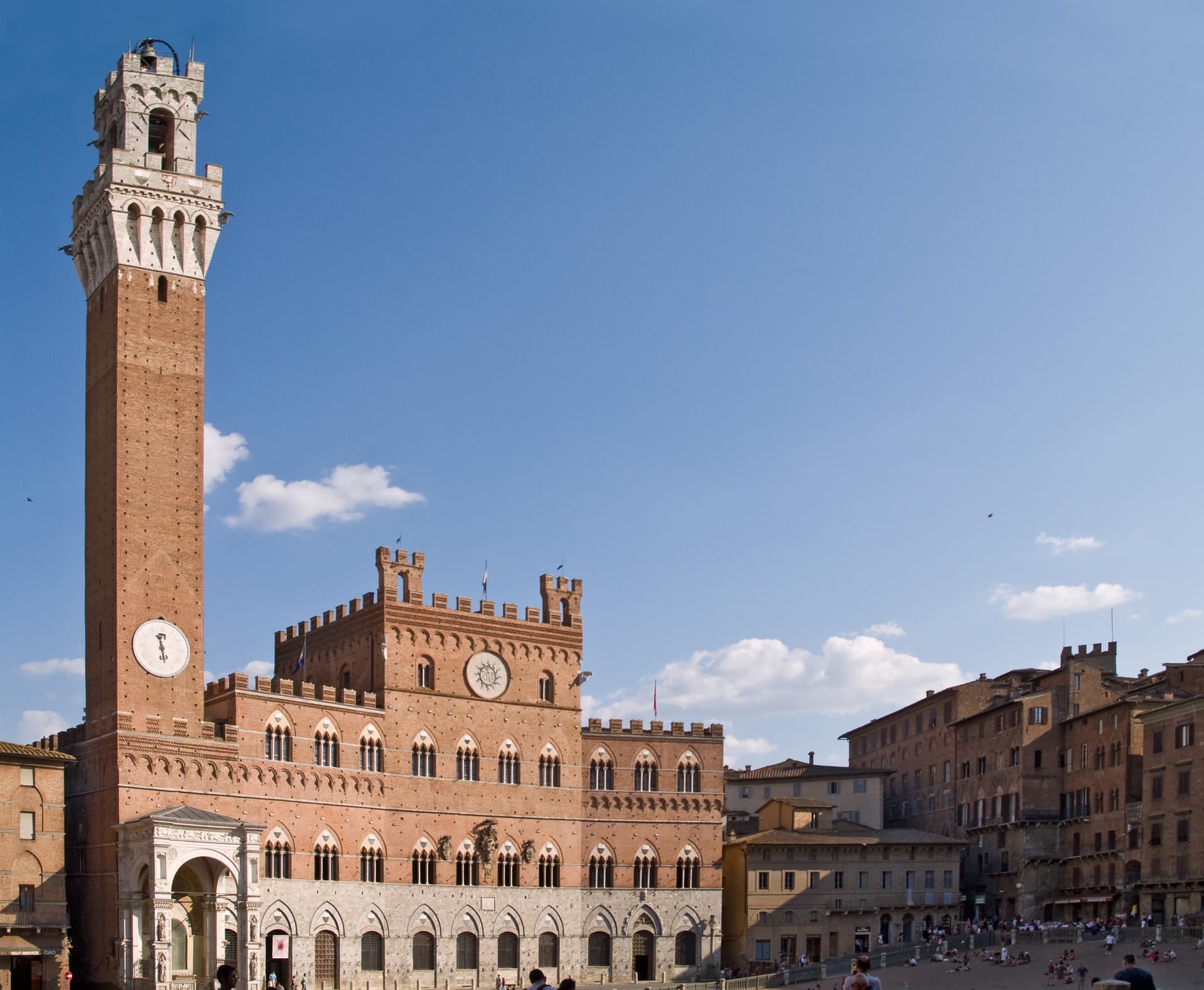
The medieval rival of Florence at 322 meters on three hills, with a shell-shaped piazza where seventeen contrade race bareback horses twice a year.
Castelnuovo di Val di Cecina
Province: Pisa
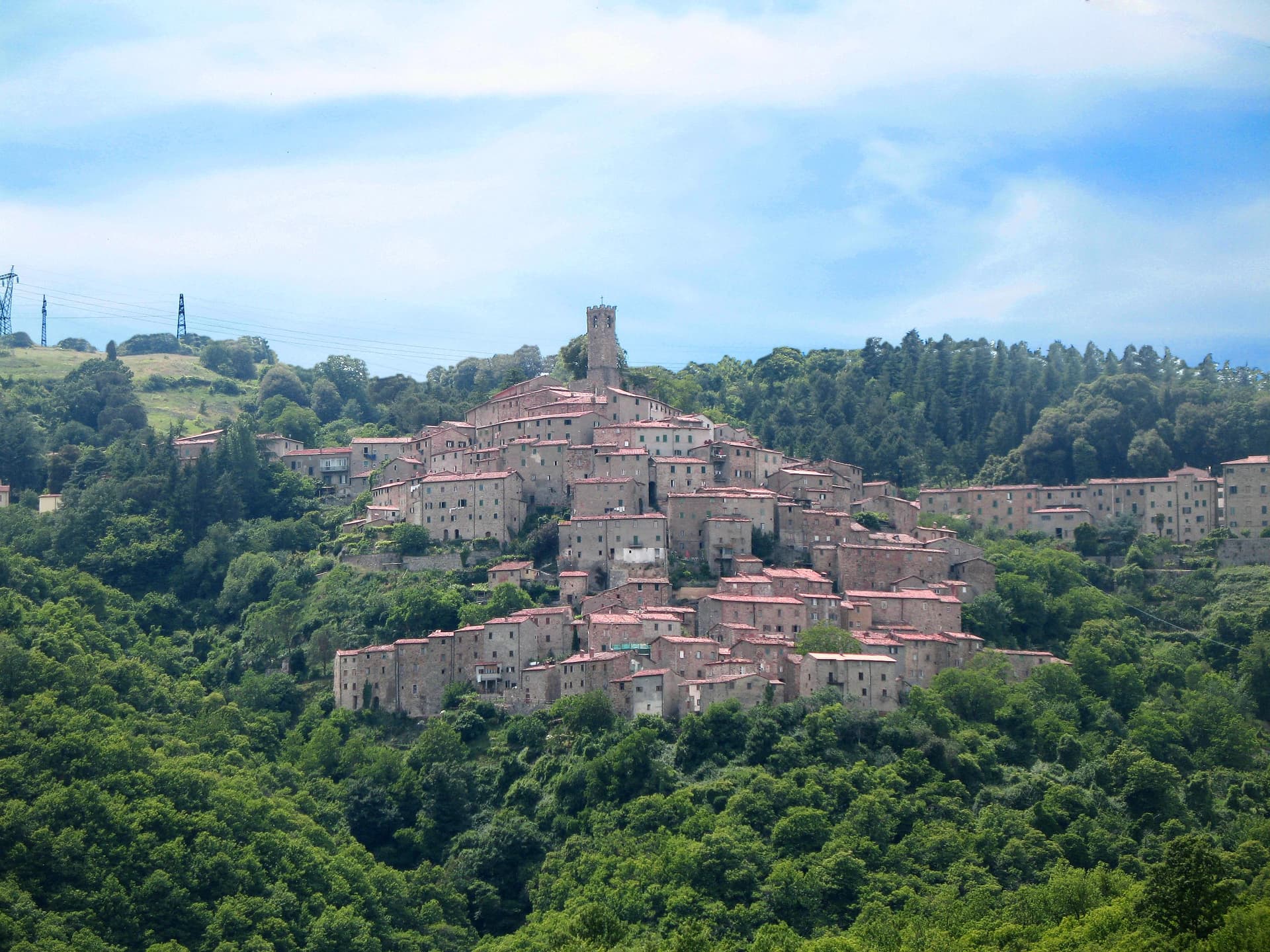
A copper and geothermal borgo at 576 meters in the Cecina valley, where natural steam vents and medieval towers sit on the same hill.
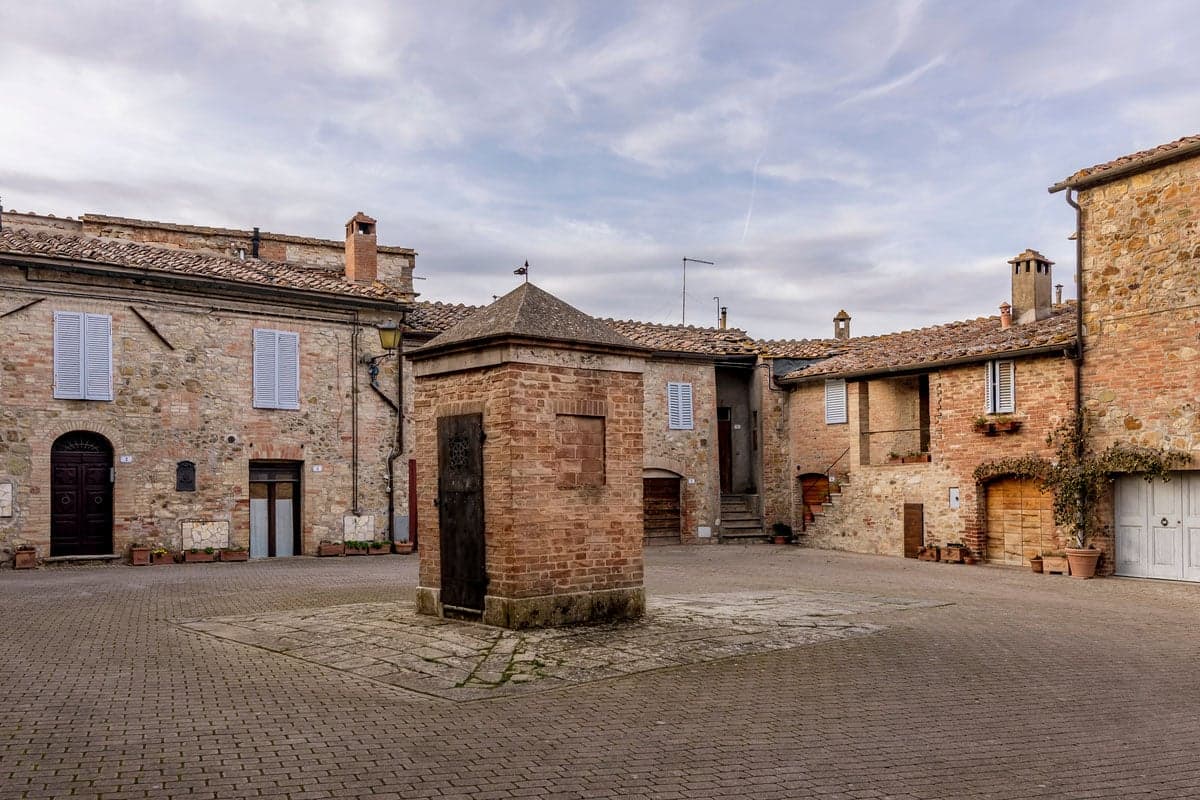
Murlo
Province: Siena
A medieval bishops' fief twenty kilometers south of Siena, with an Etruscan princely palace on Poggio Civitate and the Cappellone statue as its symbol.
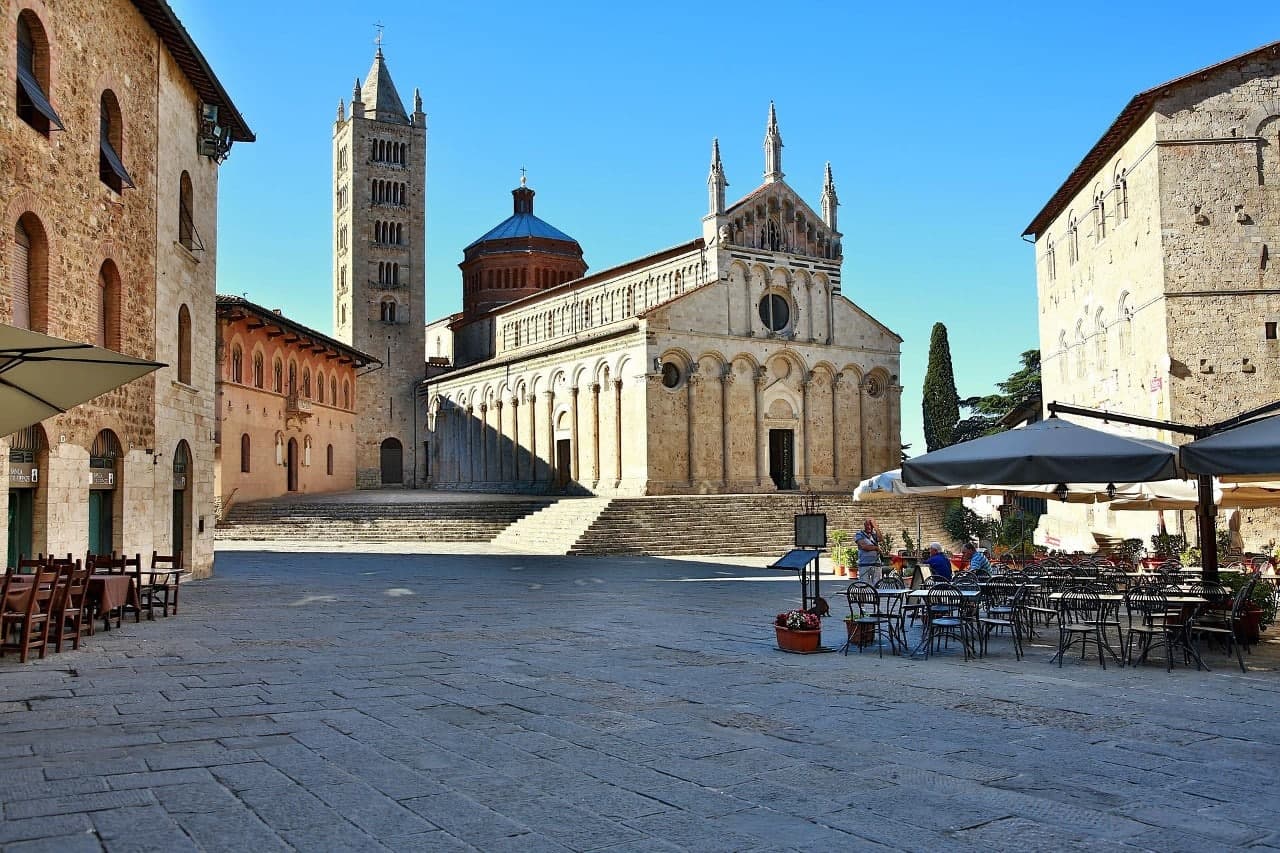
Massa Marittima
Province: Grosseto
A medieval mining town at 380 meters in the Colline Metallifere, free commune from 1255 to 1337, whose cathedral holds the relics of San Cerbone.
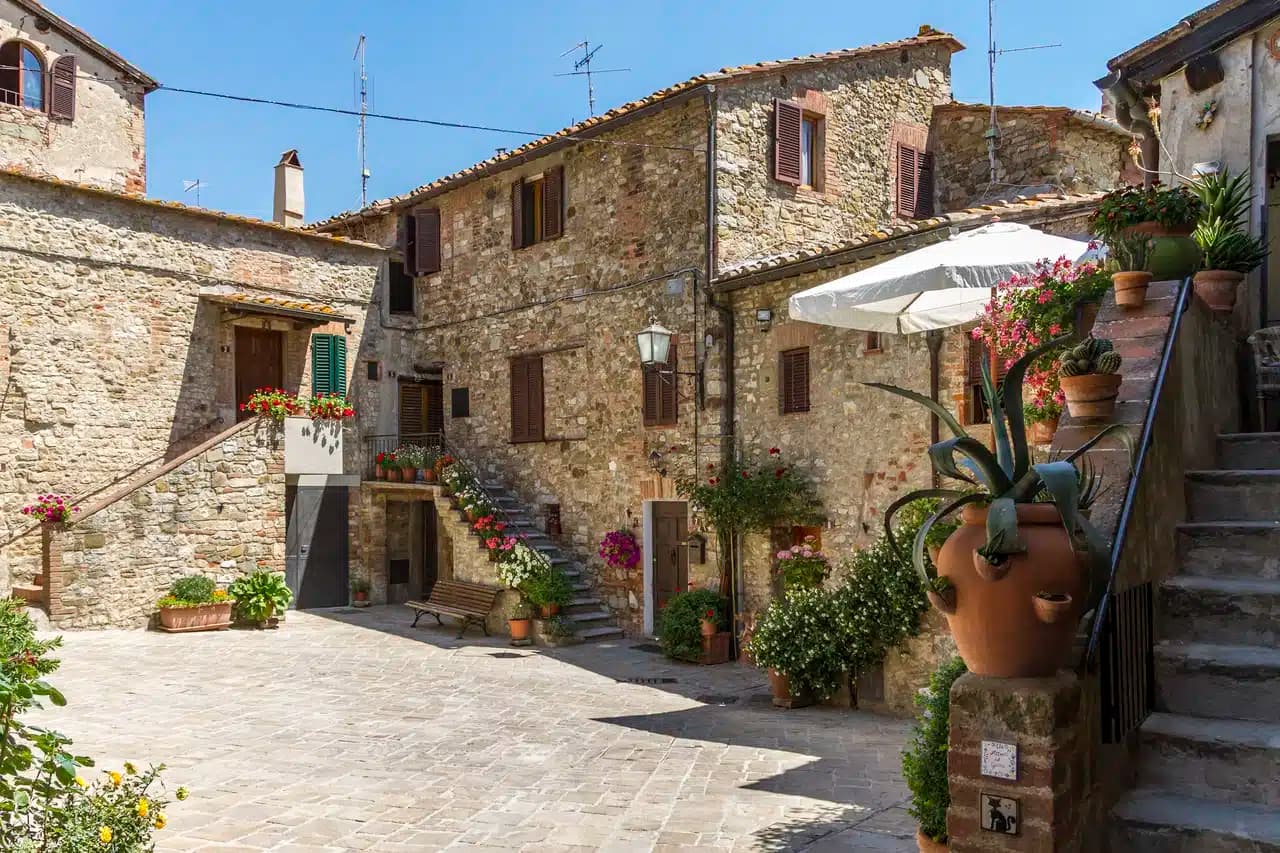
Castelnuovo Berardenga
Province: Siena
A Chianti Classico commune at 351 meters between the Ombrone and the Crete Senesi, the last castle Siena built against Florence, in 1366.
🫒 Città dell'Olio
More Città dell'Olio towns in Tuscany
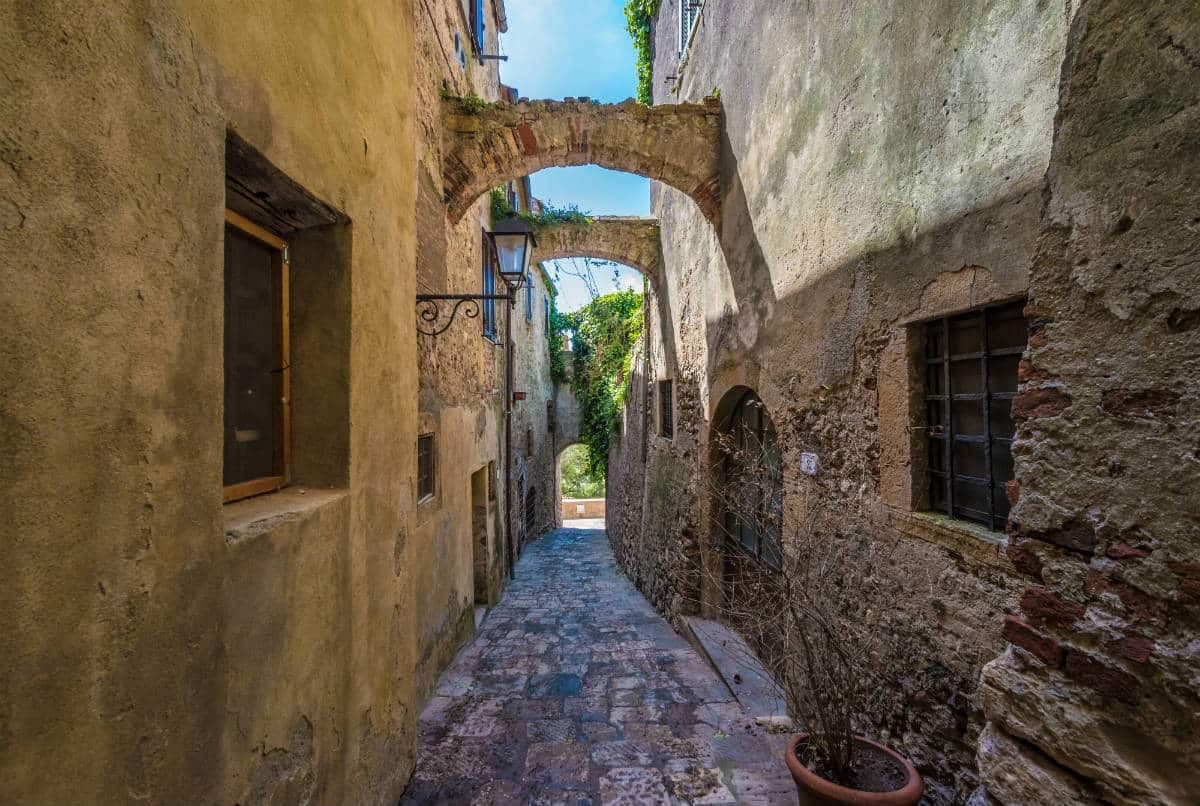
Capalbio
Province: Grosseto
A walled hilltop borgo at 217 meters in the southern Maremma, donated to the Abbey of Tre Fontane by Charlemagne and home of Niki de Saint Phalle's Tarot Garden.

Castagneto Carducci
Province: Livorno
A hilltop borgo at 194 meters above the Costa degli Etruschi, renamed for the poet Carducci in 1907 and the home of Bolgheri and Sassicaia.
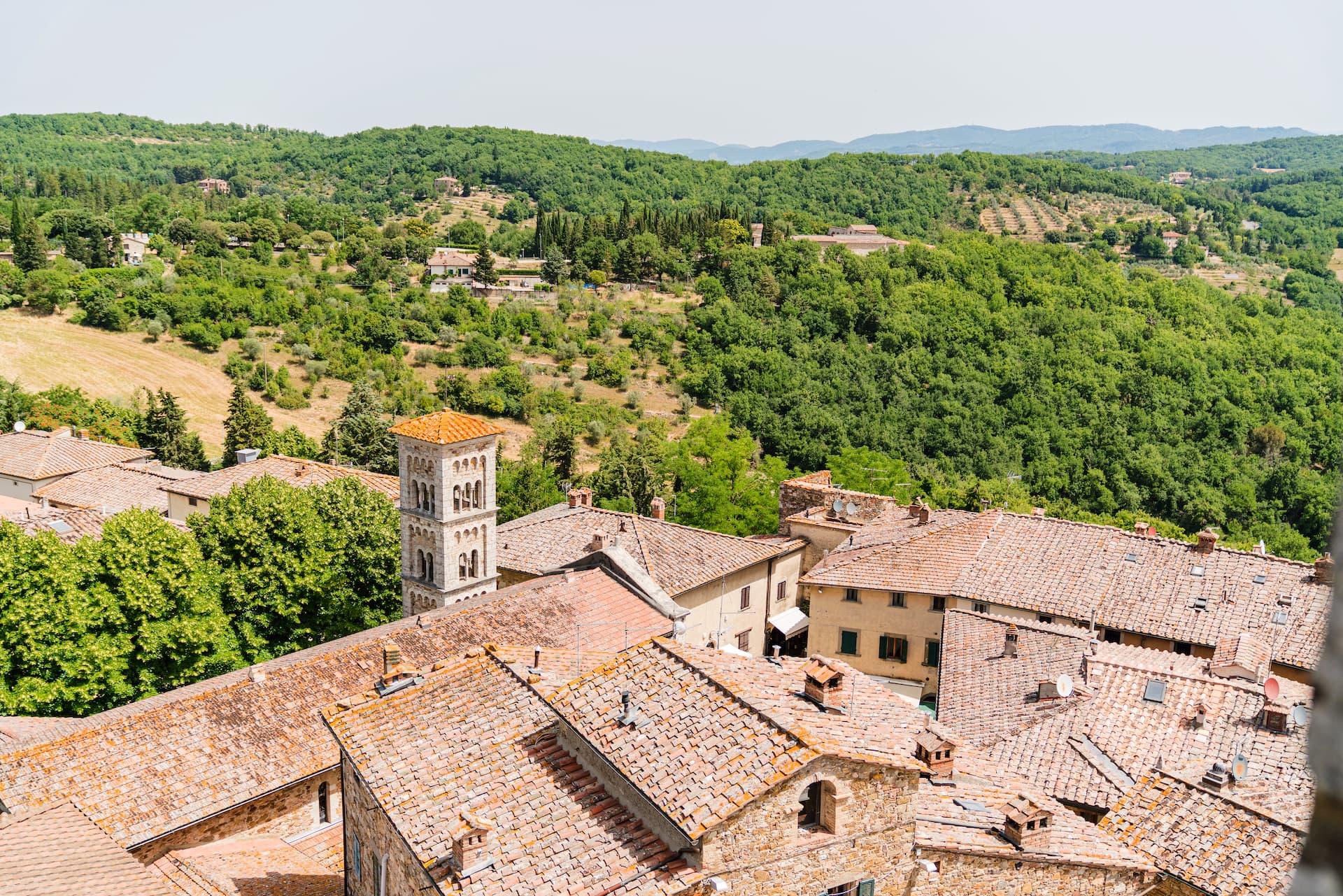
Castellina in Chianti
Province: Siena
A Chianti hill town at 578 meters on the watershed between the Arno and the Ombrone, with an Etruscan tumulus, a Brunelleschi-reinforced wall and a covered medieval walkway around its edge.
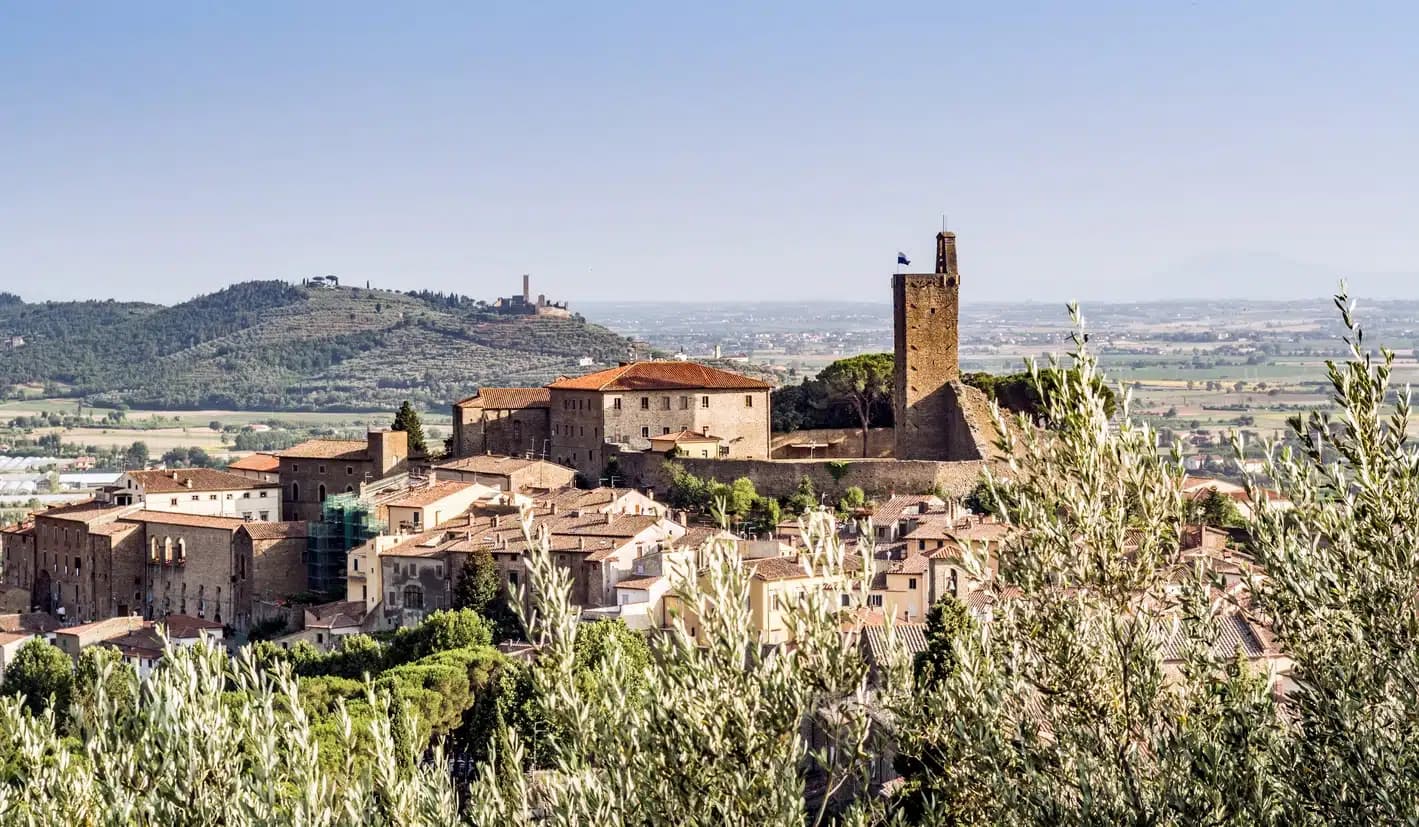
Castiglion Fiorentino
Province: Arezzo
A walled hill town at 342 meters between Arezzo and Cortona, where Etruscan walls support the medieval Cassero and Vasari's loggia frames the Val di Chiana below.
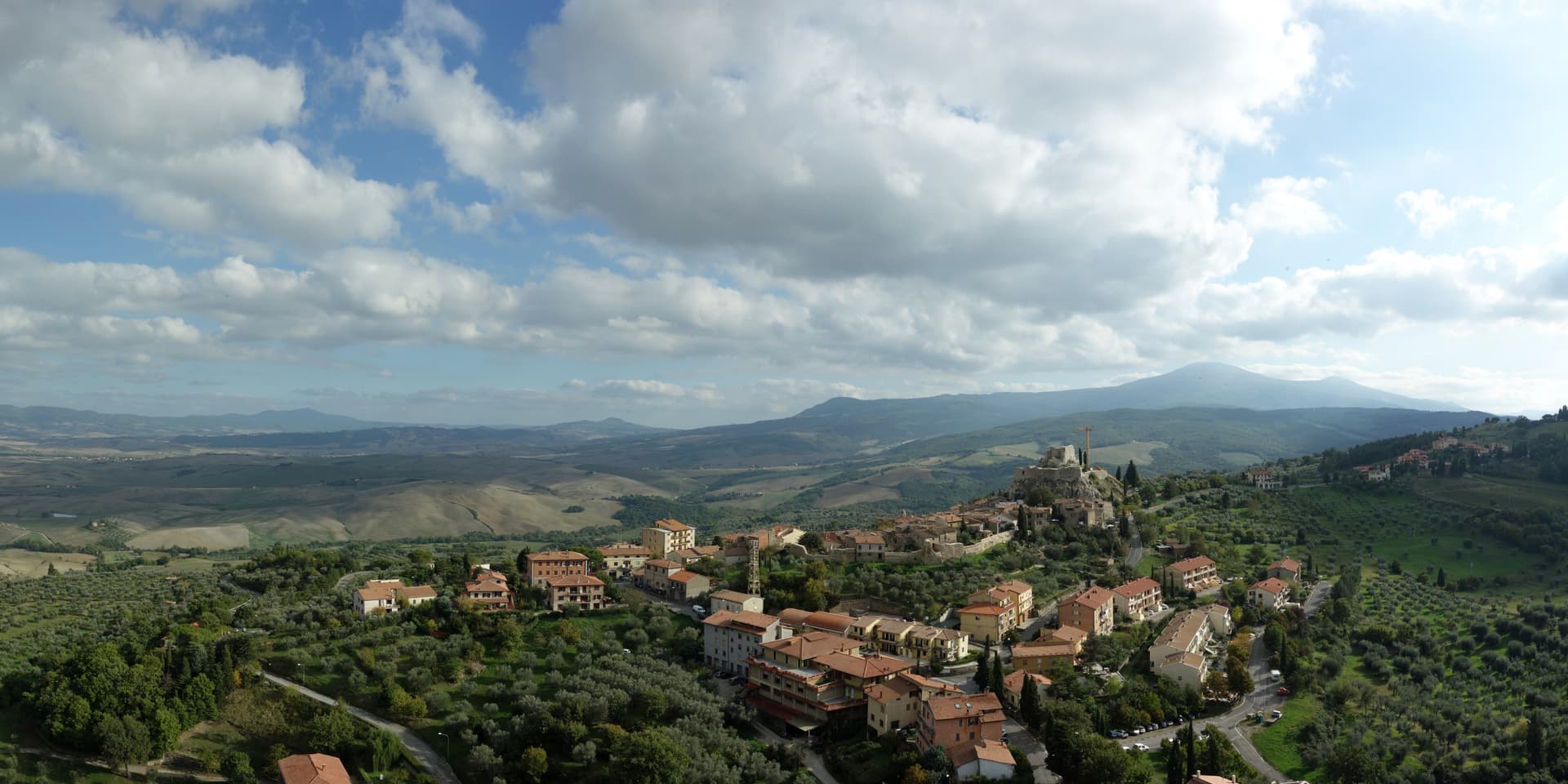
Castiglione d'Orcia
Province: Siena
A stone borgo at 540 meters in the UNESCO Val d'Orcia, first recorded in 714, with two fortresses guarding the road from Amiata to the Via Francigena.