

Tuscany · Siena
Siena
The medieval rival of Florence on three hills, with a shell-shaped piazza where seventeen contrade race bareback horses twice a year.
Known for
PALIO
Bareback horse race in Piazza del Campo on 2 July and 16 August, ten of the seventeen contrade competing, run since at least the seventeenth century.
DUOMO
Marble cathedral in black and white bands begun 1226, with sculptures by Donatello, Pisano and Michelangelo and Pinturicchio's Piccolomini Library frescoes.
UNESCO MEDIEVAL CITY
Historic centre inscribed by UNESCO in 1995, a preserved medieval city built around the merchant republic that rivaled Florence until 1555.
When to visit
Best · Apr–Oct
- J
- F
- M
- A
- M
- J
- J
- A
- S
- O
- N
- D
- Best
- Hot or crowded
- Quiet
- Mostly closed
Why come
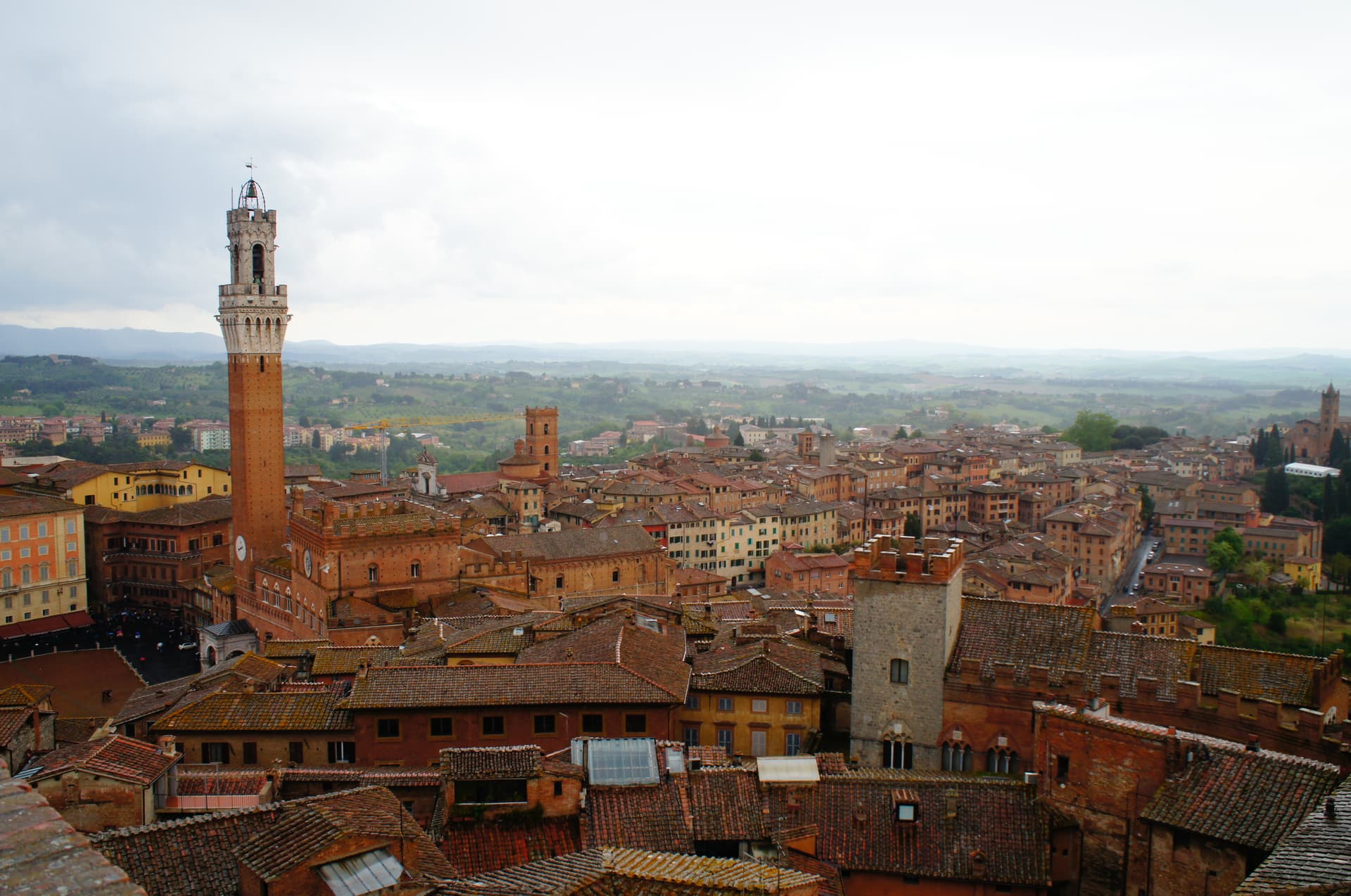
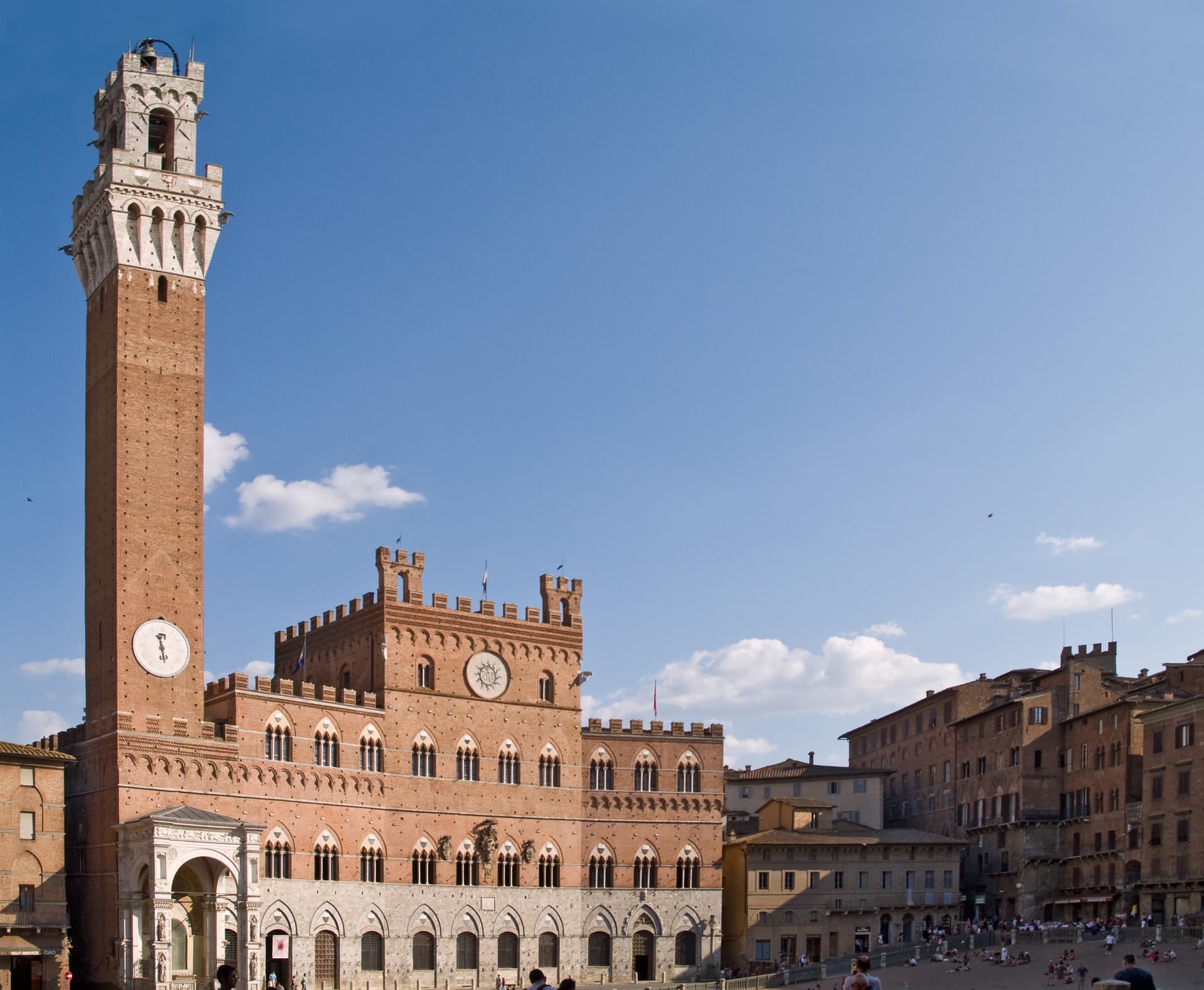
Siena sits on three hills fifty kilometers south of Florence, with which it fought a defining rivalry through the thirteenth and fourteenth centuries. The historic center has been UNESCO World Heritage since 1995, preserved as a medieval city that worked deliberately to differ from Florentine urban planning. Piazza del Campo, the shell-shaped square at the meeting point of the three original hills, fans out toward the Palazzo Pubblico, whose construction began in 1297.
The Torre del Mangia next to it, built between 1338 and 1348, stands 87 meters tall, the exact height of the Duomo, a deliberate equality between church and state. The Duomo itself, marble-clad in horizontal black and white bands, holds the inlaid mosaic floor that Vasari called the most beautiful ever made, and sculptures by Donatello, the Pisano family and Michelangelo. The Palio runs twice a year, on 2 July and 16 August: bareback riders representing seventeen contrade circle the Campo three times in roughly ninety seconds.
What to see
Piazza del Campo
Shell-shaped medieval square at the meeting point of Siena's three hills, paved in 1349 in red brick divided into nine sectors for the Council of Nine.
Palazzo Pubblico
Town hall begun in 1297, with the Sala dei Nove holding Lorenzetti's Allegory of Good and Bad Government from 1338-1339.
Torre del Mangia
Brick tower built 1338-1348 next to the Palazzo Pubblico, 87 meters tall, set deliberately to match the height of the Duomo.
Duomo di Siena
Marble-clad cathedral in black and white bands, with inlaid mosaic floor, Piccolomini Library frescoes and sculptures by Donatello, Pisano and Michelangelo.
Santa Maria della Scala
Former hospital opposite the Duomo, founded in the ninth century to care for pilgrims on the Via Francigena, now a museum complex of frescoed halls.
Pinacoteca Nazionale
Gallery in the fifteenth-century Palazzo Buonsignori, holding the major works of the Sienese school from Duccio to Sodoma.
Contrade
Seventeen historic neighborhoods of the centro storico, each with its own church, museum and identity, structuring the city year-round and the Palio in July and August.
The slow-trip planner
Building a trip? Find where Siena fits in a slow Italy circuit.
Answer five questions. We will shape a geographically coherent slow trip from the 1,000 Italian towns most travelers skip. Yours to save and share.
We recommend
Where to eat and stay
Not our picks, but places the guides put their name to — a Michelin star, a Gambero Rosso fork, a Slow Food snail, a Michelin Key for the hotels. Worth a table, a counter, or a night when you pass through.
Campo CedroRistorante
Campo Cedro carries one Gambero Rosso fork (78/100), plus a spot in the Michelin Guide.
Gallo NeroRistorante
Gallo Nero has a Gambero Rosso listing and a spot in the Michelin Guide.
Osteria le LoggeRistorante
Osteria le Logge holds two Gambero Rosso forks (82/100) and a spot in the Michelin Guide.
L' Orto & un QuartoBistrot
L' Orto & un Quarto has two Gambero Rosso tables to its name.
Osteria Quattro VentiTrattoria
A Gambero Rosso listing, at Osteria Quattro Venti.
Ristorante Al MangiaRistorante
A place on Italy's historic-locali register, at Ristorante Al Mangia.
Grand Hotel Continental SienaHotel
Grand Hotel Continental Siena carries a Leading Hotels of the World listing, plus a place in the Michelin hotel guide.
Borgo Scopeto Wine & Country RelaisHotel
Borgo Scopeto Wine & Country Relais carries a place in the Michelin hotel guide.
Hotel Palazzetto RossoHotel
Hotel Palazzetto Rosso holds a place in the Michelin hotel guide.
Il Battistero Siena - Residenza d'EpocaHotel
Il Battistero Siena - Residenza d'Epoca carries a place in the Michelin hotel guide.
Signature dish
Panforte di SienaSweet
A dense cake of honey, candied fruit, almonds and spice, pressed flat and dusted white, documented in Siena since the 13th century.
See every town in our catalogue with a dish of its own.
The Sunday letter
Siena got its letter. One town every Sunday, free — the photo, the food, the festa.
By subscribing you agree to Substack’s Terms of Use, our Privacy Policy and our Information collection notice.
Living here
- Population 52,812
- A local hubi
- Pharmacy in town
- High school within a 30-minute drive
- Train station in the comune
- Nearest airport Bologna, 2 h 6 min drive
- Regional capital Firenze, 1 h 13 min drive
Tags & datadesignations · numbers · sources
The numbers
- Elevation: 322 m
- Population: 52,812
- Surface area: 118.53 km²
These figures were compiled from public directories — ISTAT, OpenStreetMap, Wikidata — and from the official listings of the guides named on this page. Town details change; verify with official sources before you travel.
Close by
More towns near Siena
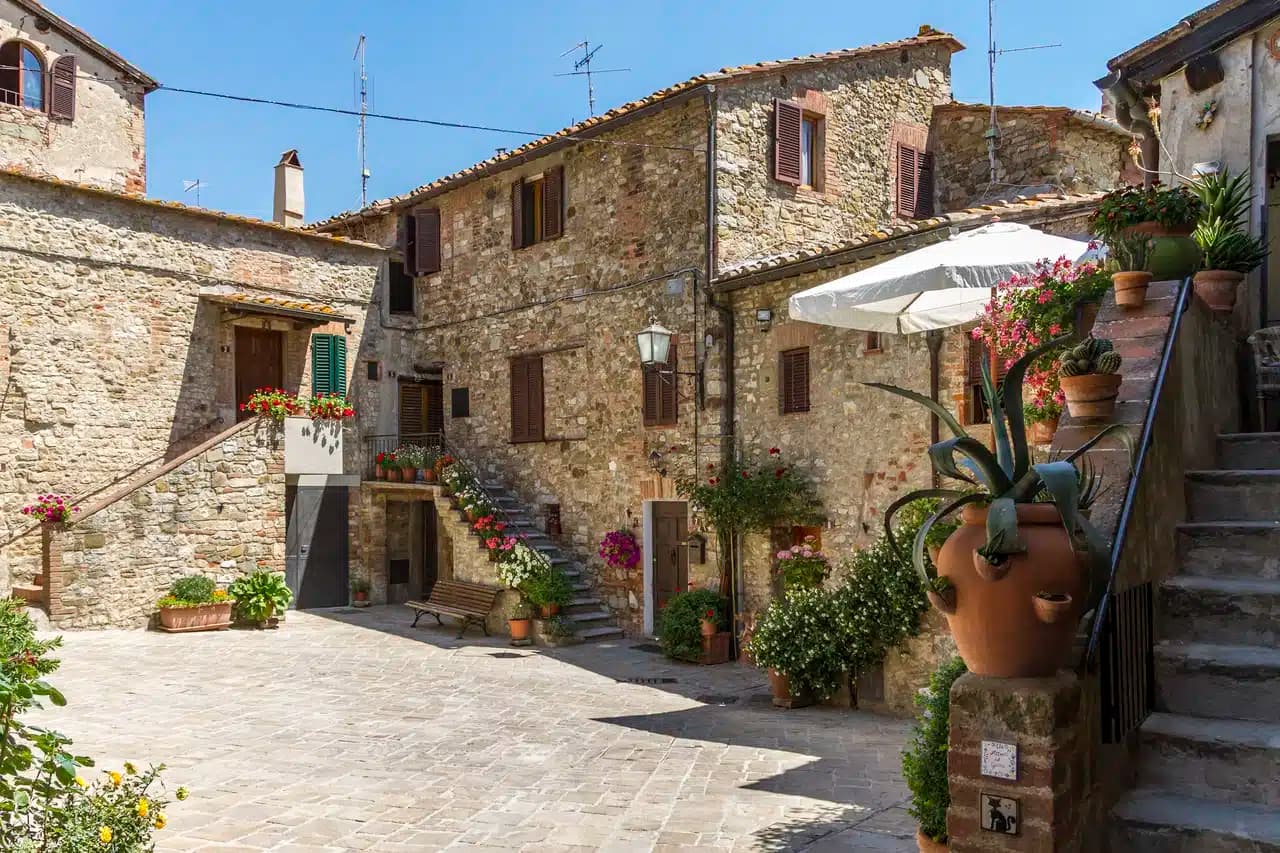
Castelnuovo Berardenga
Province: Siena
A Chianti Classico commune at 351 meters between the Ombrone and the Crete Senesi, the last castle Siena built against Florence, in 1366.
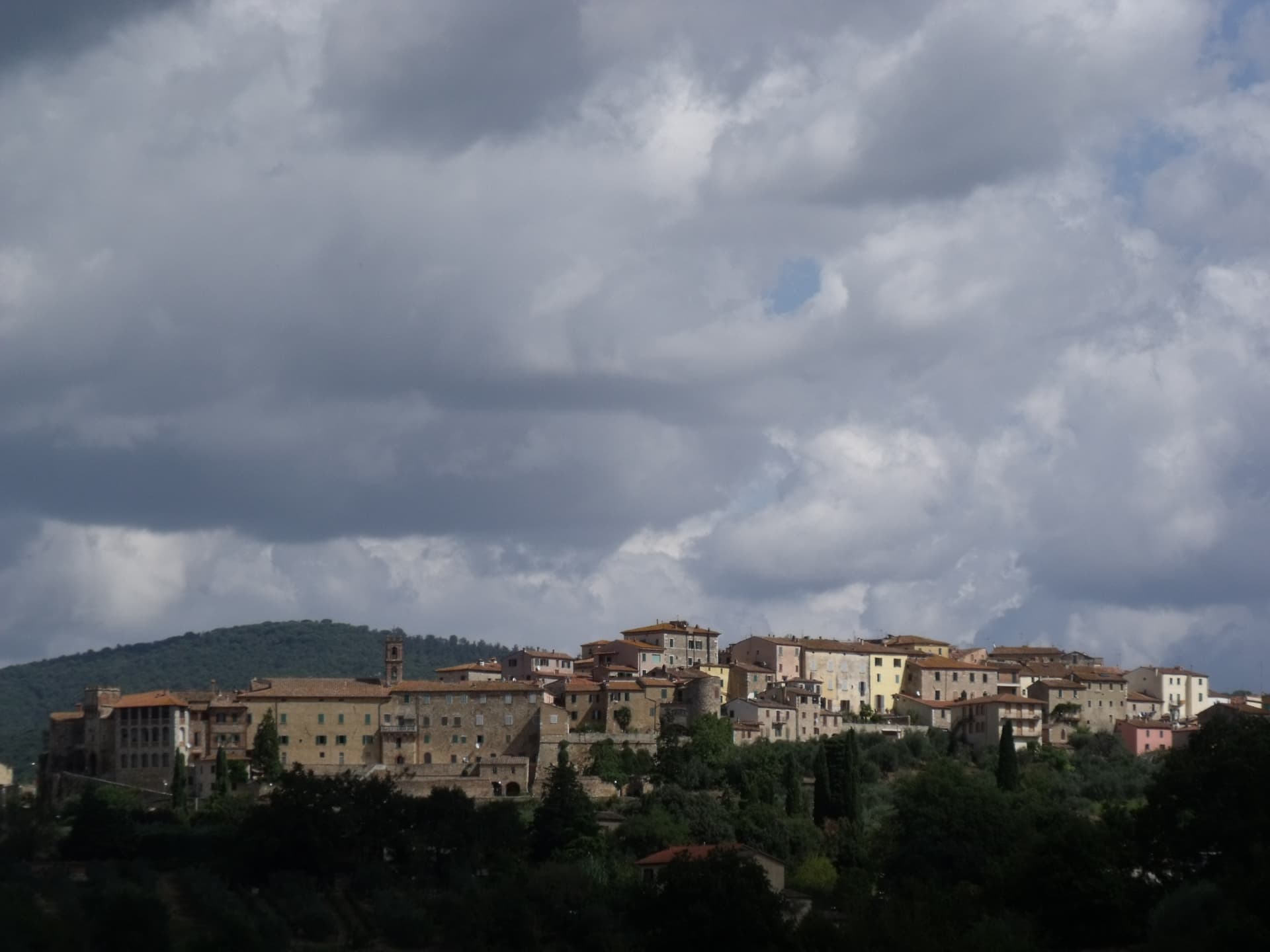
Rapolano Terme
Province: Siena
A Sienese thermal town in the Crete Senesi, 38-degree calcium-sulphur waters and travertine quarries that supplied the Pienza Duomo and Montepulciano's San Biagio.
Buonconvento
Province: Siena
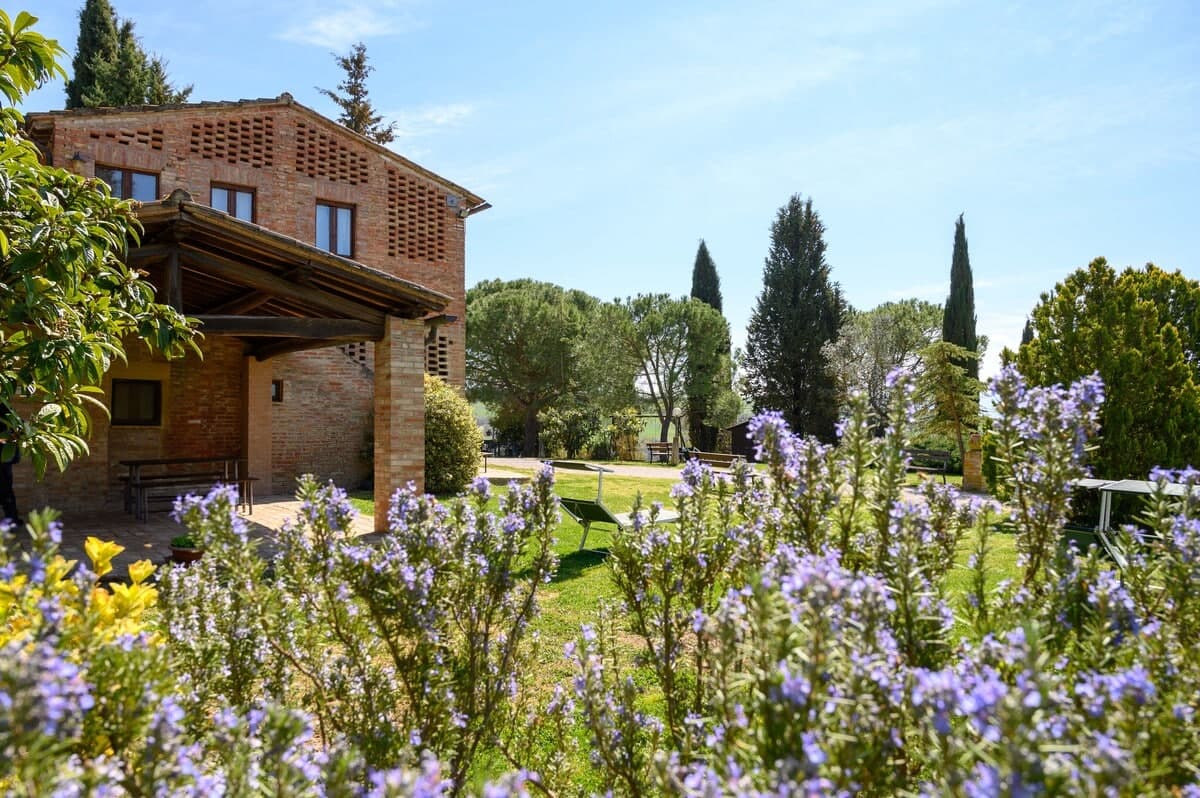
The walled brick borgo in the Crete Senesi where Emperor Henry VII died in 1313, on the Via Cassia at the confluence of the Arbia and Ombrone.
Murlo
Province: Siena
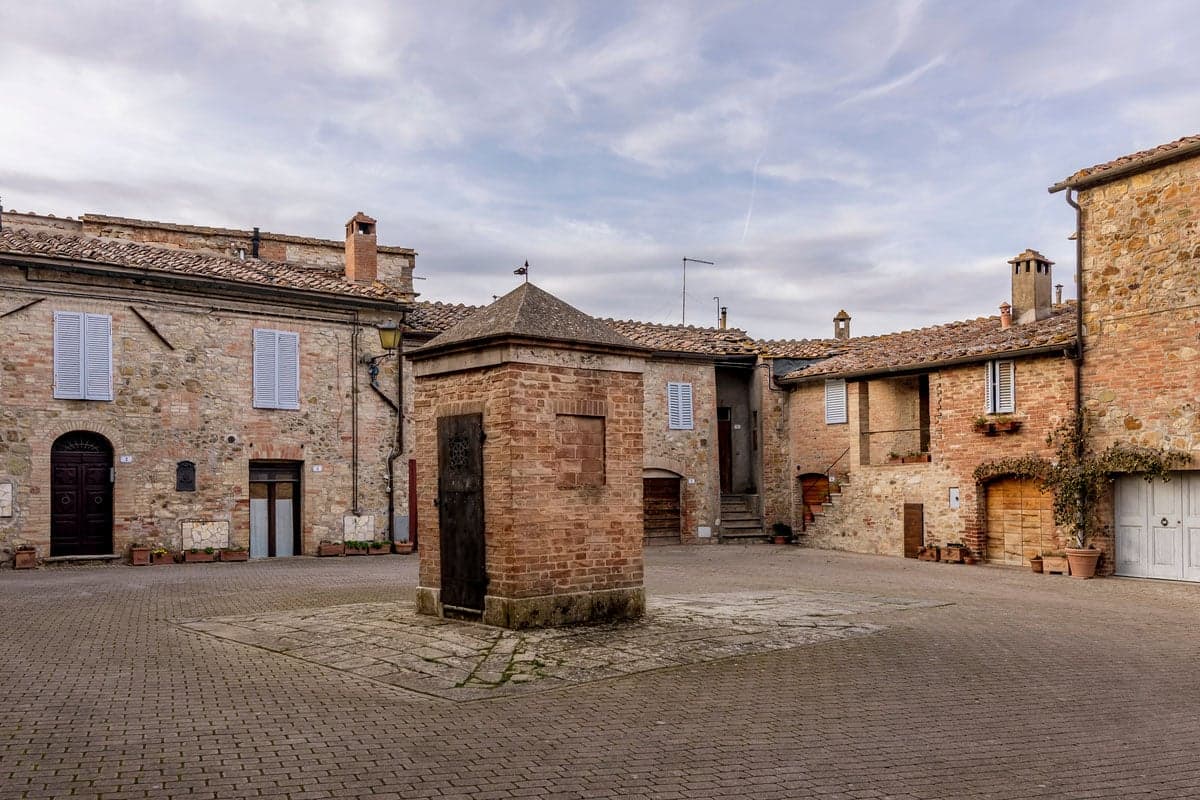
A medieval bishops' fief twenty kilometers south of Siena, with an Etruscan princely palace on Poggio Civitate and the Cappellone statue as its symbol.
Lucignano
Province: Arezzo
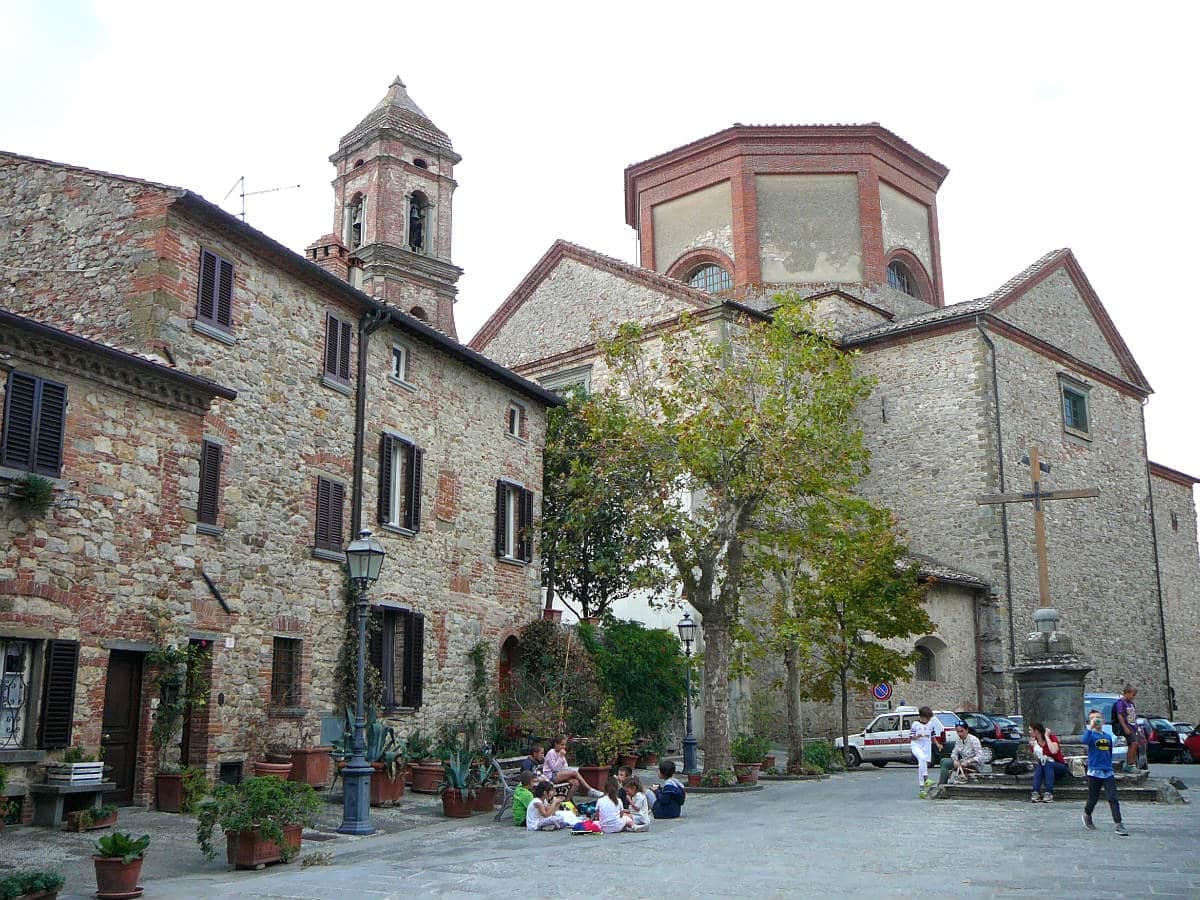
A walled elliptical hill town at 400 meters between Siena and Arezzo, planned in medieval concentric rings around the goldsmith's reliquary called the Tree of Life.
🍷 Città del Vino
More Città del Vino towns in Tuscany
Campiglia Marittima
Province: Livorno
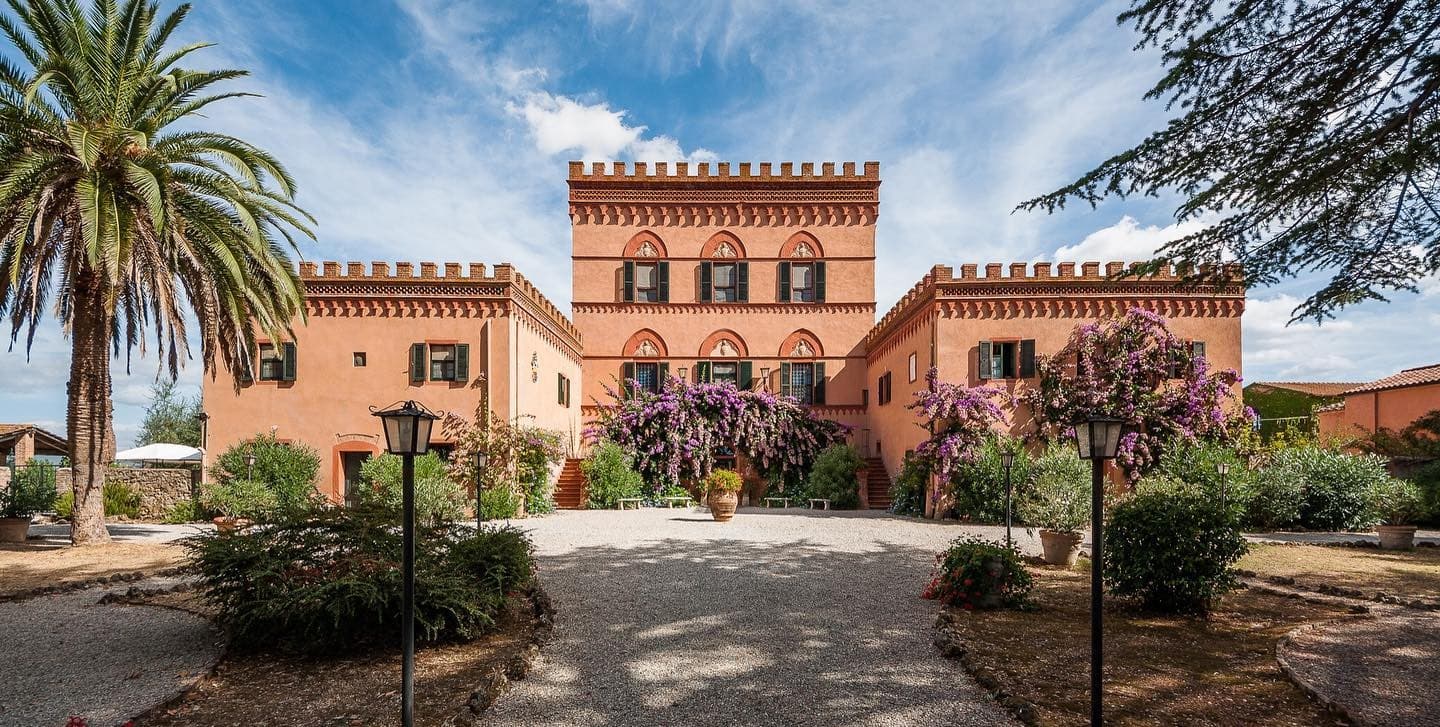
A walled hilltop borgo above the Val di Cornia, where the Rocca tower watches a mining landscape worked from the Etruscans to 1976.
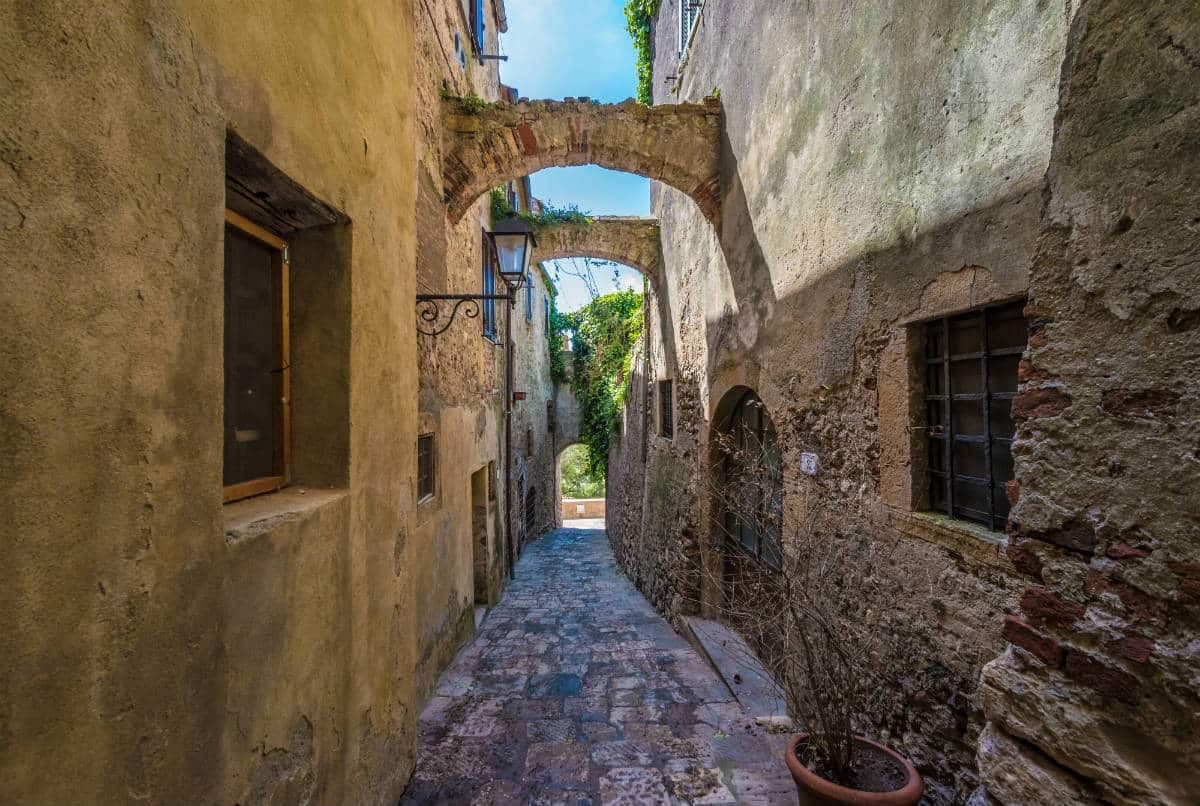
Capalbio
Province: Grosseto
A walled hilltop borgo at 217 meters in the southern Maremma, donated to the Abbey of Tre Fontane by Charlemagne and home of Niki de Saint Phalle's Tarot Garden.
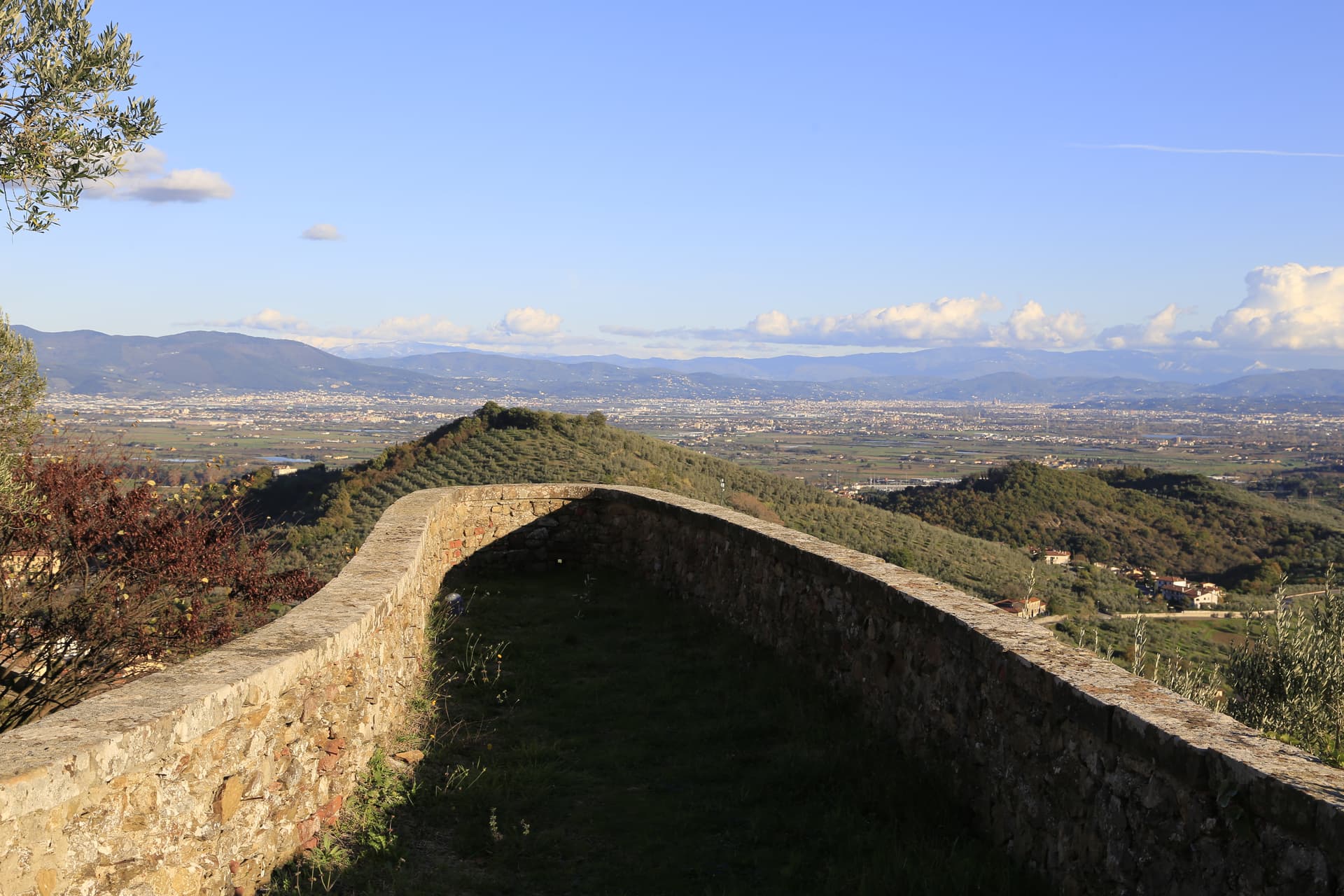
Carmignano
Province: Prato
A Medici village at 189 meters on the Montalbano slopes, where Pontormo's Visitation hangs in the parish church and Etruscan tumuli sit below the Renaissance villas.

Castagneto Carducci
Province: Livorno
A hilltop borgo at 194 meters above the Costa degli Etruschi, renamed for the poet Carducci in 1907 and the home of Bolgheri and Sassicaia.
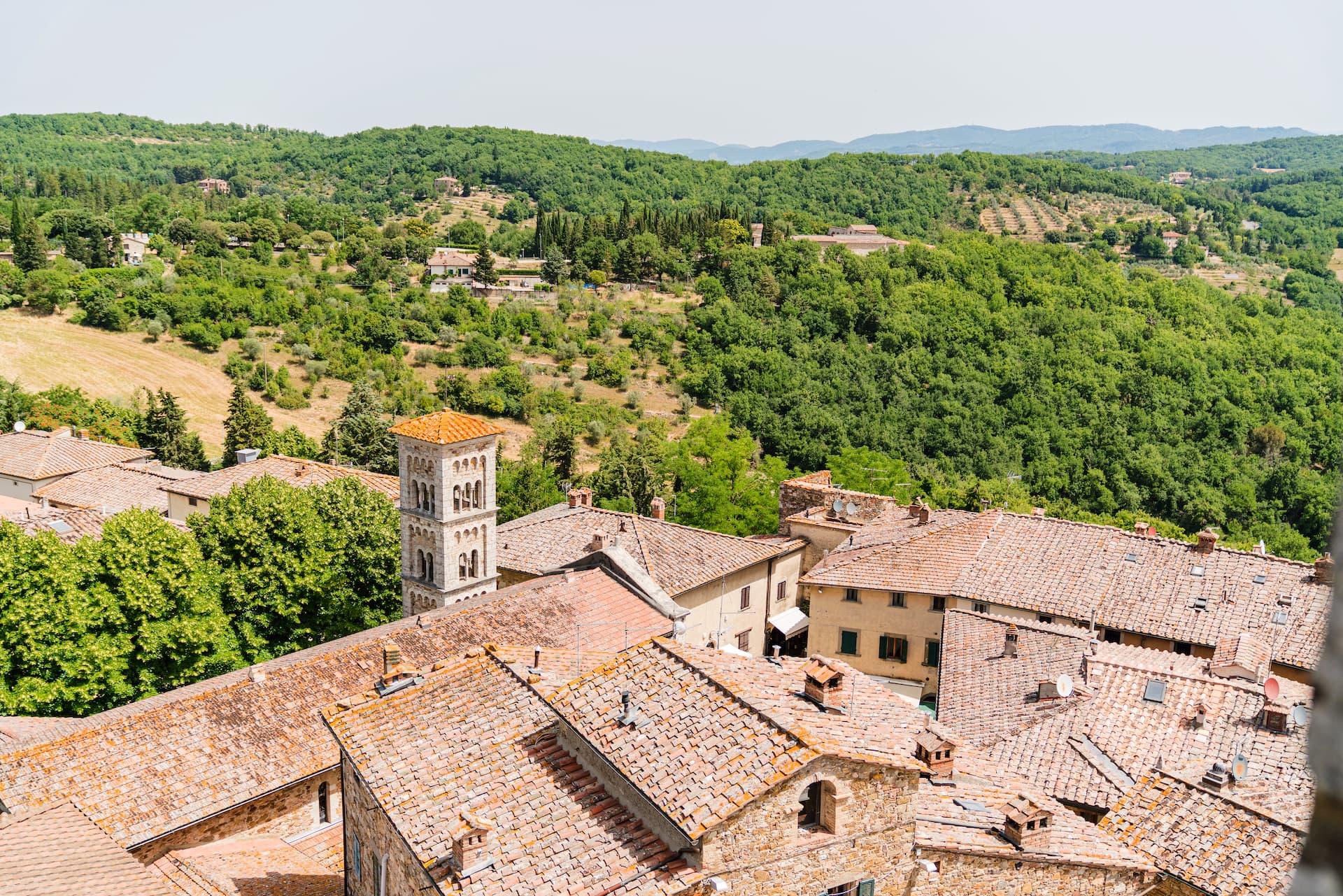
Castellina in Chianti
Province: Siena
A Chianti hill town at 578 meters on the watershed between the Arno and the Ombrone, with an Etruscan tumulus, a Brunelleschi-reinforced wall and a covered medieval walkway around its edge.