

Tuscany · Siena
Murlo
A medieval bishops' fief twenty kilometers south of Siena, with an Etruscan princely palace on Poggio Civitate and the Cappellone statue as its symbol.
Known for
CAPPELLONE
Sixth-century BC seated terracotta male in a wide-brimmed hat, the symbol of the Antiquarium and one of the most striking Etruscan acroteria ever found.
POGGIO CIVITATE
Etruscan princely palace excavated from 1966 on a hill three kilometers north, one of the most important pre-Roman settlement complexes in Italy.
BISHOPS' FIEF
Held by the bishops of Siena as a feudal lordship for centuries, the unusual status that kept it outside the Sienese republic until the nineteenth century.
When to visit
Best · Apr–Oct
- J
- F
- M
- A
- M
- J
- J
- A
- S
- O
- N
- D
- Best
- Hot or crowded
- Quiet
- Mostly closed
Why come
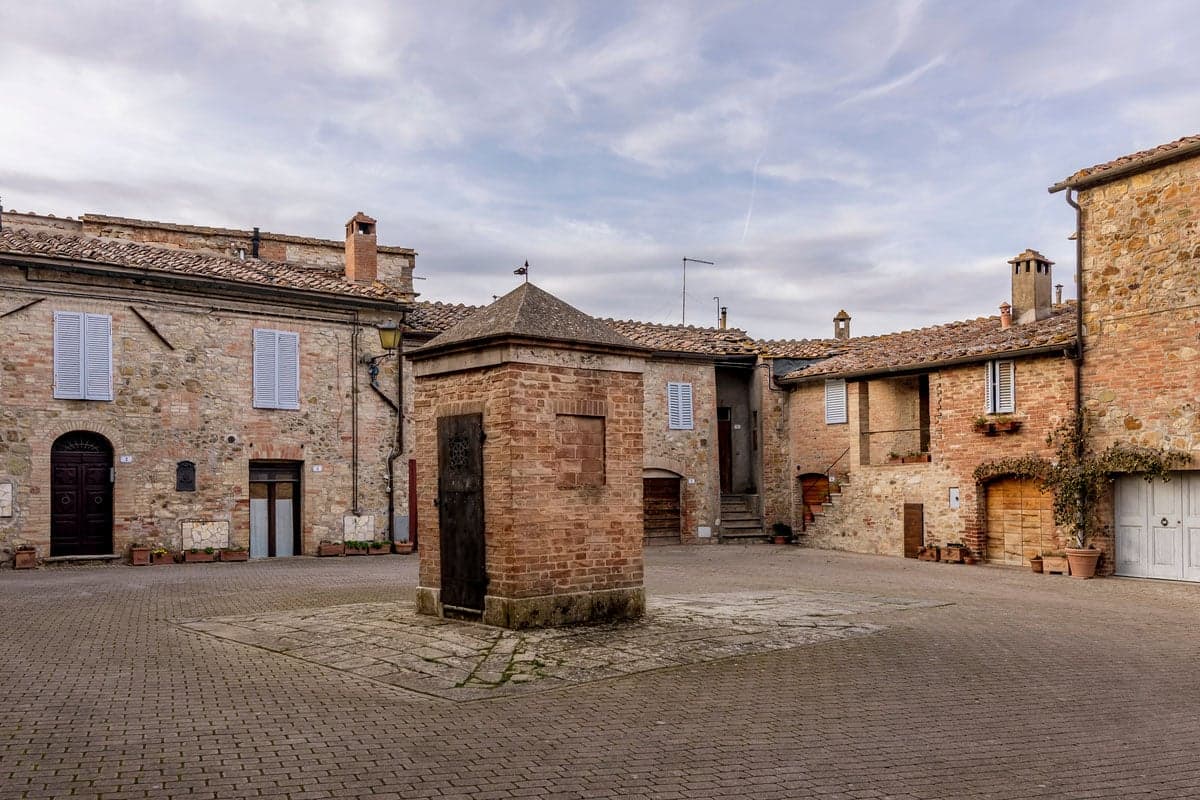
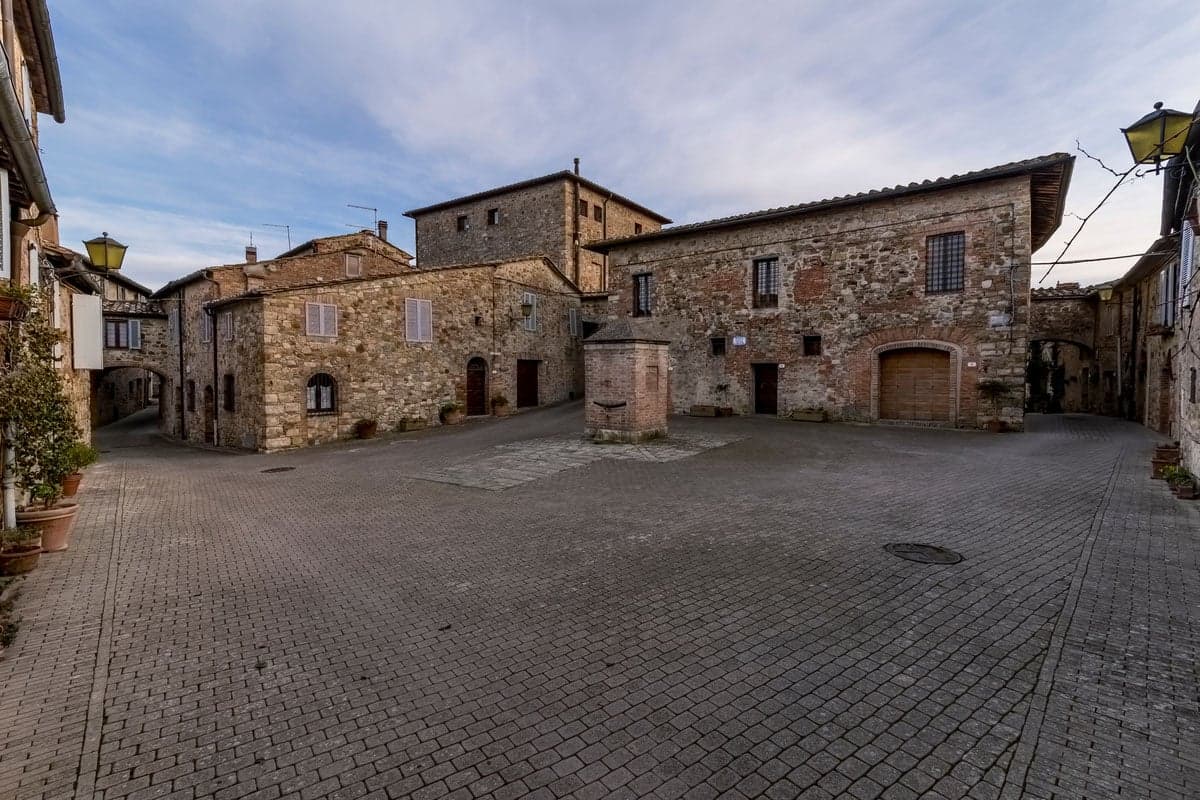
Murlo sits on a wooded ridge above the Crevole river, twenty kilometers south of Siena. The comune is scattered. The town hall is in Vescovado, the modern center down on the valley road; the medieval castle of Murlo, walled and tower-anchored, is a kilometer up on the hill, mostly empty and given over to tourism.
The bishops of Siena held this ground as a feudal lordship for centuries, which kept it outside the Sienese republic and gave it the unusual status of an episcopal fief. The defining find is older. On Poggio Civitate, three kilometers north, archaeologists from 1966 onward uncovered an Etruscan princely palace of the seventh and sixth centuries BC, one of the most important Etruscan settlement complexes ever excavated. The terracotta acroteria from the roof line included the Cappellone, a seated bearded male wearing a wide-brimmed hat, sixth century BC, now the symbol of the Antiquarium museum housed in the old Episcopal Palace at the center of the borgo.
The Sunday letter
We haven’t written Murlo’s letter yet.
One town every Sunday, with the photo, the food, the festa. Be there when this one comes up. Free, by Peter & Sophia from Pietrasanta.
By subscribing you agree to Substack’s Terms of Use, our Privacy Policy and our Information collection notice.
What to see
Antiquarium di Poggio Civitate
Archaeological museum in the medieval Palazzo Vescovile at the center of Murlo, holding the Cappellone and other finds from the Etruscan settlement on Poggio Civitate.
Poggio Civitate
Etruscan princely palace complex of the seventh and sixth centuries BC, three kilometers north of the borgo, one of the most important sites in Etruria.
Castello di Murlo
Twelfth-century walled village, the medieval seat of the bishops of Siena, with narrow streets converging on the Palazzo Vescovile.
Chiesa di San Fortunato
Parish church inside the walls of Murlo castle, plain stone façade, the religious anchor of the episcopal fief.
Val di Merse
Forested river valley west of Murlo, with hiking trails connecting the borgo to the hermitages of Montespecchio and the surrounding nature reserves.
The slow-trip planner
Building a trip? Find where Murlo fits in a slow Italy circuit.
Answer five questions. We will shape a geographically coherent slow trip from the 1,000 Italian towns most travelers skip. Yours to save and share.
Living here
- Population 2,423
- In-betweeni
- Pharmacy in town
- Nearest high school over ~30 minutes away
- Train station in the comune
- Nearest airport Bologna, 2 h 37 min drive
- Regional capital Firenze, 1 h 44 min drive
Tags & datadesignations · numbers · sources
The numbers
- Elevation: 314 m
- Population: 2,423
- Surface area: 114.61 km²
These figures were compiled from public directories — ISTAT, OpenStreetMap, Wikidata — and from the official listings of the guides named on this page. Town details change; verify with official sources before you travel.
Close by
More towns near Murlo
Siena
Province: Siena
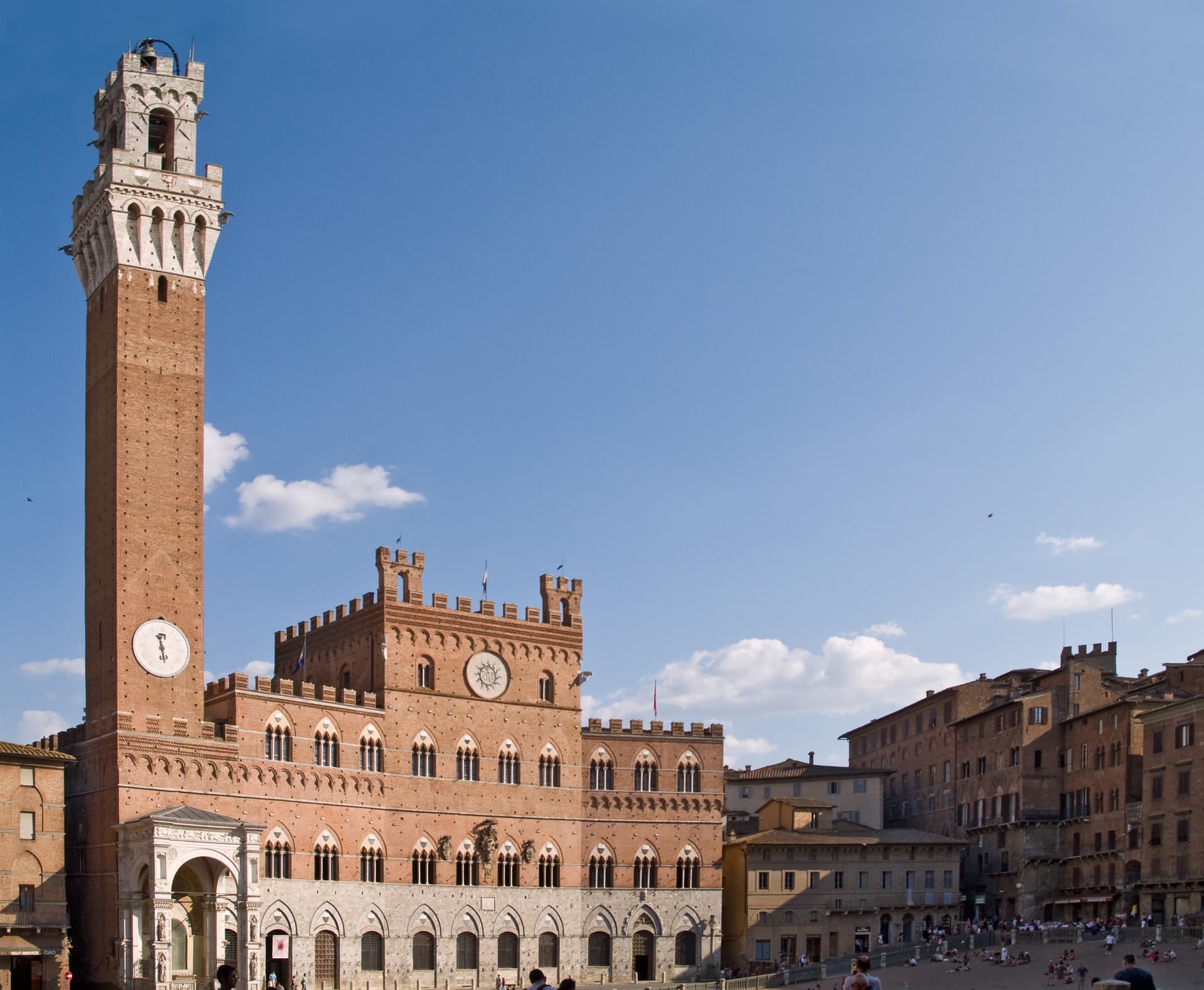
The medieval rival of Florence at 322 meters on three hills, with a shell-shaped piazza where seventeen contrade race bareback horses twice a year.
Buonconvento
Province: Siena
The walled brick borgo in the Crete Senesi where Emperor Henry VII died in 1313, on the Via Cassia at the confluence of the Arbia and Ombrone.
Castelnuovo Berardenga
Province: Siena
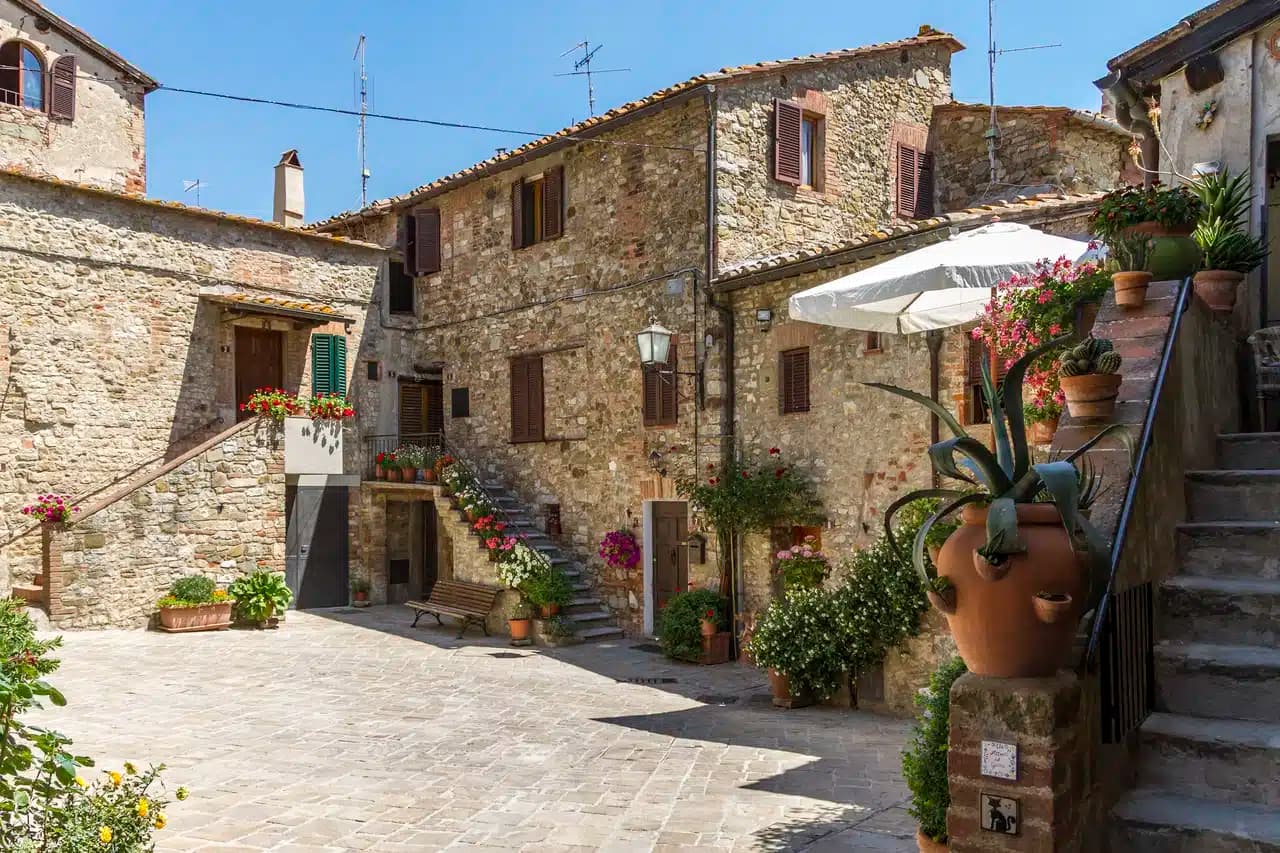
A Chianti Classico commune at 351 meters between the Ombrone and the Crete Senesi, the last castle Siena built against Florence, in 1366.
Rapolano Terme
Province: Siena
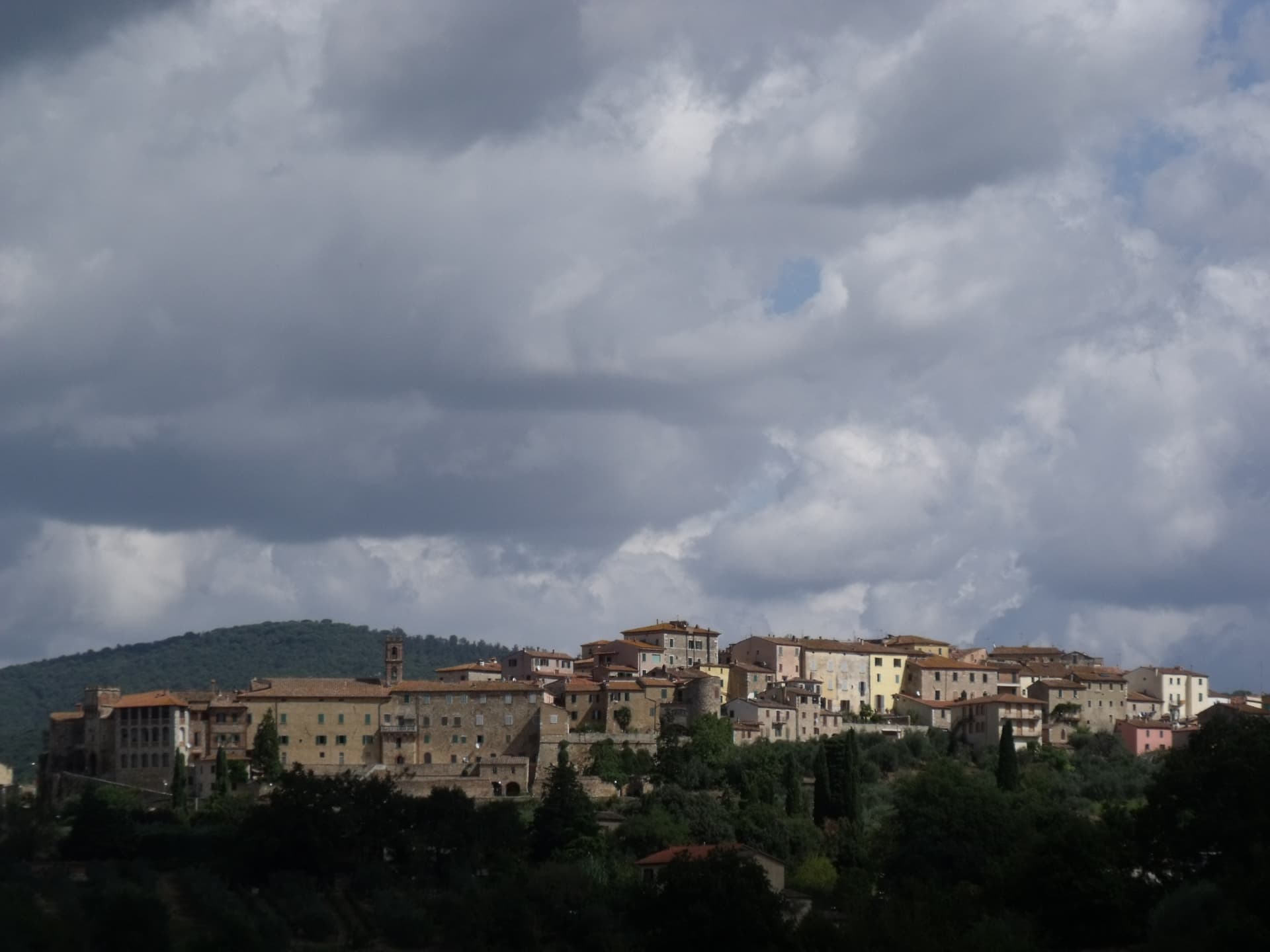
A Sienese thermal town in the Crete Senesi, 38-degree calcium-sulphur waters and travertine quarries that supplied the Pienza Duomo and Montepulciano's San Biagio.
Chiusdino
Province: Siena
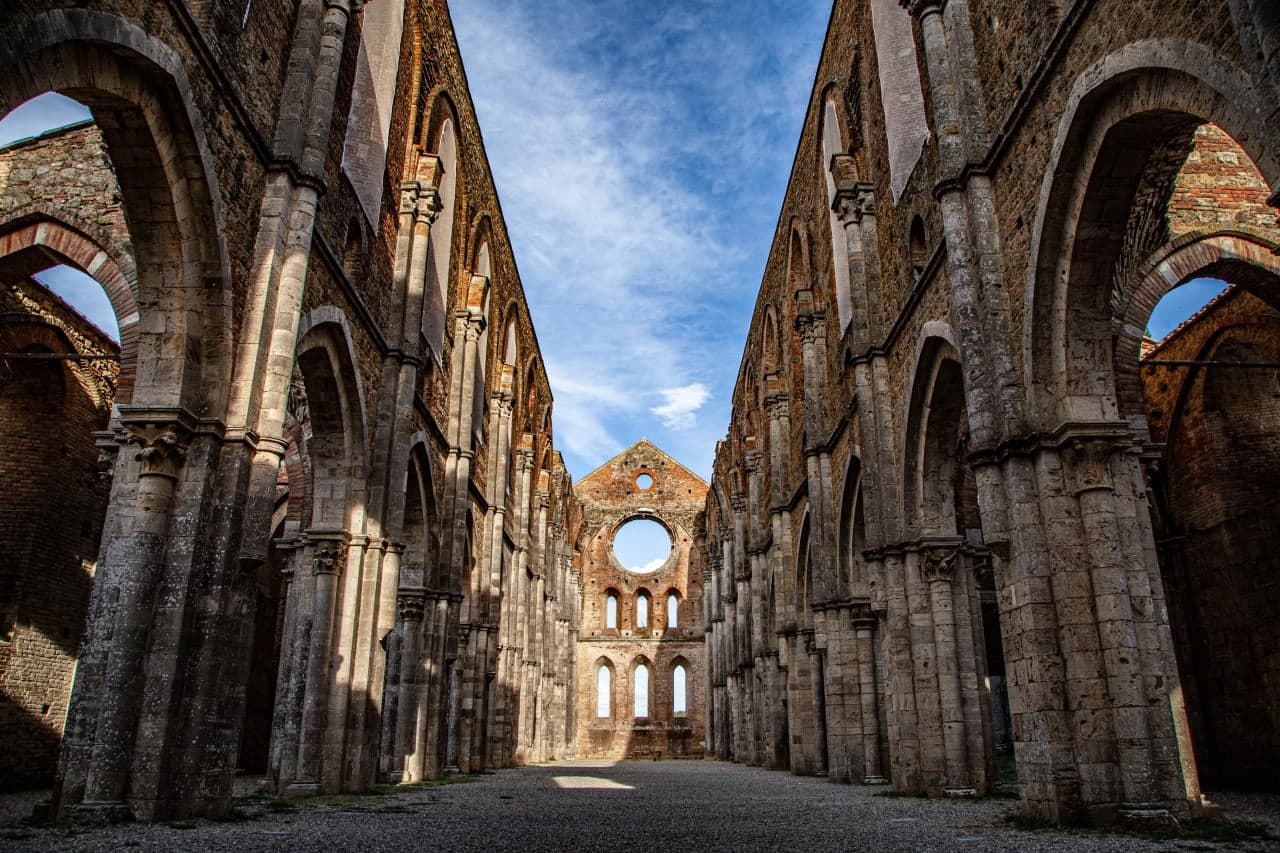
A medieval village at 564 meters in the Val di Merse where Galgano Guidotti plunged his sword into a rock in 1180 and the roofless Cistercian abbey grew up below.
🟠 Bandiera Arancione
More Bandiera Arancione towns in Tuscany
Abetone Cutigliano
Province: Pistoia
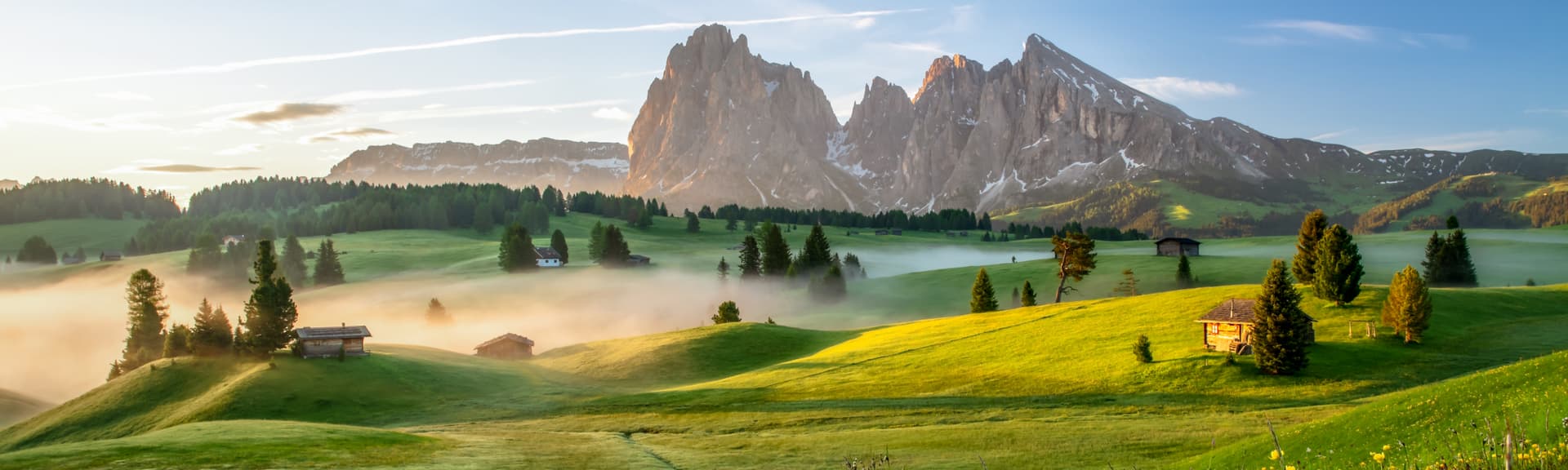
The Apennine ski pass at 1,388 meters where the Granduca's two stone pyramids of 1778 mark the old Tuscan-Modenese border.
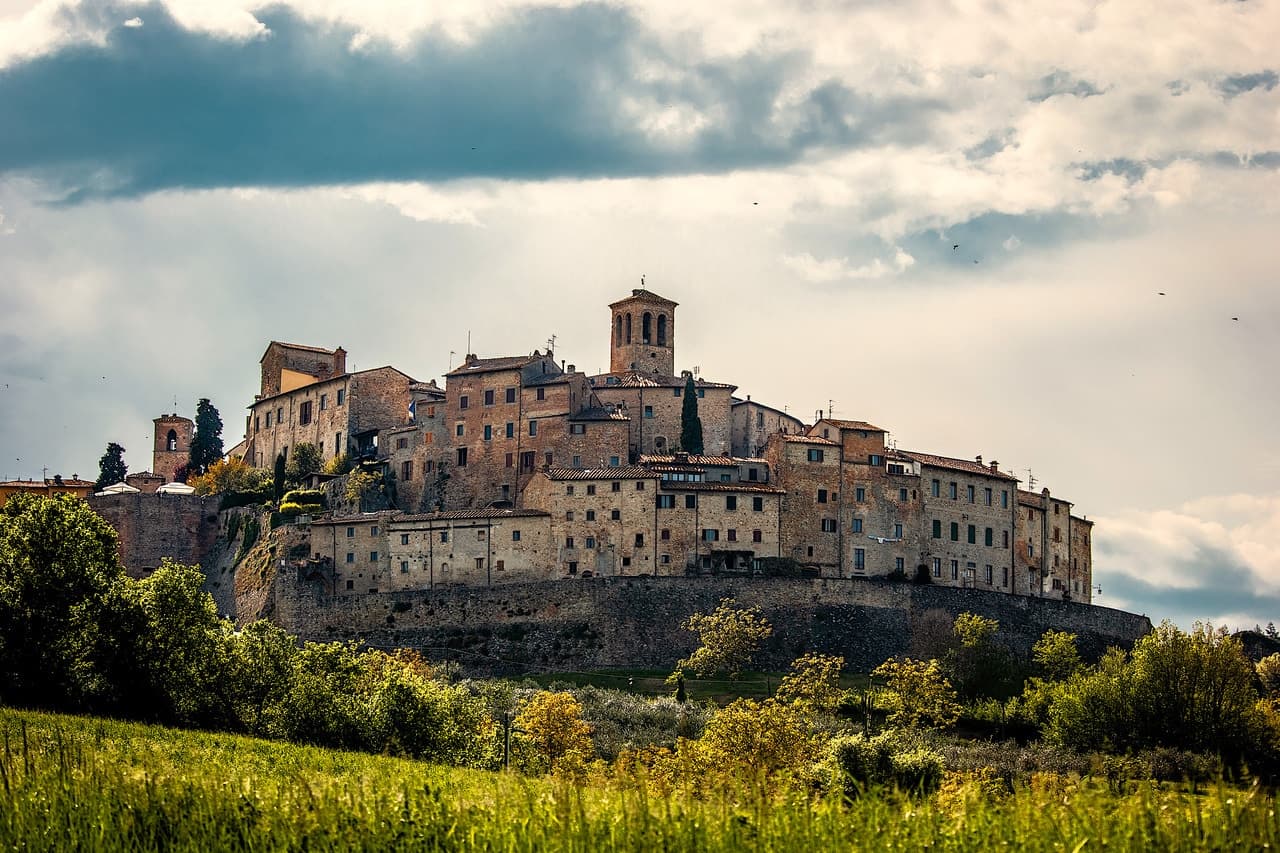
Anghiari
Province: Arezzo
A walled medieval town at 430 meters over the upper Tiber valley, where Florence beat Milan in 1440 and Leonardo started the fresco he never finished.
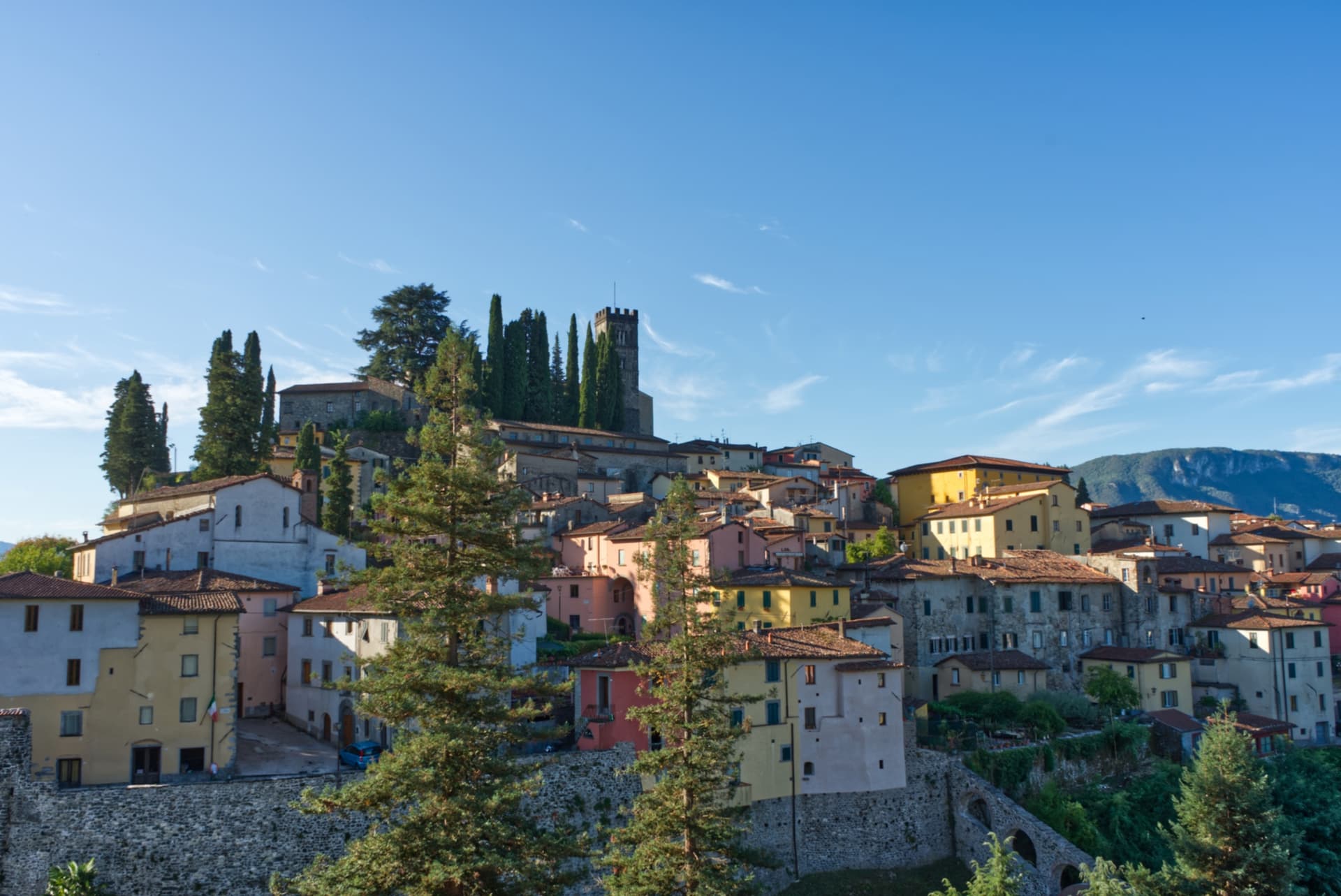
Barga
Province: Lucca
A medieval hilltop town at 410 meters in the Serchio valley between the Apuan Alps and the Apennines, where Giovanni Pascoli wrote his last poems and the August festival serves fish and chips.
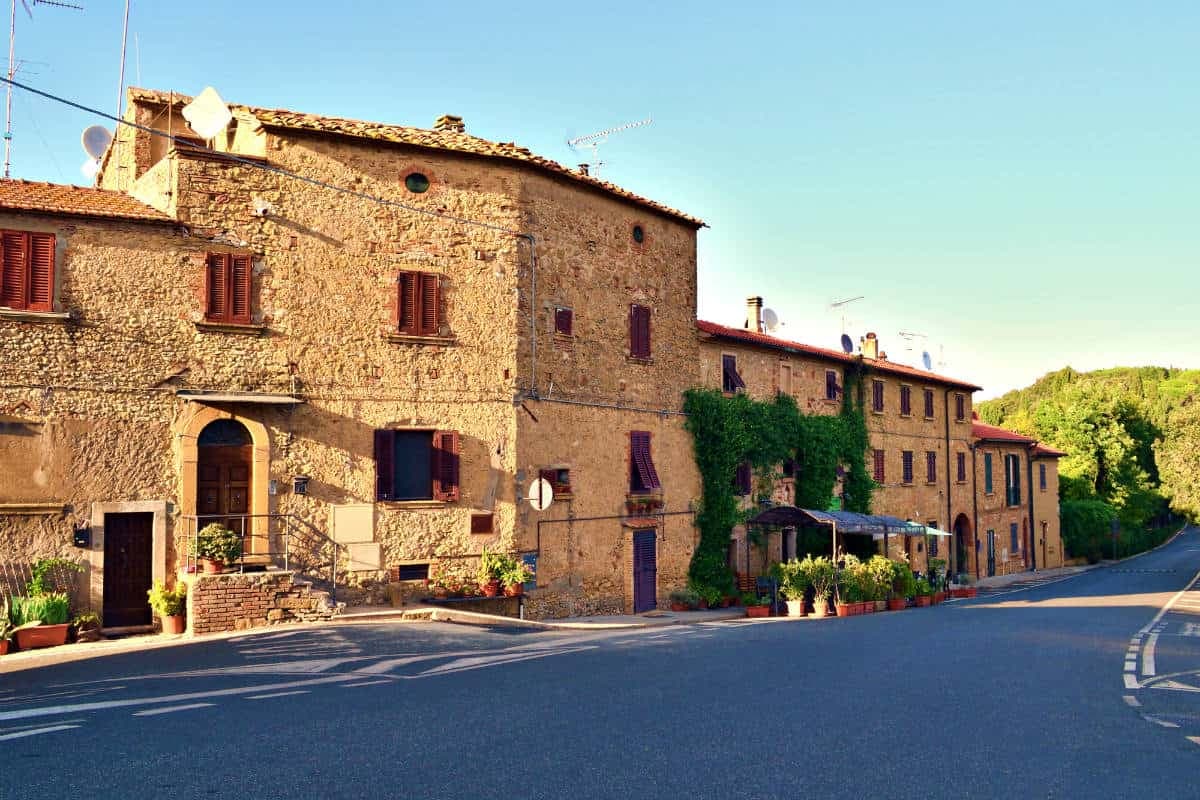
Casale Marittimo
Province: Pisa
A concentric stone borgo at 214 meters above the Val di Cecina, built where a seventh-century BC Etruscan outpost of Volterra once stood.
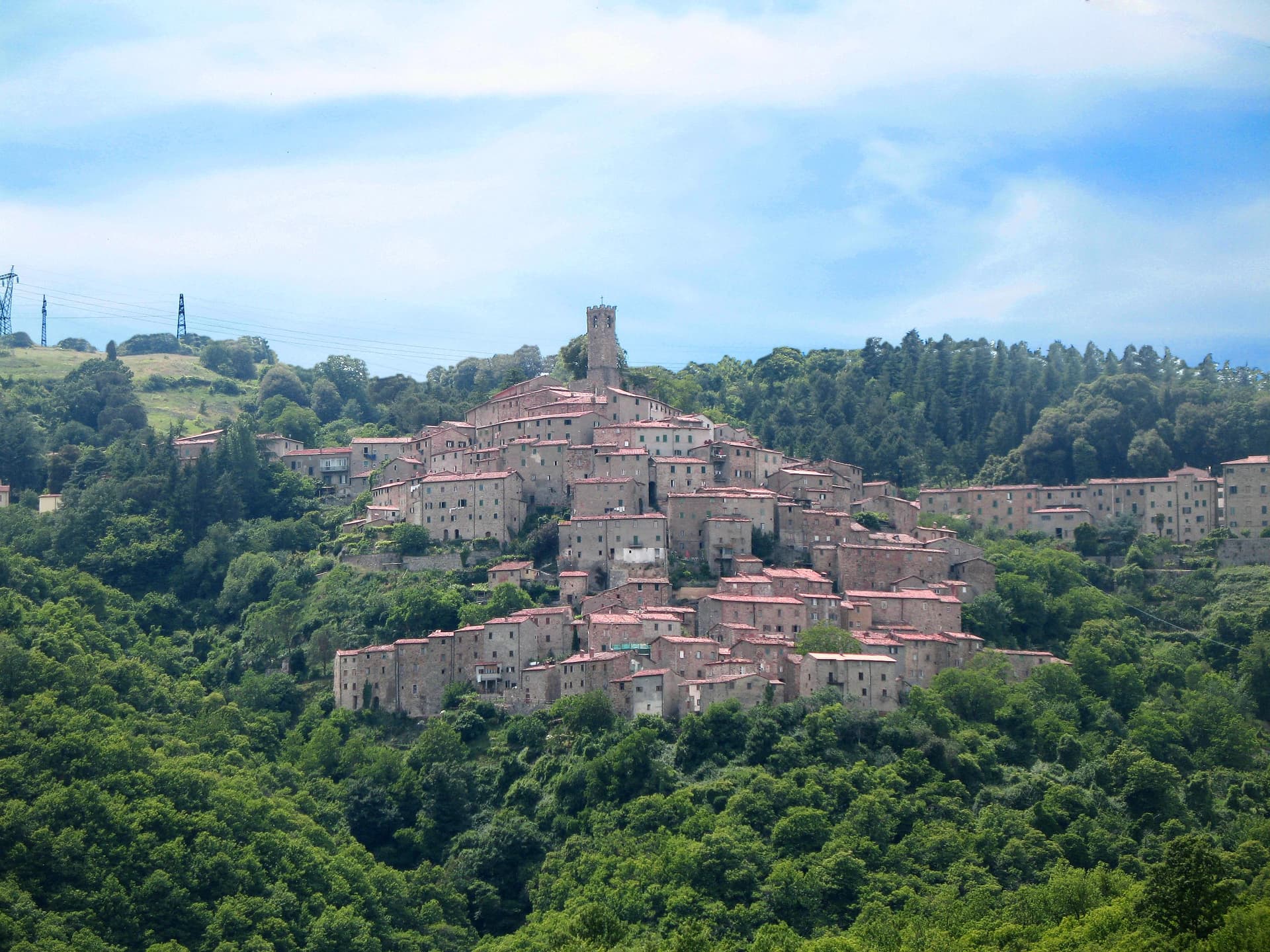
Castelnuovo di Val di Cecina
Province: Pisa
A copper and geothermal borgo at 576 meters in the Cecina valley, where natural steam vents and medieval towers sit on the same hill.