

Umbria · Perugia
Montone
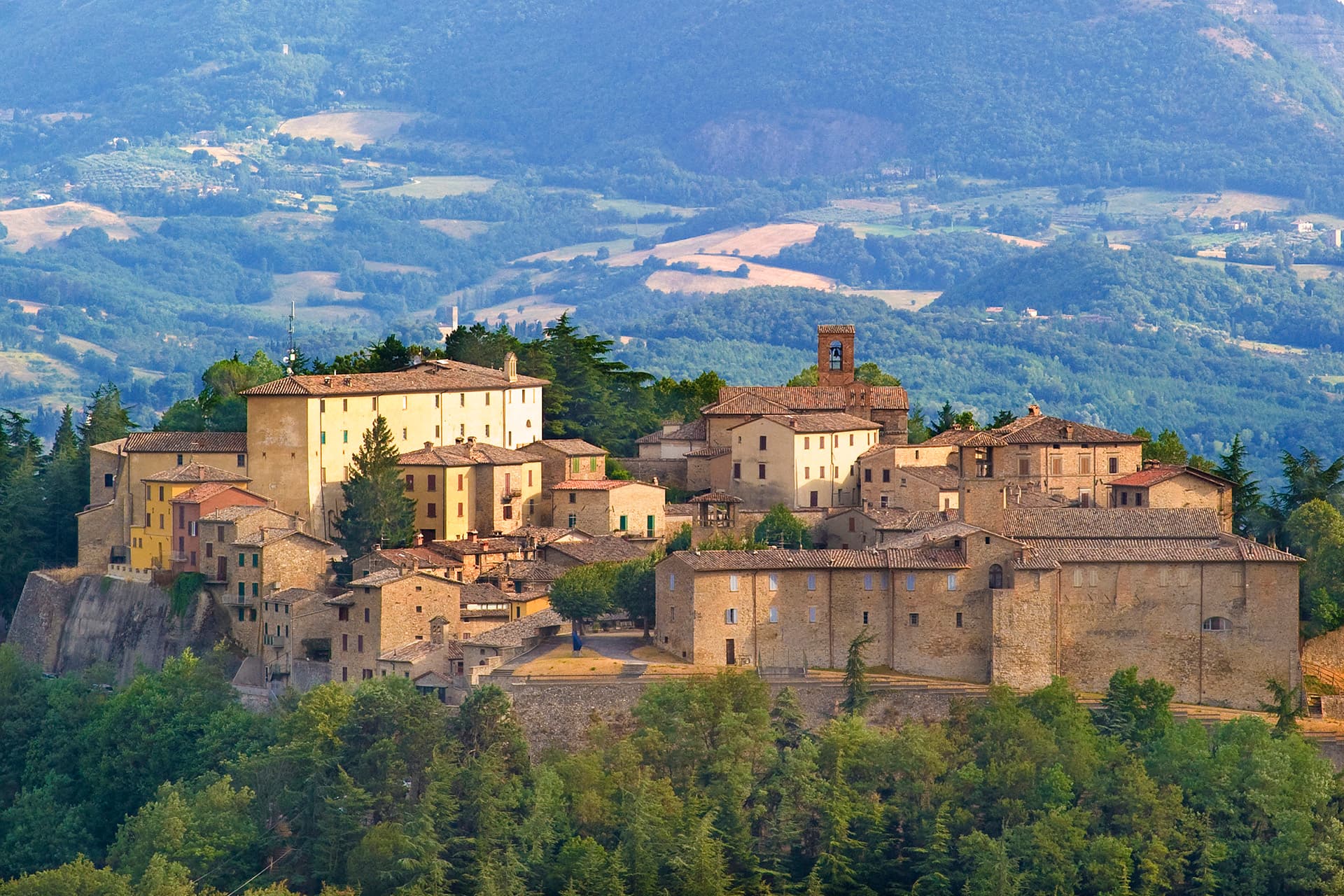
A walled medieval hill town above the upper Tiber, birthplace of the condottiero Braccio Fortebracci.
Known for
BRACCIO FORTEBRACCI
The condottiero made Count of Montone in 1414 by Antipope John XXIII, who briefly ruled Perugia and shaped fifteenth-century Italian war.
FILM FESTIVAL
Umbria Film Festival held in the borgo every July since 1997, co-founded with Terry Gilliam and running independent cinema for nearly thirty years.
DONAZIONE DELLA SPINA
A relic-thorn from Christ's crown given to Montone by Carlo Fortebracci after Venetian naval service, processed twice a year in costume.
When to visit
Best · Apr–Oct
- J
- F
- M
- A
- M
- J
- J
- A
- S
- O
- N
- D
- Best
- Hot or crowded
- Quiet
- Mostly closed
Why come
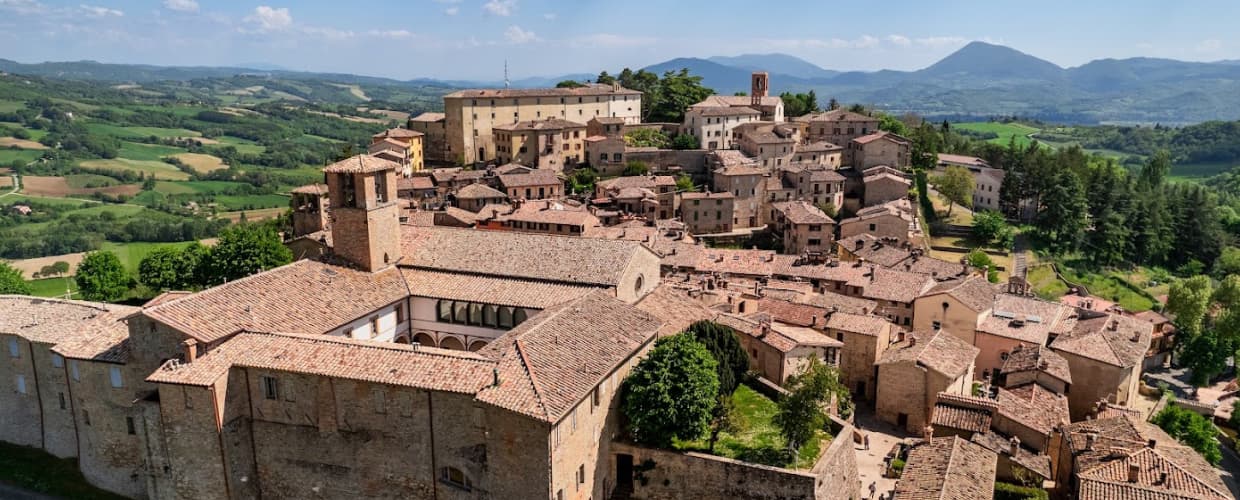
Montone sits on a ridge above the upper Tiber valley, thirty kilometers north of Perugia. The walled centro storico is small enough to circuit in fifteen minutes and steep enough that the route is the climb. The town is the cradle of the Fortebracci, the condottieri family whose most famous member, Braccio da Montone, was made Count of Montone in 1414 by Antipope John XXIII.
The Rocca di Braccio at the top of the hill and the Rocca d'Aries six kilometers out are both Fortebracci works. The Gothic Chiesa di San Francesco, built around 1300 where the family had its houses, holds the Pinacoteca with a Bartolomeo Caporali altarpiece. The Donazione della Spina, a relic-thorn from Christ's crown given to the town by Carlo Fortebracci after the Venetians thanked him for naval service against the Turks, is processed twice a year, on Easter Monday and during the August week after Ferragosto. Since 1997 the Umbria Film Festival has run here every July, founded with Terry Gilliam.
The Sunday letter
We haven’t written Montone’s letter yet.
One town every Sunday, with the photo, the food, the festa. Be there when this one comes up. Free, by Peter & Sophia from Pietrasanta.
By subscribing you agree to Substack’s Terms of Use, our Privacy Policy and our Information collection notice.
What to see
Chiesa di San Francesco
Gothic church of around 1300 with a fourteenth-century convent, picture gallery and cloister, on the hill where the Fortebracci had their houses.
Rocca di Braccio
Fortress at the top of the borgo rebuilt under Oddo III Fortebracci in the late fourteenth century, now a panoramic ramparts walk.
Rocca d'Aries
Castle six kilometers from the centro storico, the first Fortebracci stronghold according to tradition, restored and reopened to visit.
Museo Comunale di San Francesco
Museum in the former Franciscan convent with a Caporali altarpiece, Della Robbia ceramics and the Donazione della Spina reliquary.
Piazza Fortebraccio
Small main square between the Palazzo Comunale and the Collegiata, framed by stone buildings from the medieval and Renaissance centuries.
The slow-trip planner
Building a trip? Find where Montone fits in a slow Italy circuit.
Answer five questions. We will shape a geographically coherent slow trip from the 1,000 Italian towns most travelers skip. Yours to save and share.
We recommend
Where to eat and stay
Not our picks, but places the guides put their name to — a Michelin star, a Gambero Rosso fork, a Slow Food snail, a Michelin Key for the hotels. Worth a table, a counter, or a night when you pass through.
Tipico Osteria dei SensiRistorante
Tipico Osteria dei Sensi carries a Michelin Bib Gourmand, plus a Slow Food snail.
Locanda del Capitano & Tipico Osteria dei SensiRistorante
Two Gambero Rosso forks (82/100), at Locanda del Capitano & Tipico Osteria dei Sensi.
Tipica Osteria dei SensiRistorante
A Slow Food snail, at Tipica Osteria dei Sensi.
Torre di MoravolaHotel
Torre di Moravola has a La Liste score of 92 to its name.
Living here
- Population 1,580
- In-betweeni
- Pharmacy in town
- High school within a 30-minute drive
- Nearest airport Ancona / Pescara, 2 h 0 min drive
- Regional capital Perugia, 42 min drive
Tags & datadesignations · numbers · sources
Recognised as
The numbers
- Elevation: 482 m
- Population: 1,580
- Surface area: 51.1 km²
These figures were compiled from public directories — ISTAT, OpenStreetMap, Wikidata — and from the official listings of the guides named on this page. Town details change; verify with official sources before you travel.
Close by
More towns near Montone

Città di Castello
Province: Perugia
The upper Tiber valley's Renaissance + 20th-c art capital — 38,000-resident walled town in the Alta Valtiberina where Raphael painted his first independent commissions, where Alberto Burri (1915-95) founded the Fondazione that now occupies the 14th-c Ex Seccatoi del Tabacco + the Palazzo Albizzini, and where the white truffle season + the Mostra del Tartufo in November are the year's headline food event.
Pietralunga
Province: Perugia
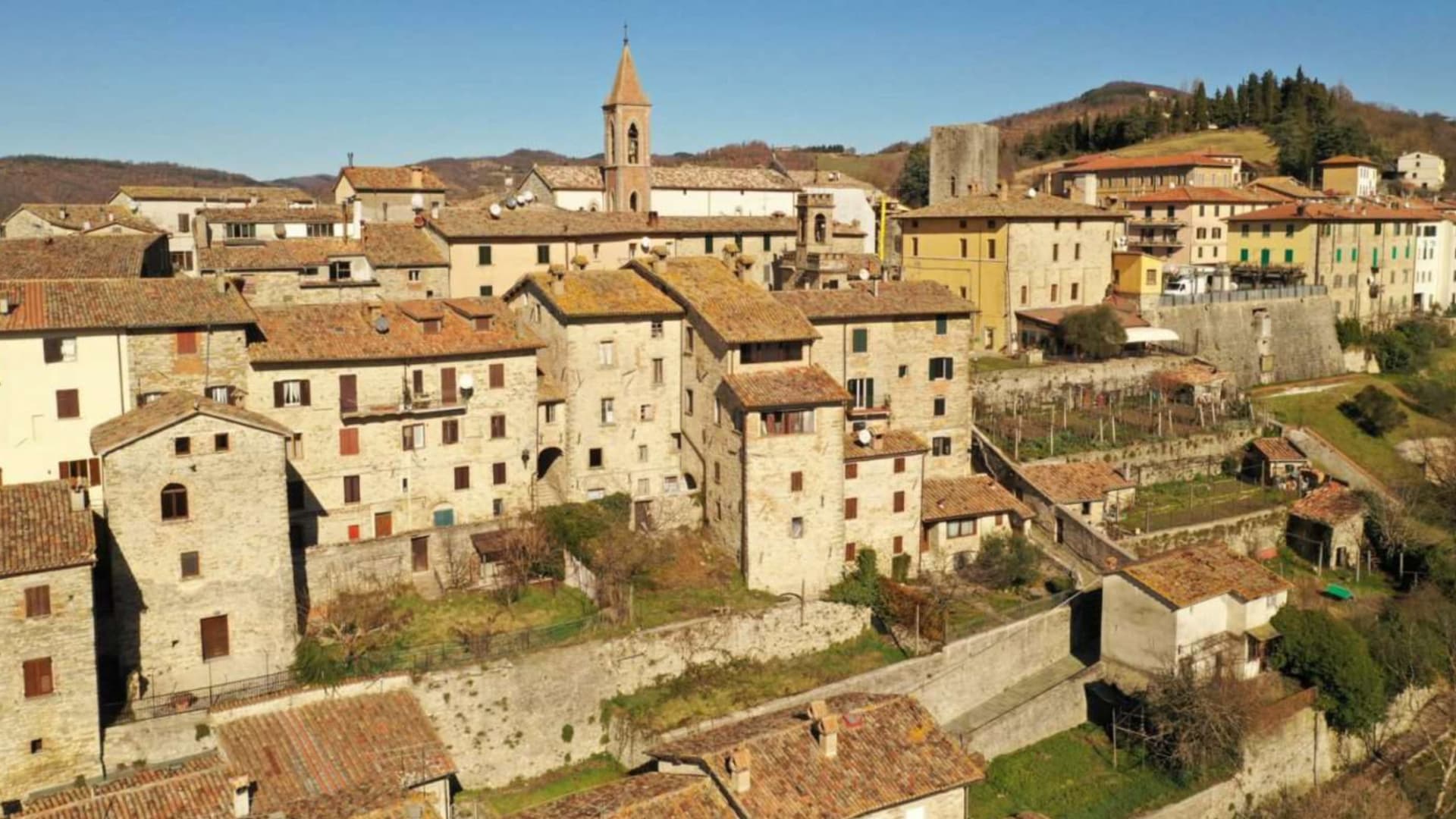
A pre-Apennine hill town at 566 meters on the northeast Tiber ridge, ringed by truffle woods and white-potato fields.
Gubbio
Province: Perugia
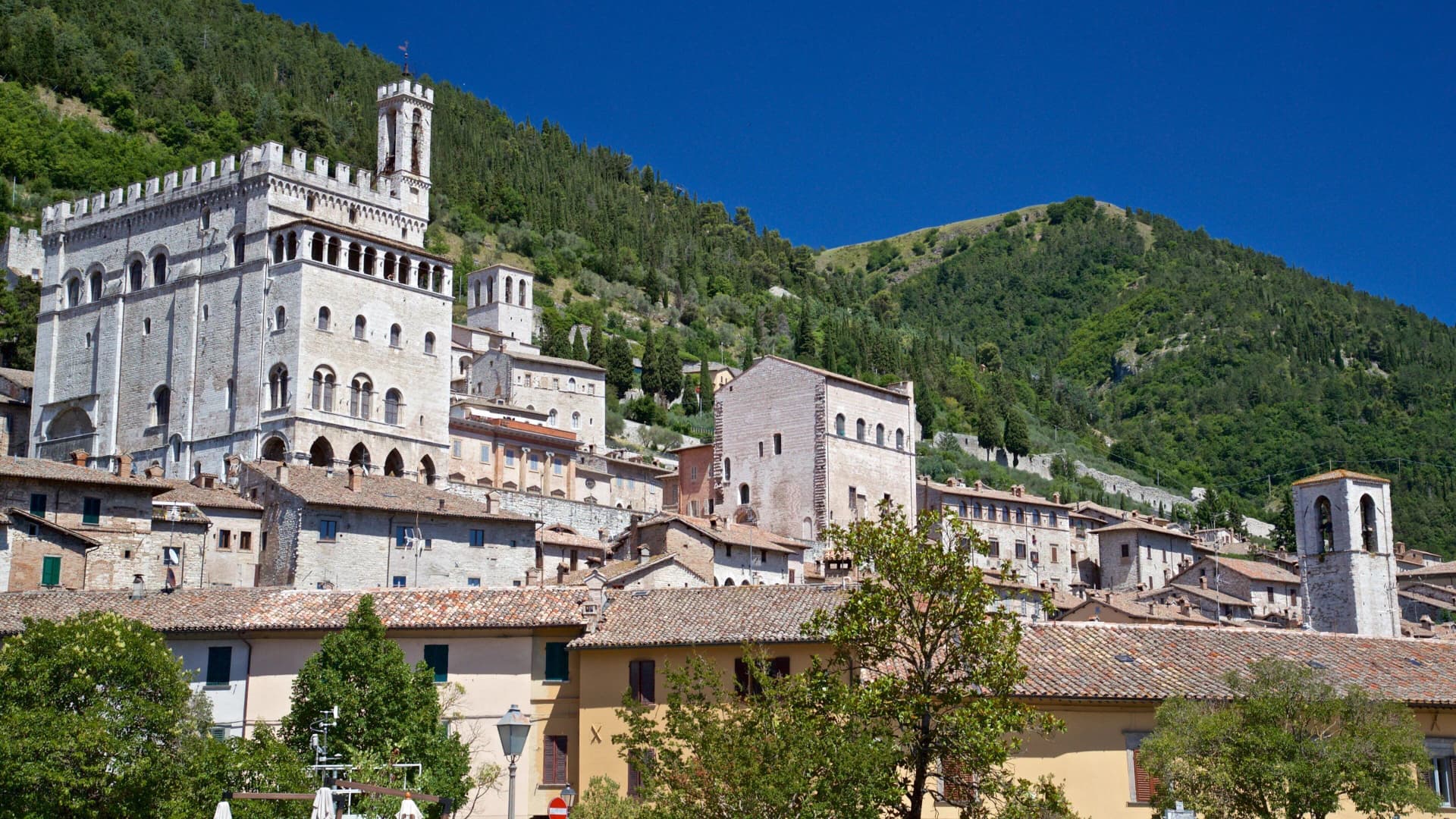
Pre-Roman Ikuvium of the Umbri at the foot of Monte Ingino, where seven bronze tablets carry the longest text of the Umbrian language.
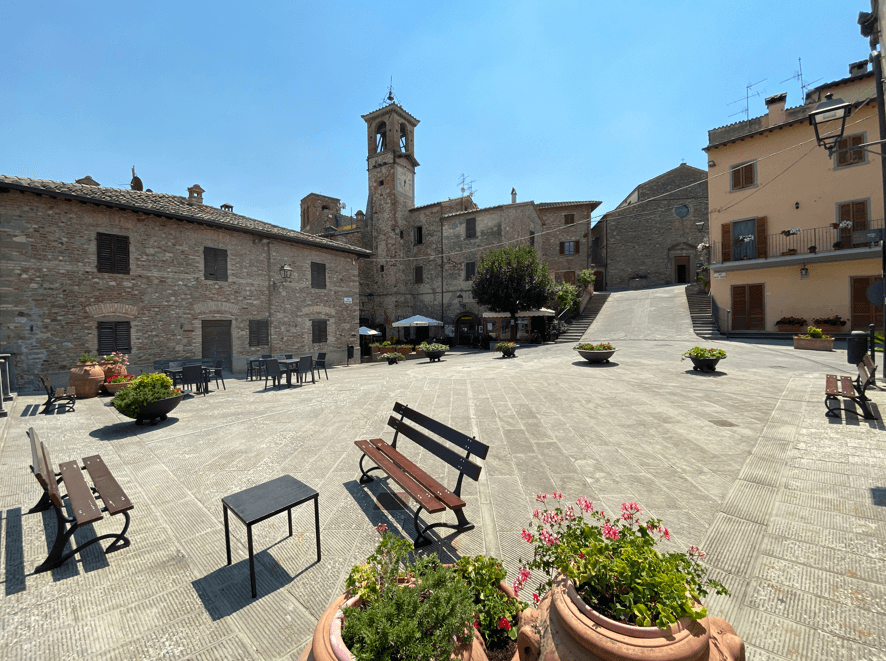
Citerna
Province: Perugia
A medieval borgo at 480 meters above the upper Tiber valley, holding the only sculpture by Donatello in Umbria.
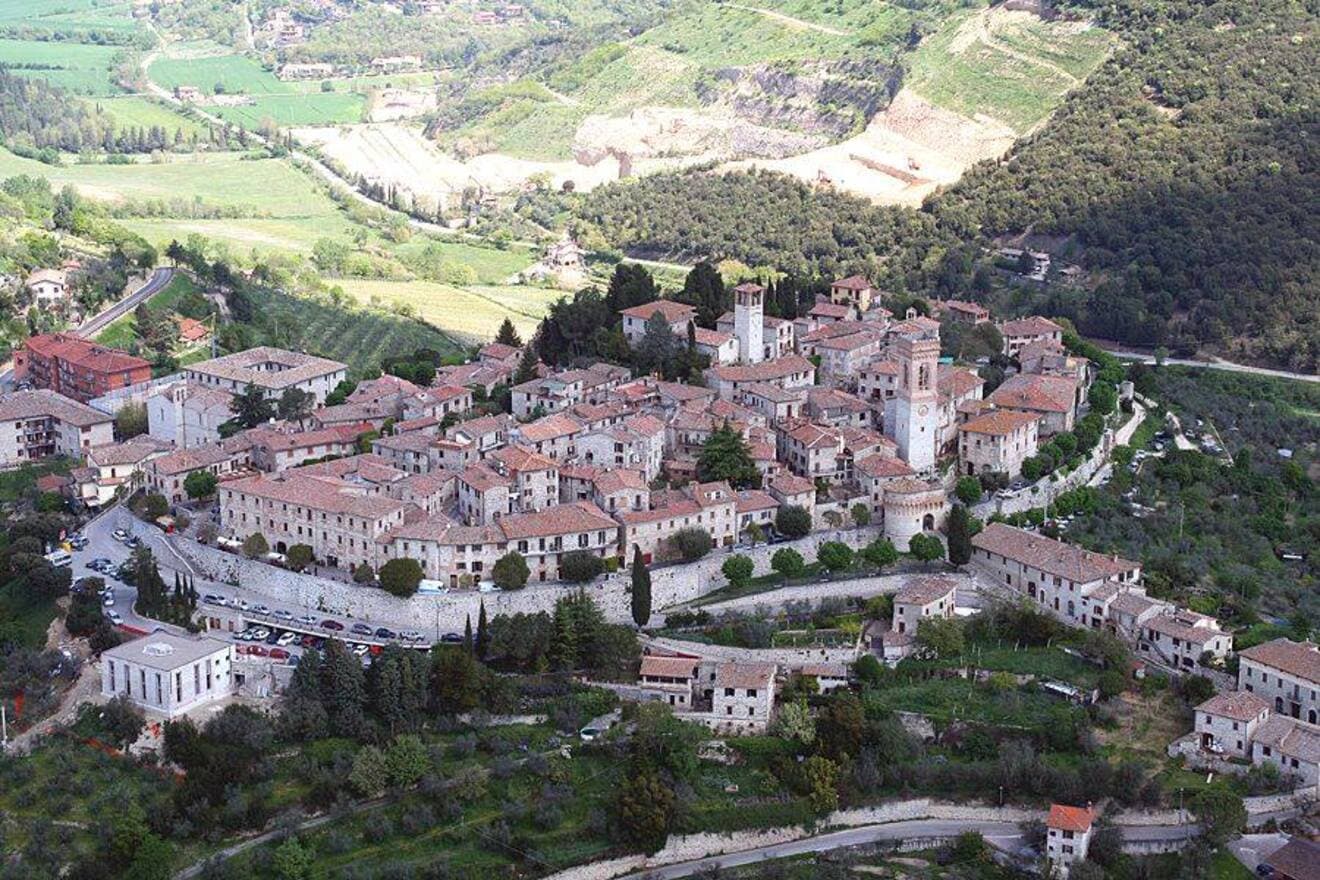
Corciano
Province: Perugia
A walled medieval castello at 408 meters eight kilometers west of Perugia, where Saint Francis stopped on his way back from Isola Maggiore in 1223.
🎨 Borghi più belli d'Italia
More Borghi più belli d'Italia towns in Umbria
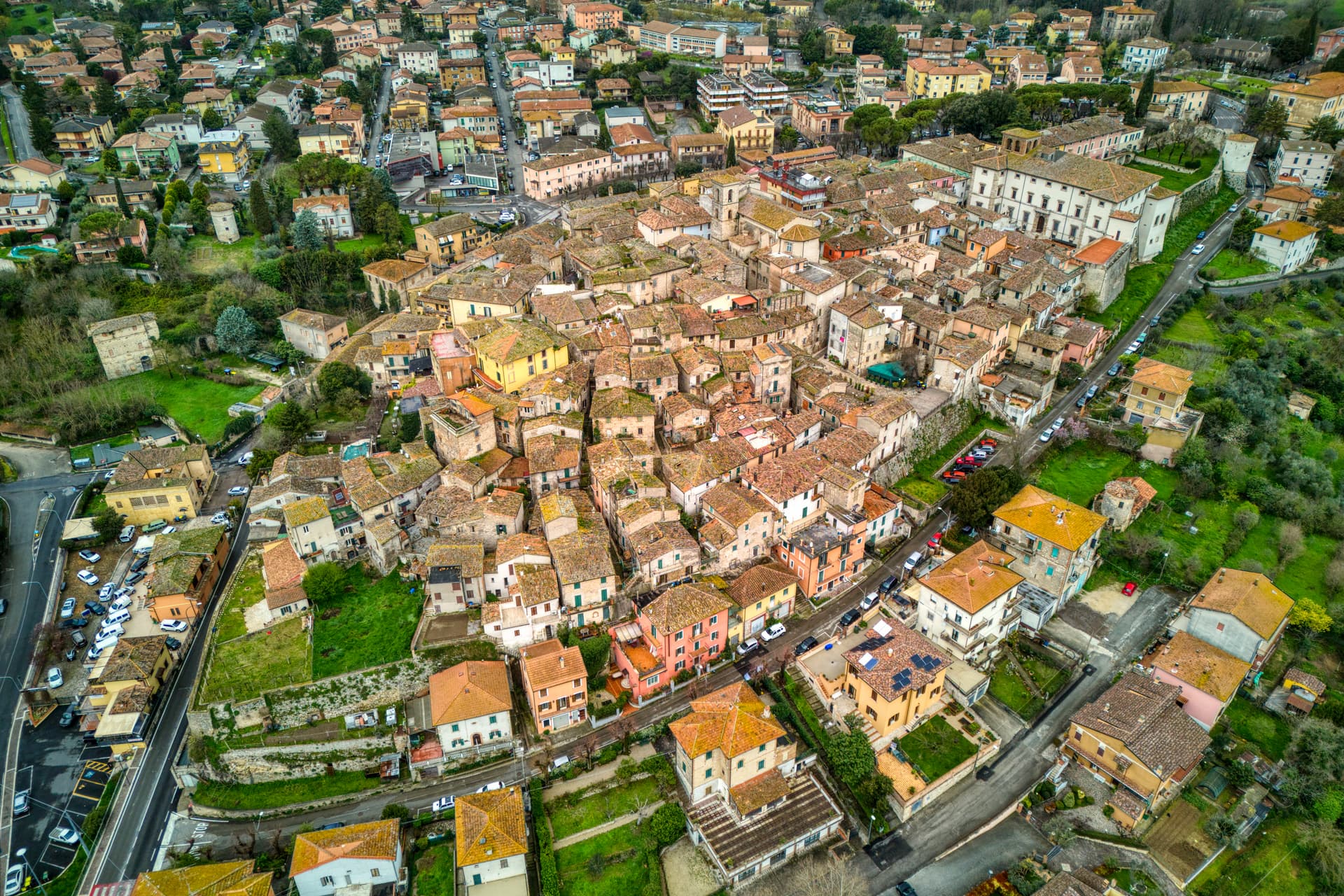
Acquasparta
Province: Terni
A hill town at 350 meters above the Naia valley, where Federico Cesi convened the first Accademia dei Lincei in his Palazzo Cesi in 1603.
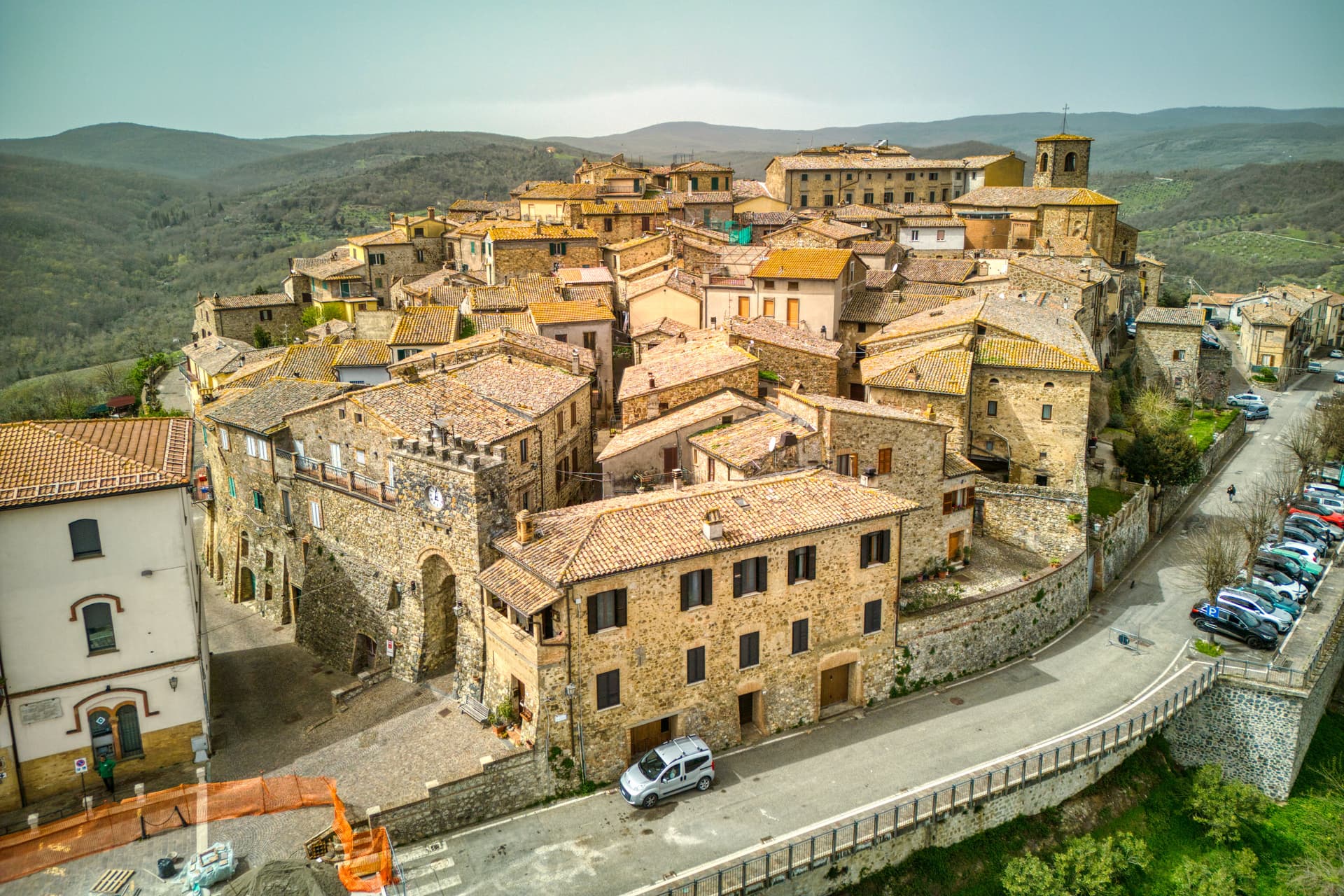
Allerona
Province: Terni
A stone borgo at 472 meters between the Paglia valley and the Valdichiana, an Orvieto outpost whose Monaldeschi castle fell to Charles V.
Arrone
Province: Terni
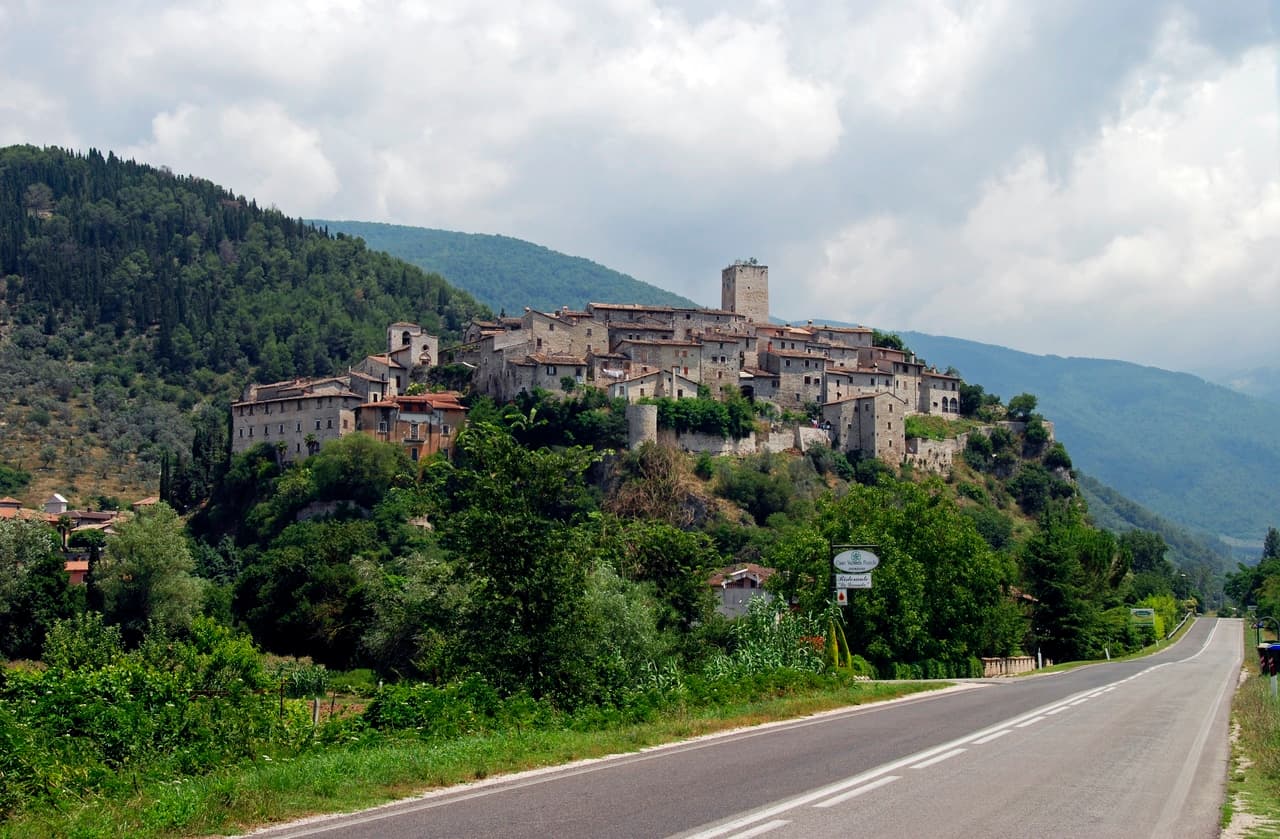
Medieval castle village on the left bank of the Nera at 243 meters, upstream from the largest man-made waterfall in the world.
Bettona
Province: Perugia
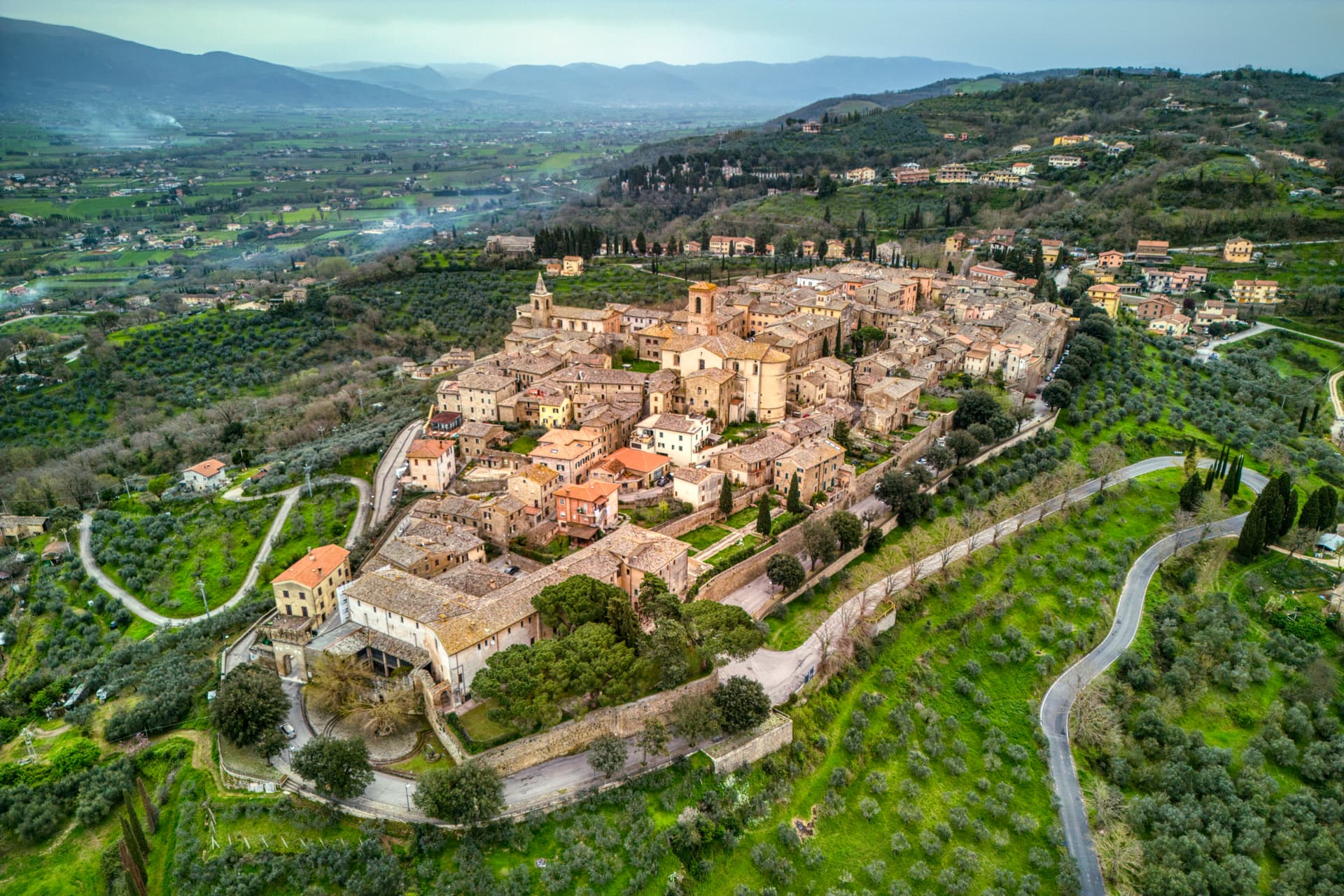
A hill town at 353 meters between the Topino and Chiascio rivers, the only Etruscan settlement ever built east of the Tiber.
Bevagna
Province: Perugia
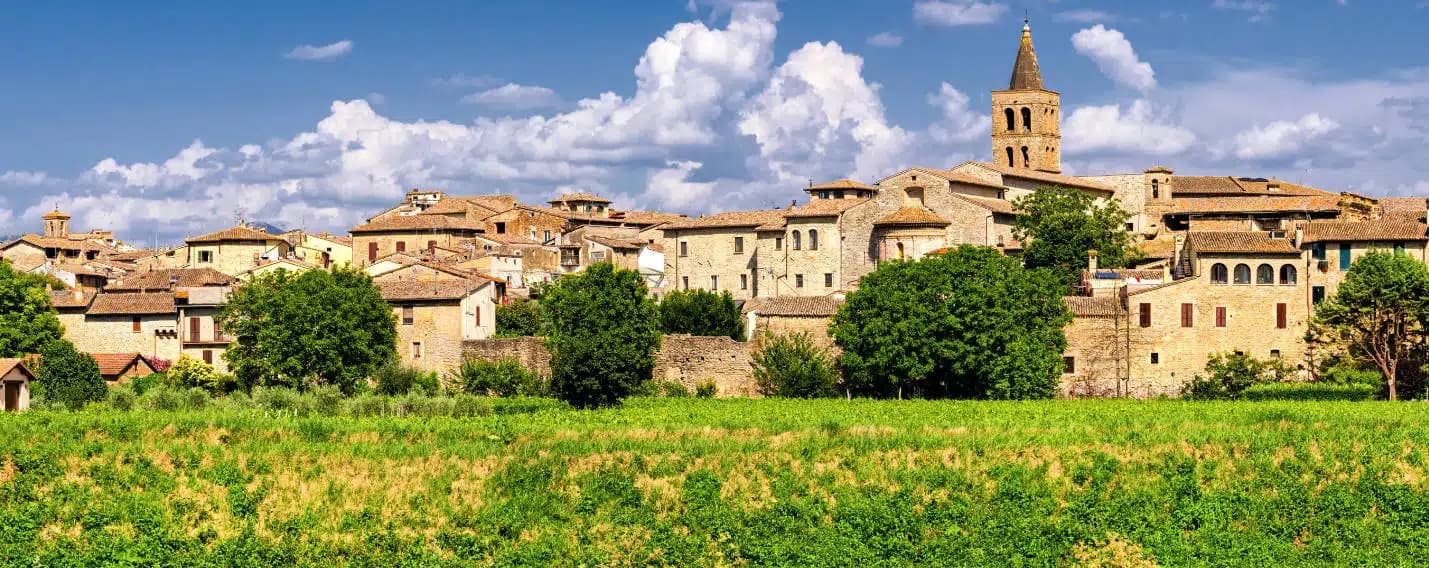
Roman Mevania on the Umbrian plain at 225 meters, four medieval quarters that compete every June in a reconstructed market of the 13th century.