

Tuscany · Siena
Montepulciano
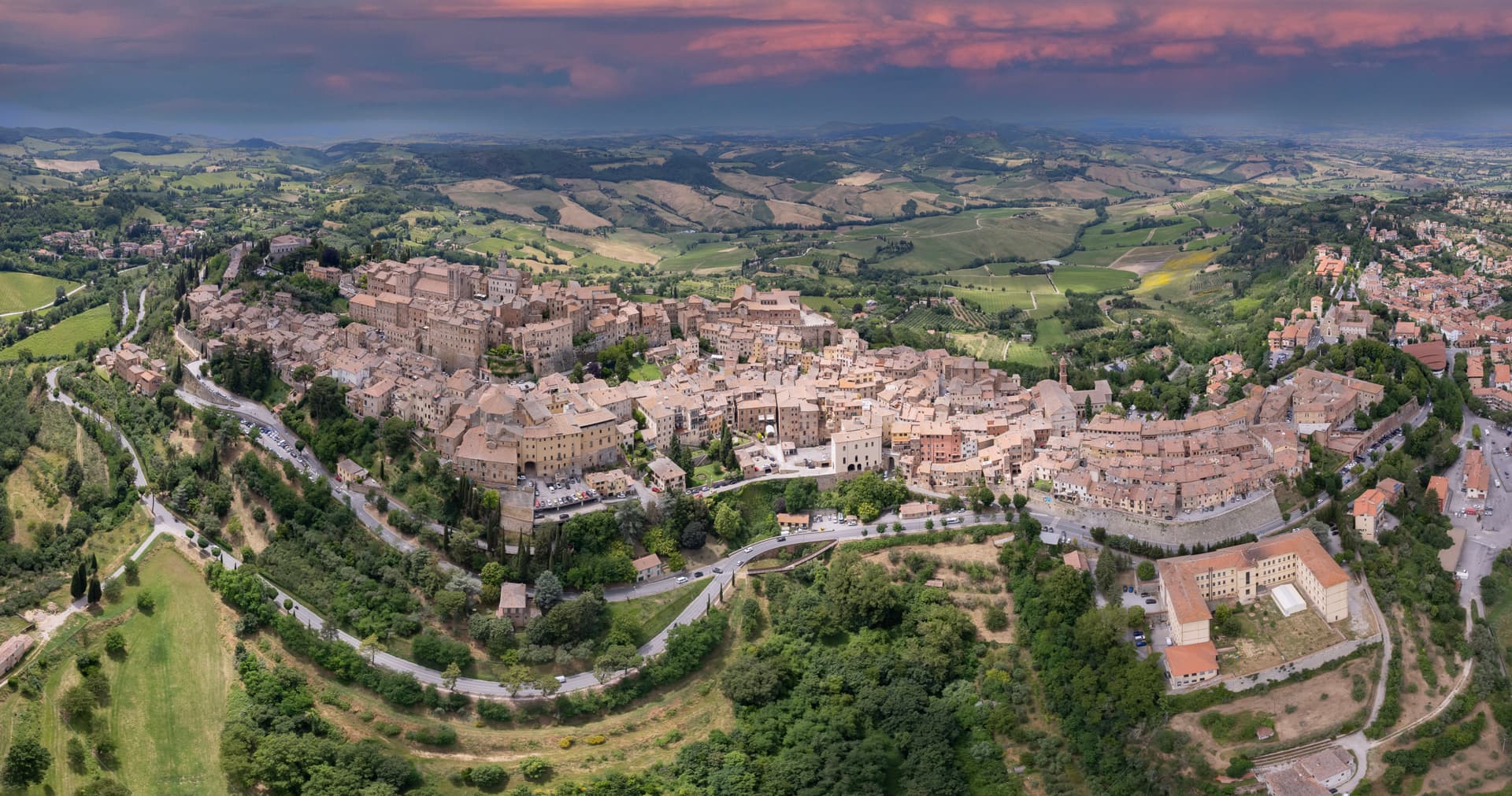
A Renaissance hill town at 605 meters on a limestone ridge, where Vino Nobile is aged in vaulted cellars beneath the palazzi of Piazza Grande.
Known for
VINO NOBILE
DOCG red based on Sangiovese (locally Prugnolo Gentile), one of three principal Tuscan reds alongside Brunello and Chianti Classico.
SAN BIAGIO
Sangallo's Renaissance temple built 1518-1545 on a Greek-cross plan, the iconic image of Montepulciano from below the walls.
BRAVÌO DELLE BOTTI
Annual barrel race up the steep streets to Piazza Grande, run on the last Sunday of August since the fourteenth century.
When to visit
Best · Apr–Oct
- J
- F
- M
- A
- M
- J
- J
- A
- S
- O
- N
- D
- Best
- Hot or crowded
- Quiet
- Mostly closed
Why come
Montepulciano sits on a 605-meter limestone ridge between the Val di Chiana and the Val d'Orcia, 70 kilometers southeast of Siena. The town traces its origin to the Etruscans, who left tombs in the surrounding hills, but the architecture that defines the centro storico is Renaissance: the Palazzo Comunale designed by Michelozzo, Piazza Grande at the top of the climb, and the Tempio di San Biagio just outside the walls, the Greek-cross masterpiece built by Antonio da Sangallo the Elder between 1518 and 1545. Vino Nobile di Montepulciano holds DOCG status alongside Brunello and Chianti Classico, and the producers age it in brick-vaulted cellars carved beneath the same Renaissance palazzi.
The Bravìo delle Botti has run on the last Sunday of August since the fourteenth century: two men from each of the eight contrade roll an eighty-kilogram barrel uphill through the streets to the Piazza Grande. The climb that wears them out is the same climb every visitor makes on foot.
The Sunday letter
We haven’t written Montepulciano’s letter yet.
One town every Sunday, with the photo, the food, the festa. Be there when this one comes up. Free, by Peter & Sophia from Pietrasanta.
By subscribing you agree to Substack’s Terms of Use, our Privacy Policy and our Information collection notice.
What to see
Tempio di San Biagio
Greek-cross Renaissance church built by Antonio da Sangallo the Elder between 1518 and 1545, with a 13-meter dome and travertine façade outside the walls.
Piazza Grande
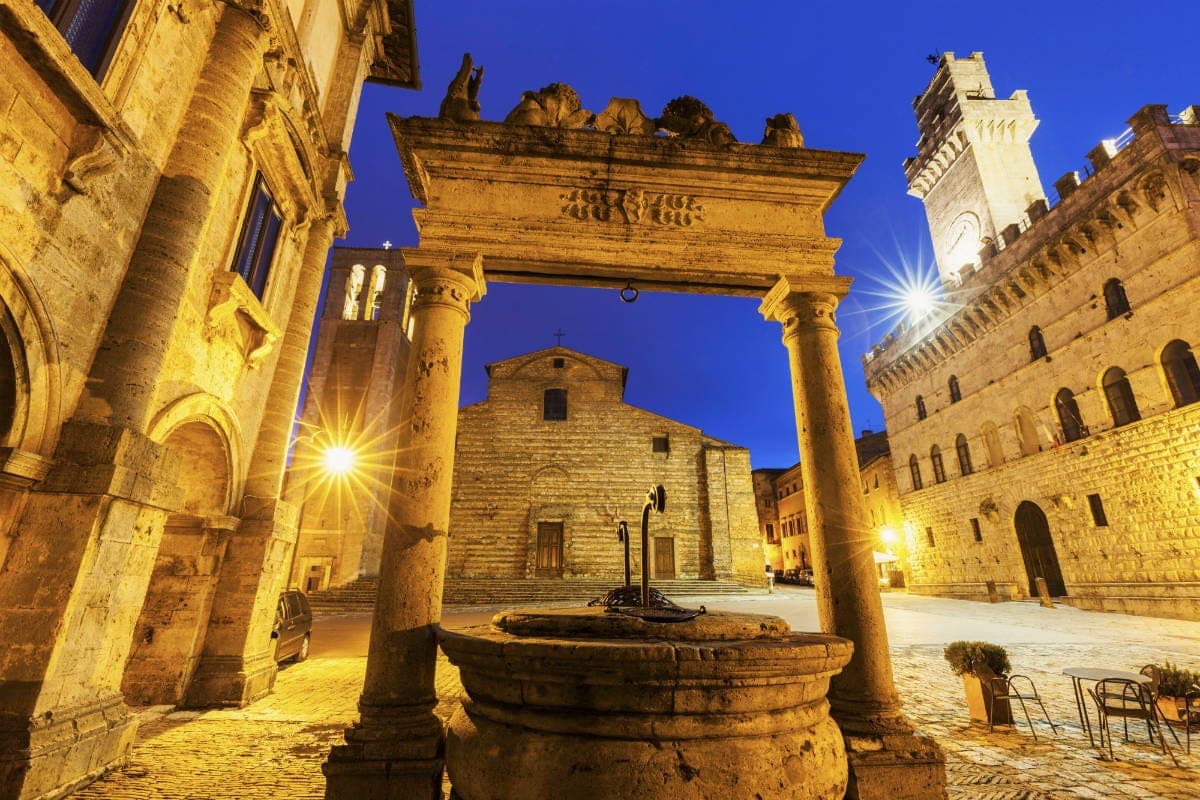
The high piazza at the top of the ridge, ringed by the Duomo, the Palazzo Comunale and the Palazzo Tarugi, all rebuilt in the fifteenth and sixteenth centuries.
Palazzo Comunale
Town hall designed by Michelozzo in the fifteenth century, its tower offering a view over the Val di Chiana and Val d'Orcia.
Duomo di Santa Maria Assunta
Cathedral on Piazza Grande, finished in the early seventeenth century, housing the triptych of the Assumption by Taddeo di Bartolo from 1401.
Cantine storiche
Underground brick-vaulted cellars beneath the Renaissance palazzi where Vino Nobile di Montepulciano is aged, several open for guided tours.
The slow-trip planner
Building a trip? Find where Montepulciano fits in a slow Italy circuit.
Answer five questions. We will shape a geographically coherent slow trip from the 1,000 Italian towns most travelers skip. Yours to save and share.
We recommend
Where to eat and stay
Not our picks, but places the guides put their name to — a Michelin star, a Gambero Rosso fork, a Slow Food snail, a Michelin Key for the hotels. Worth a table, a counter, or a night when you pass through.
IndigenoBistrot
Indigeno carries one Gambero Rosso table, plus a spot in the Michelin Guide.
OsmosiRistorante
One Michelin star for Osmosi, and two Gambero Rosso forks (83/100).
La Bottega del NobileRistorante
One Gambero Rosso fork (78/100), at La Bottega del Nobile.
Le Logge del VignolaRistorante
Le Logge del Vignola has a spot in the Michelin Guide to its name.
Osteria Porta di BaccoWine Bar
Osteria Porta di Bacco has two Gambero Rosso bottles to its name.
Ristorante Caffè Pasticceria PolizianoPasticceria
Ristorante Caffè Pasticceria Poliziano holds a place on Italy's historic-locali register.
Borgo San VincenzoHotel
Borgo San Vincenzo carries a place in the Michelin hotel guide.
Precise Tale Poggio Alla SalaHotel
Precise Tale Poggio Alla Sala carries one Michelin Key.
VILLA POGGIANOHotel
VILLA POGGIANO holds a place in the Michelin hotel guide.
Signature product
Vino Nobile di Montepulciano DOCGDOCG
Sangiovese-based, aged in oak, named noble in the 1500s when it reached the Vatican cellars.
See every town in our catalogue producing Vino Nobile di Montepulciano DOCG.
Living here
- Population 13,274
- Off the beaten pathi
- Pharmacy in town
- High school within a 30-minute drive
- Train station in the comune
- Nearest airport Bologna, 2 h 28 min drive
- Regional capital Firenze, 1 h 29 min drive
Thermal baths in town: Terme di Montepulciano.
Tags & datadesignations · numbers · sources
Recognised as
The numbers
- Elevation: 605 m
- Population: 13,274
- Surface area: 165.33 km²
These figures were compiled from public directories — ISTAT, OpenStreetMap, Wikidata — and from the official listings of the guides named on this page. Town details change; verify with official sources before you travel.
Close by
More towns near Montepulciano
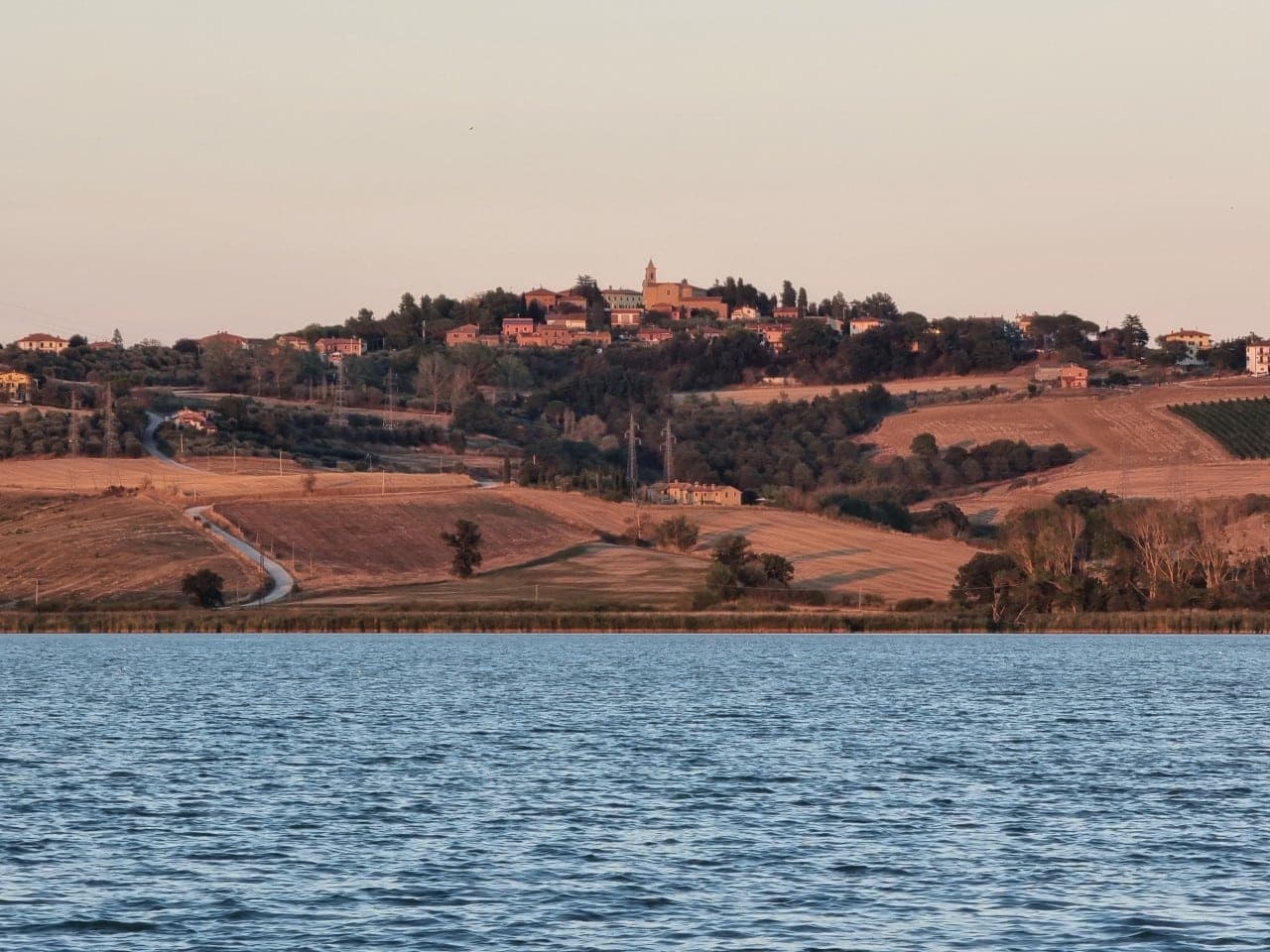
Chiusi
Province: Siena
The Etruscan city of King Porsenna at 398 meters above the Val di Chiana, with one of Italy's major Etruscan museums and tunnels carved beneath the streets.
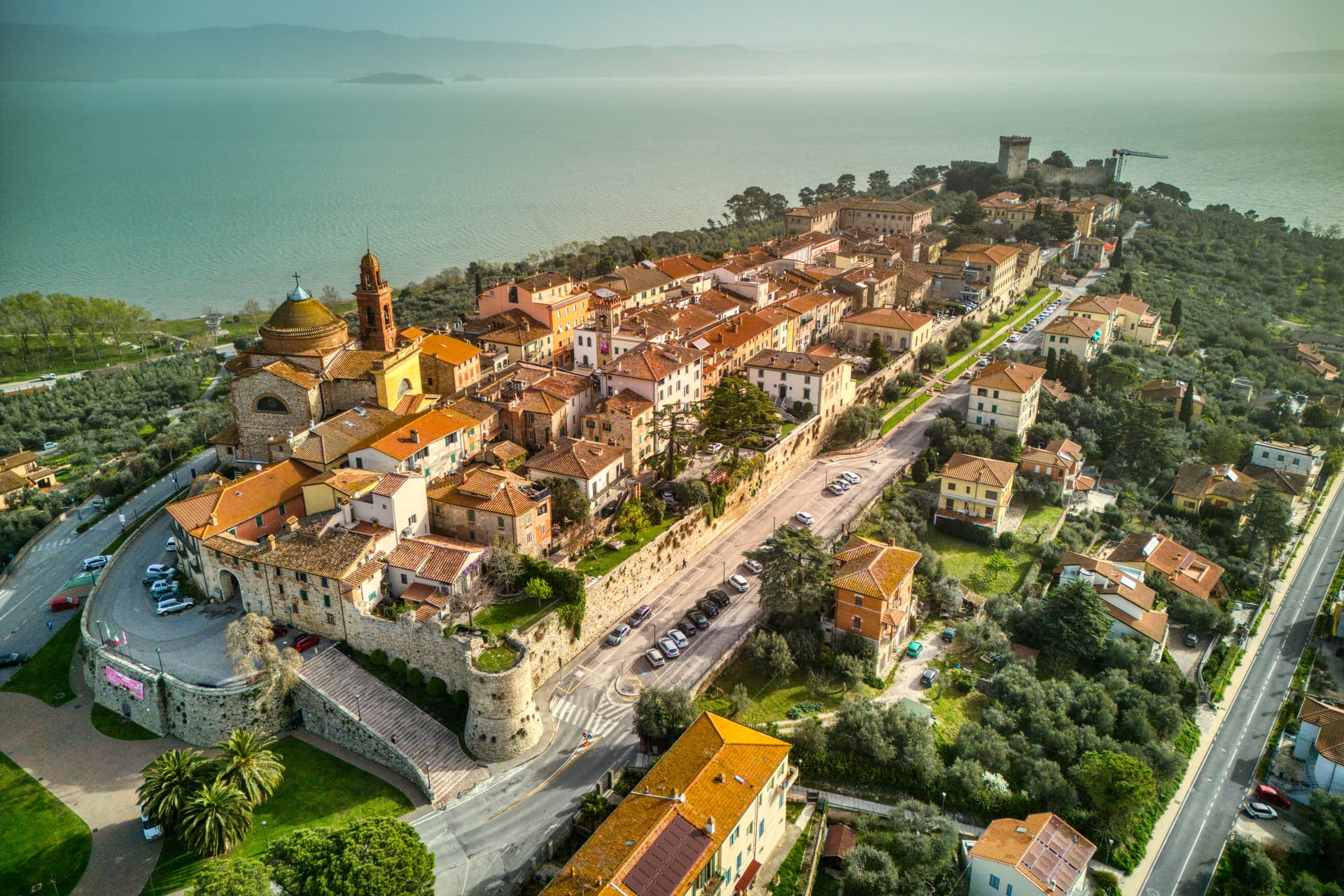
Castiglione del Lago
Province: Perugia
Trasimeno's western promontory, once the lake's fourth island, fortified by Federico II in 1247 and frescoed by Pomarancio for the Corgna marquises.
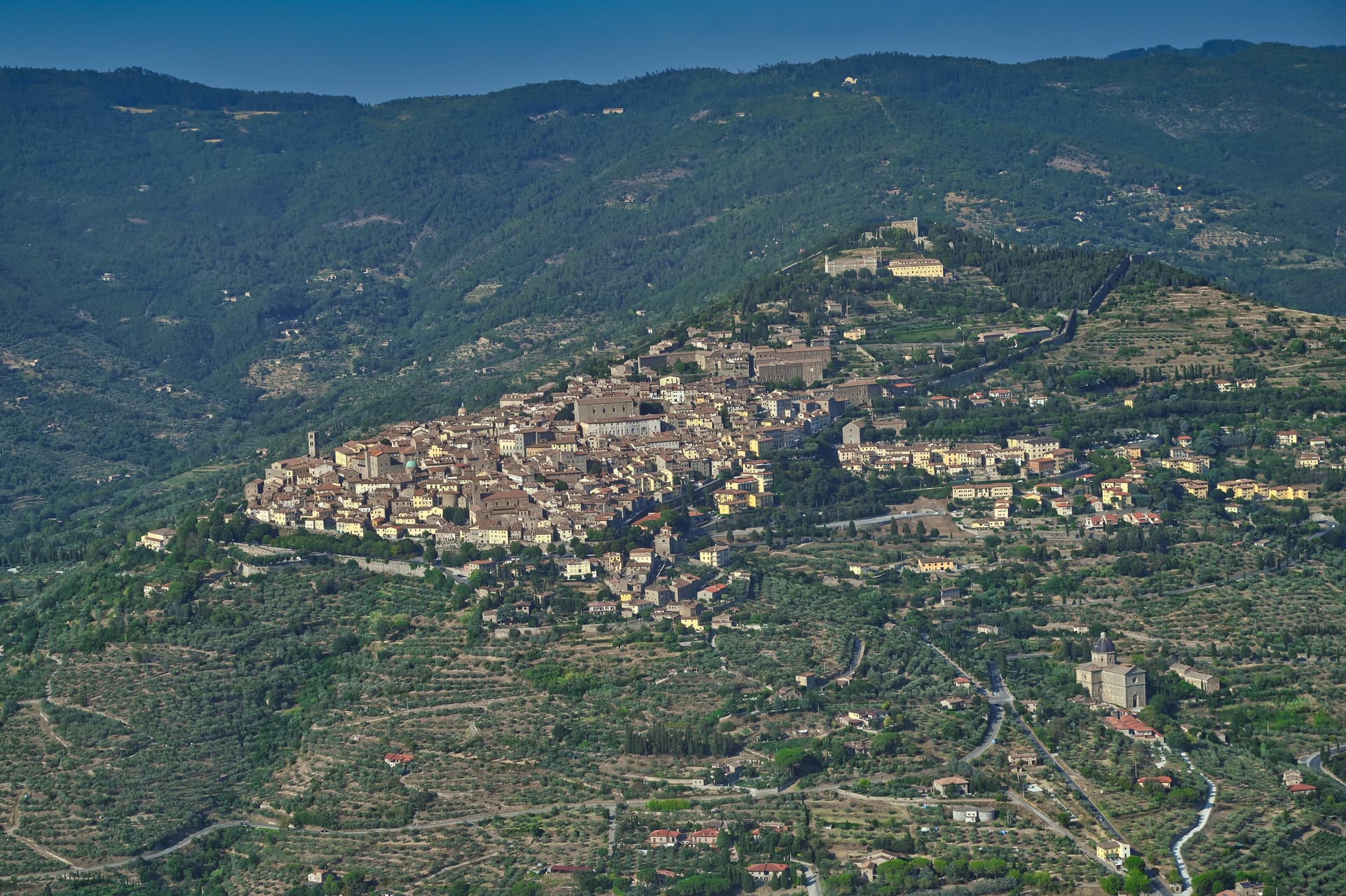
Cortona
Province: Arezzo
An Etruscan lucumonia at 494 meters with two kilometers of walls older than Rome, looking down on the Val di Chiana and Lake Trasimeno.
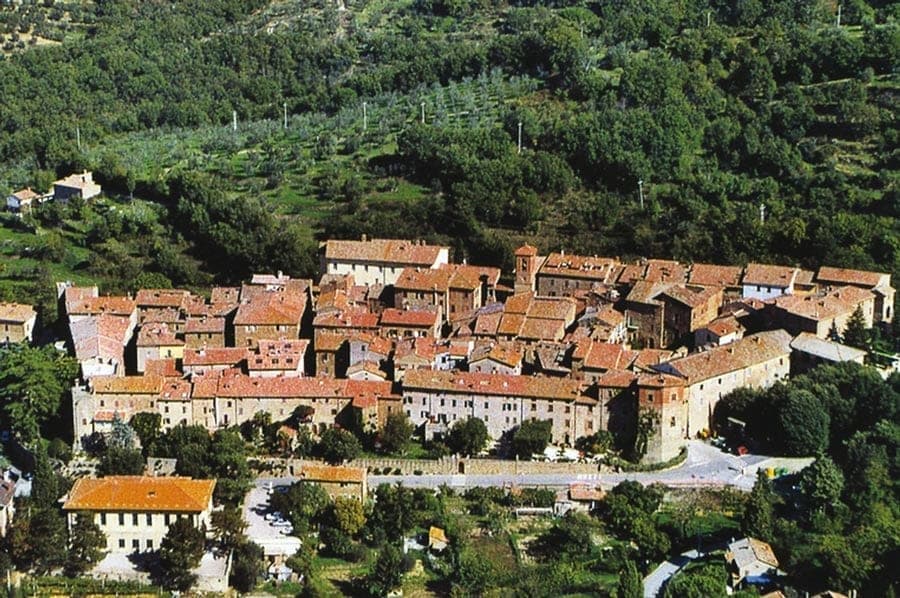
Paciano
Province: Perugia
Walled hill town of 957 people at 391 meters above Lake Trasimeno, three parallel streets, eight towers and three medieval gates intact.
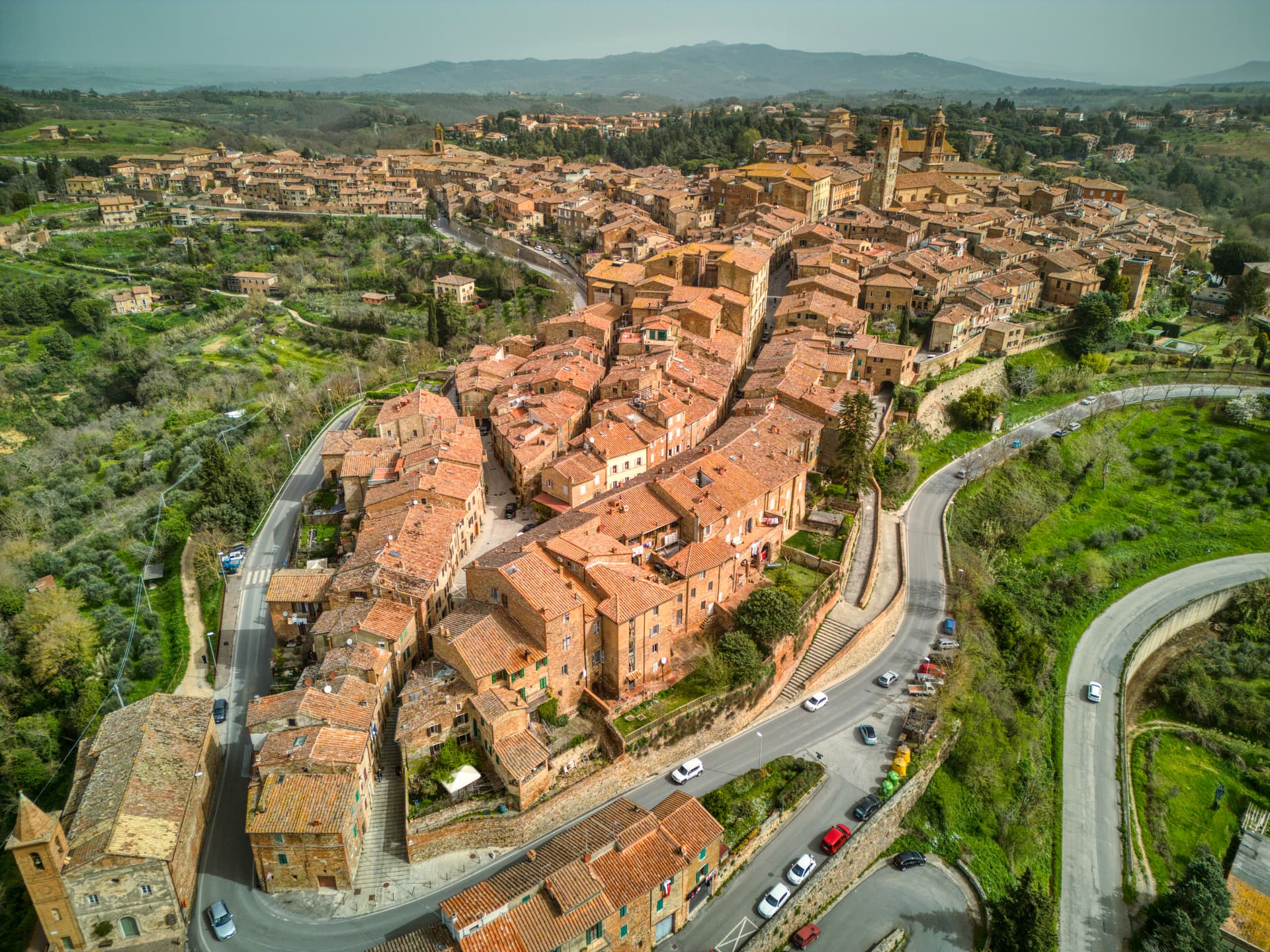
Città della Pieve
Province: Perugia
A red-brick hill town at 508 meters above the Valdichiana, the birthplace of Perugino and the home of Italy's narrowest alley.
🟠 Bandiera Arancione
More Bandiera Arancione towns in Tuscany
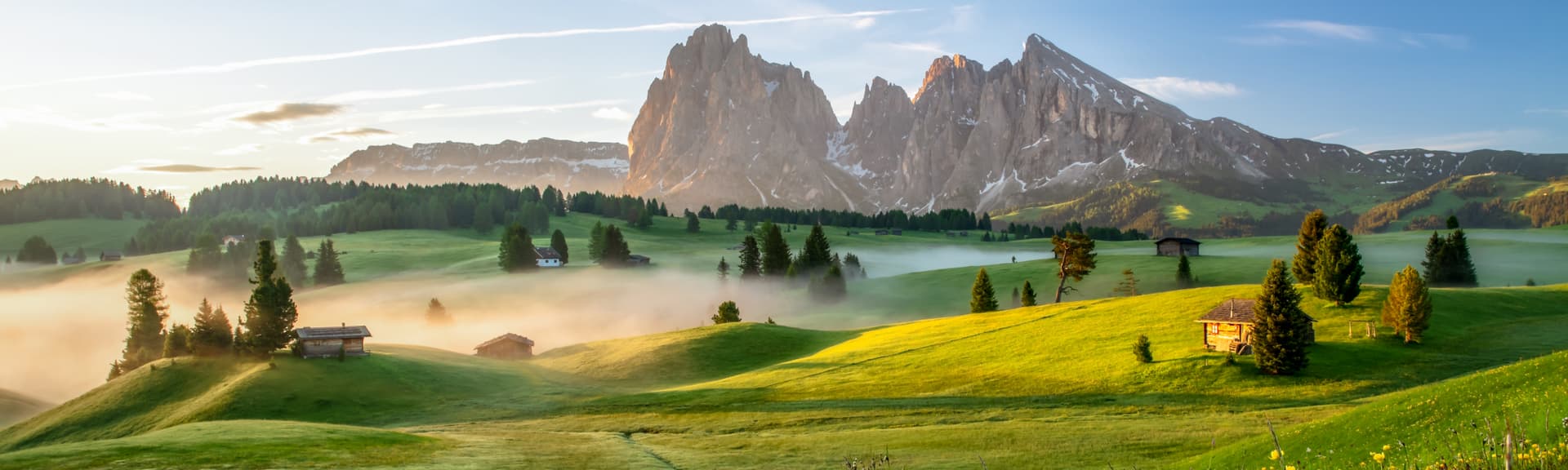
Abetone Cutigliano
Province: Pistoia
The Apennine ski pass at 1,388 meters where the Granduca's two stone pyramids of 1778 mark the old Tuscan-Modenese border.
Anghiari
Province: Arezzo
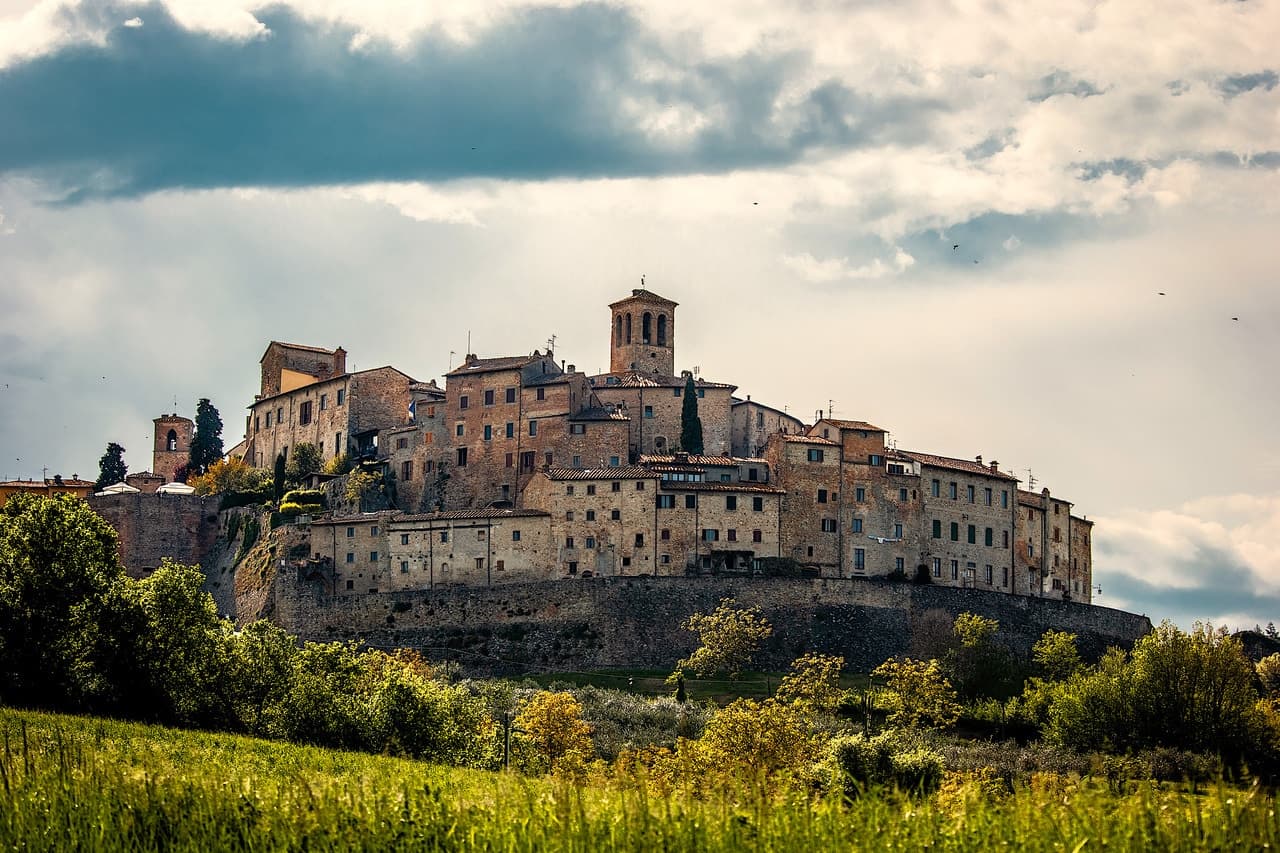
A walled medieval town at 430 meters over the upper Tiber valley, where Florence beat Milan in 1440 and Leonardo started the fresco he never finished.
Barga
Province: Lucca
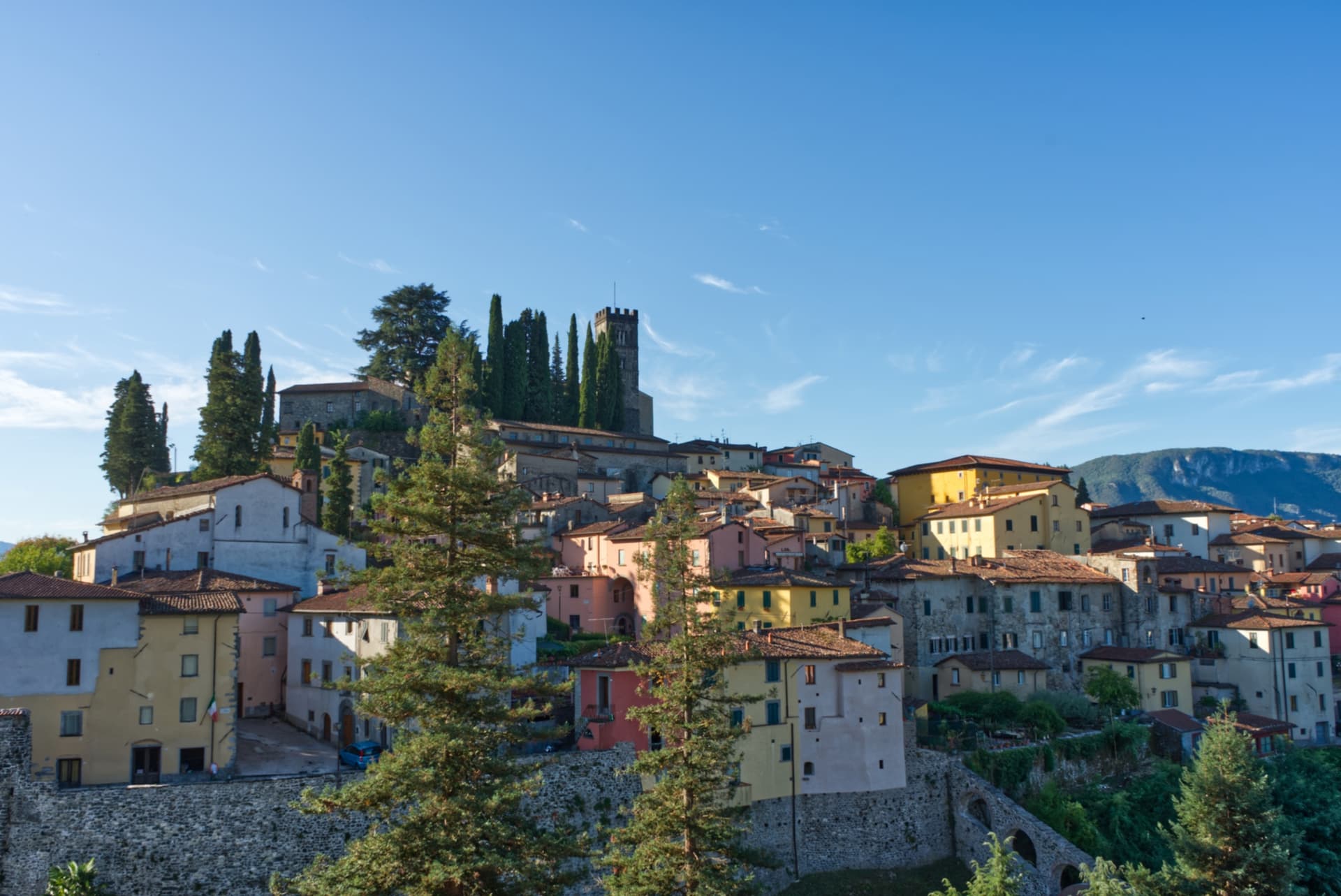
A medieval hilltop town at 410 meters in the Serchio valley between the Apuan Alps and the Apennines, where Giovanni Pascoli wrote his last poems and the August festival serves fish and chips.
Casale Marittimo
Province: Pisa
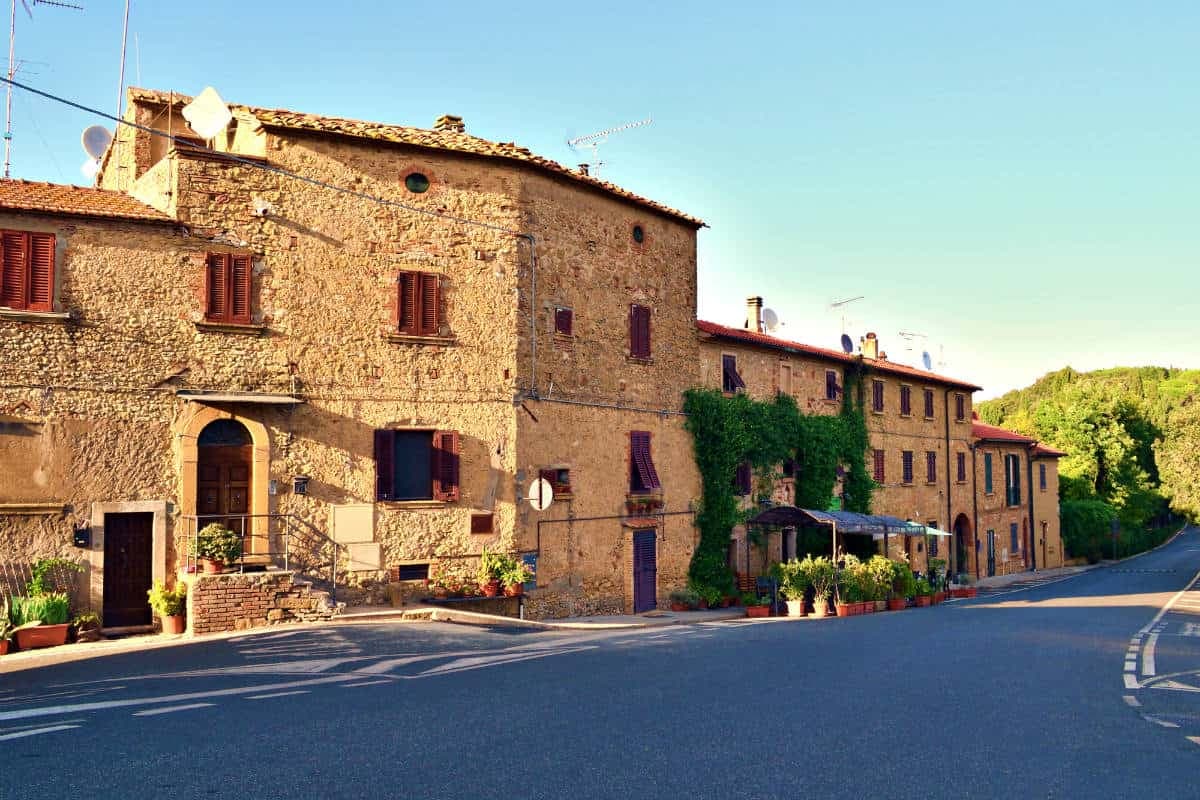
A concentric stone borgo at 214 meters above the Val di Cecina, built where a seventh-century BC Etruscan outpost of Volterra once stood.
Castelnuovo Berardenga
Province: Siena
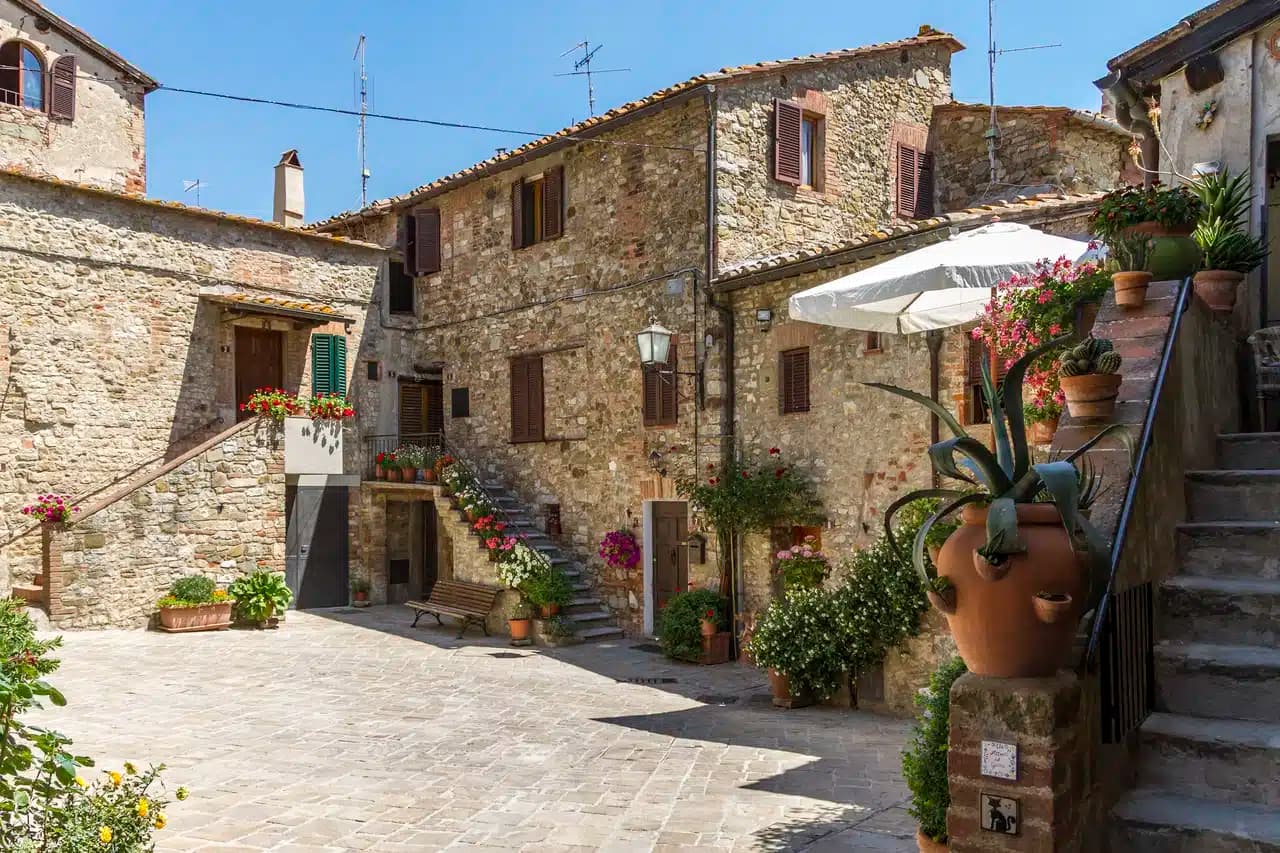
A Chianti Classico commune at 351 meters between the Ombrone and the Crete Senesi, the last castle Siena built against Florence, in 1366.