
Hill towns
Hill towns in Sardinia
16 towns
The ridge and hilltop borghi, sitting around 400 meters. Vineyards below, one road up, walkable once you are there. Good in almost any season.
The towns
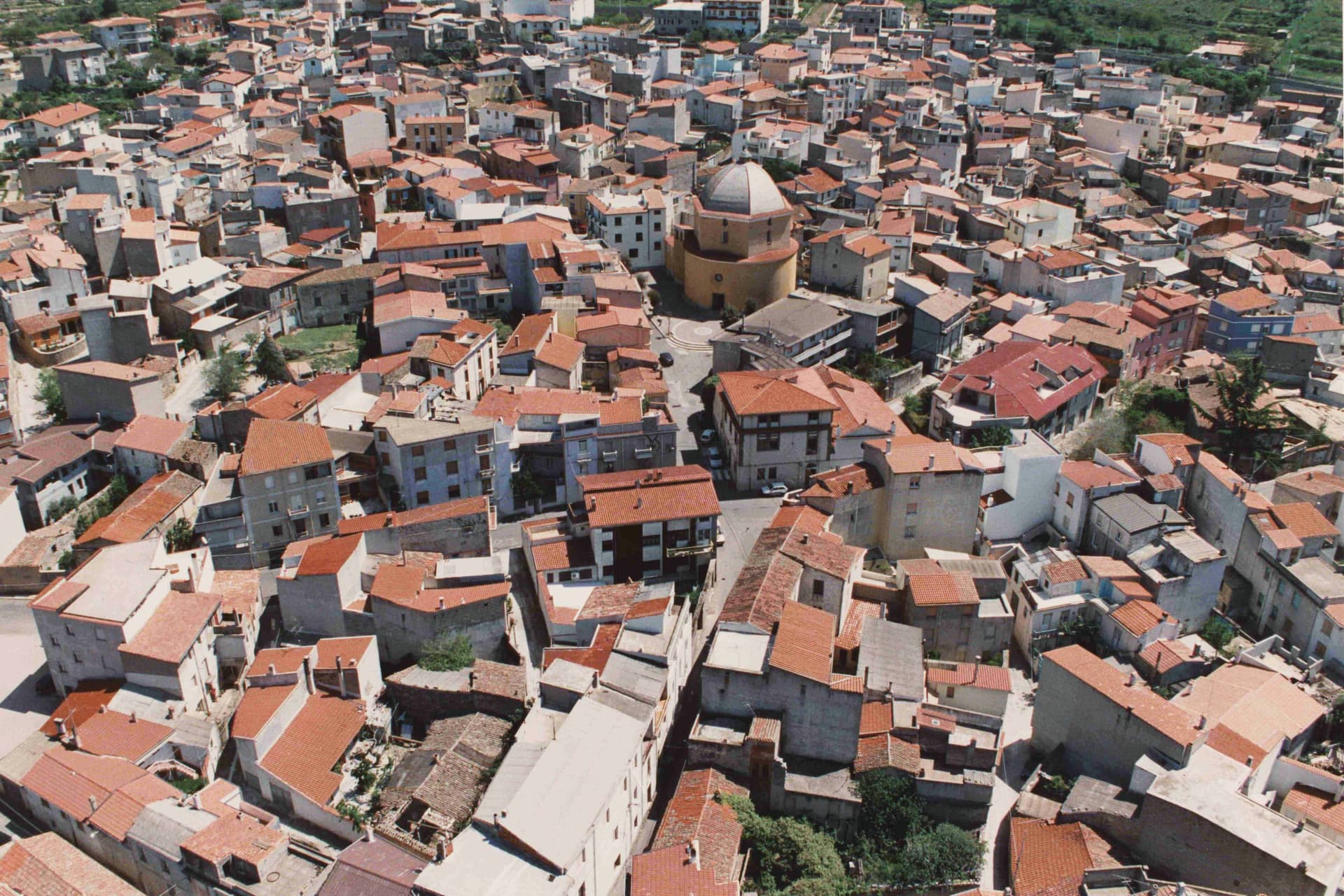
Mamoiada
Province: Nuoro · 644 m
The Barbagia village where the Mamuthones come out on January 17, twelve men in black sheepskins carrying thirty kilos of cowbells.
Tempio Pausania
Province: Gallura Nord-Est Sardegna · 566 m
The granite capital of Gallura at the foot of Monte Limbara, known for cork, Vermentino DOCG and the largest Carnival in northern Sardinia.
Atzara
Province: Nuoro · 553 m
A Mandrolisai wine village on the western Gennargentu, painted in the early twentieth century by Spanish costumbristas and the Sardinian Scuola di Atzara.
Orroli
Province: Cagliari · 550 m
A Sarcidano village at 550 meters on the Pranemuru basalt plateau, home of the Nuraghe Arrubiu, the only five-tower nuraghe in Sardinia.
Aggius
Province: Gallura Nord-Est Sardegna · 514 m
A Gallura granite village at 514 meters under the Monti di Aggius, with the largest ethnographic museum in Sardegna and three centuries of bandit history.
Santu Lussurgiu
Province: Oristano · 503 m
A Montiferru village at 503 meters where the Carnival horse race runs through a steep stone street and saddlery has been made since 1923.
Baunei
Province: Ogliastra · 480 m
A village at 480 meters on the Monte Santo limestone ridge, its territory holding a national-monument beach and a trek regularly called Italy's hardest.
Jerzu
Province: Ogliastra · 450 m
The Cannonau capital of Ogliastra, perched at 450 meters in the eastern Ogliastra interior.
Cuglieri
Province: Oristano · 428 m
A Montiferru town at 428 meters, with the first minor basilica in Sardegna above it and the ruins of Punic Cornus below.
Montresta
Province: Oristano · 405 m
A Planargia hill village of 435 people founded in 1746 by Maniot Greek families who left Corsica for new land in Sardinia.
Dorgali
Province: Nuoro · 387 m
A Supramonte town at 387 meters, with a coastal frazione, a Nuragic village hidden in a sinkhole, and a limestone gorge cut through the massif to the south.
Oliena
Province: Nuoro · 380 m
A Supramonte village at the foot of the massif's highest peak, source of Cannonau Nepente, base camp for Tiscali and the Lanaitto valley.
Samugheo
Province: Oristano · 380 m
Sardinia's textile-weaving capital: a 2,687-resident Mandrolisai borgo where the MURATS regional textile museum, the Tessingiu woven-art biennale, and an active community of weavers on traditional looms keep a knot-stitch tradition alive.
Seneghe
Province: Oristano · 305 m
An olive-oil village on the eastern slope of Montiferru, 25 km from Oristano, that doubles as Sardegna's poetry capital each September.
Barumini
Province: Medio Campidano · 202 m
A Marmilla village whose nuraghe became Sardegna's first UNESCO site.
Iglesias
Province: Sulcis Iglesiente · 200 m
Sardinia's medieval mining capital: a 25,000-resident Pisan-Aragonese walled town in the Sulcis-Iglesiente metalliferous district, with an intact Gothic centro storico and UNESCO-recognised mining heritage at Monteponi just outside town.
From elsewhere in Italy
Five more towns
Salemi
Province: Trapani
The Trapani hill town where Garibaldi raised the tricolor on 14 May 1860 and proclaimed Salemi the capital of Italy for a day.
Pieve Tesino
Province: Trento
A plateau village in eastern Trentino, birthplace of Alcide De Gasperi, shaped by centuries of families who left to trade prints across Europe.
Vieste
Province: Foggia
The Gargano headland of whitewashed alleys on a white limestone cliff, with the 25-meter Pizzomunno sea stack standing on the beach.
Castelvecchio Calvisio
Province: L'Aquila
124 people at 1,067 meters on a ridge above the Tirino, inside a fortified ellipse of stone walls with alleys orthogonal to its perimeter.
Agnone
Province: Isernia
At 840 meters, town of the pontifical bell foundry and the fire procession that lights its streets every Christmas Eve.