
Parco Regionale
Parco Regionale in Campania
26 towns
Campania holds 26 Parco Regionale sites inside our catalogue. They cluster in the Salerno, Napoli, and Avellino provinces.
The three most recognised in our catalogue are Tramonti, Positano, and Furore. 23 more towns carry the mark alongside them.
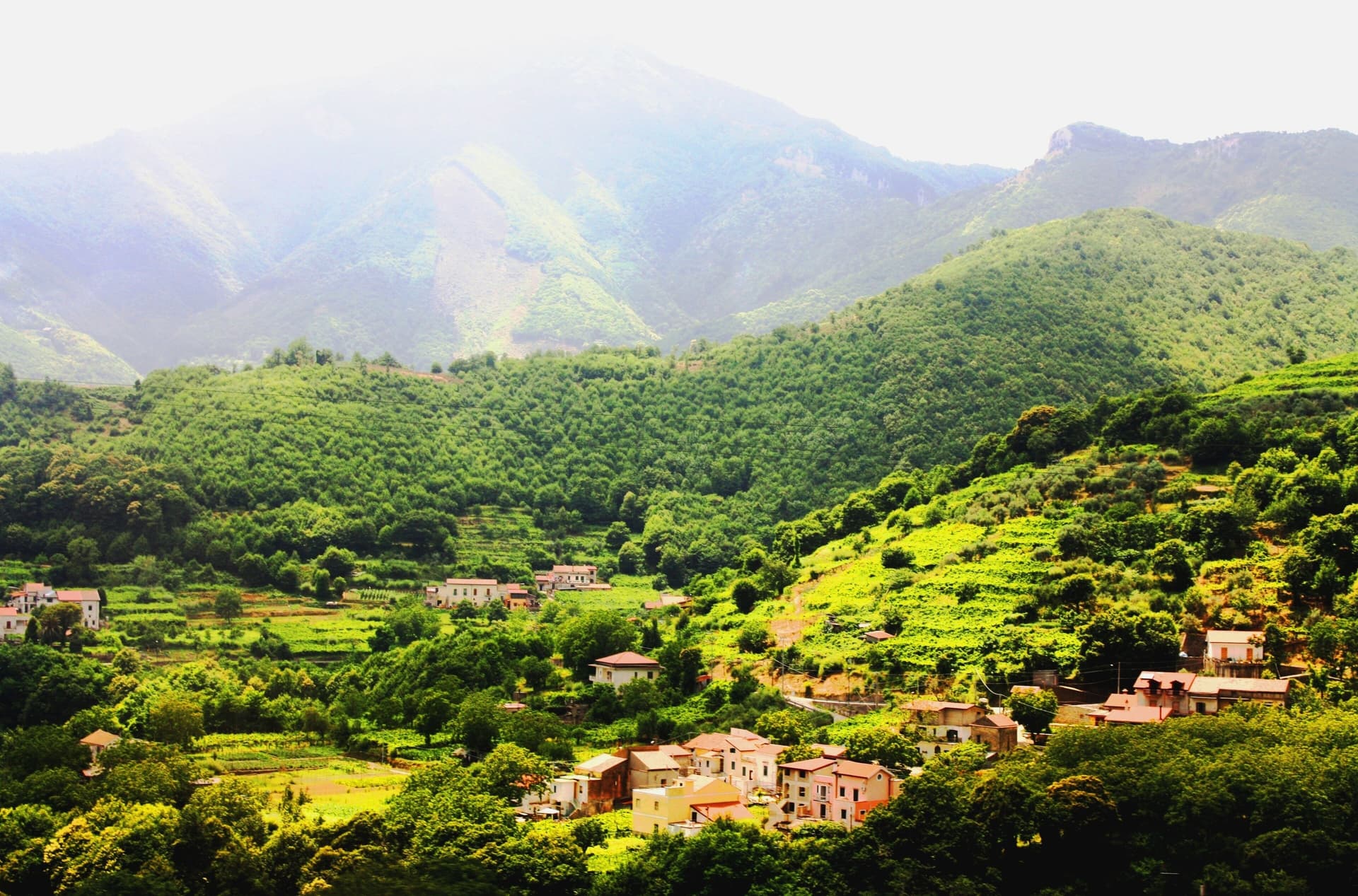
Tramonti
Province: Salerno · 321 m
The inland side of the Amalfi Coast, thirteen hamlets on the Lattari slopes producing the Costa d'Amalfi Tramonti DOC and an exported pizza dough.
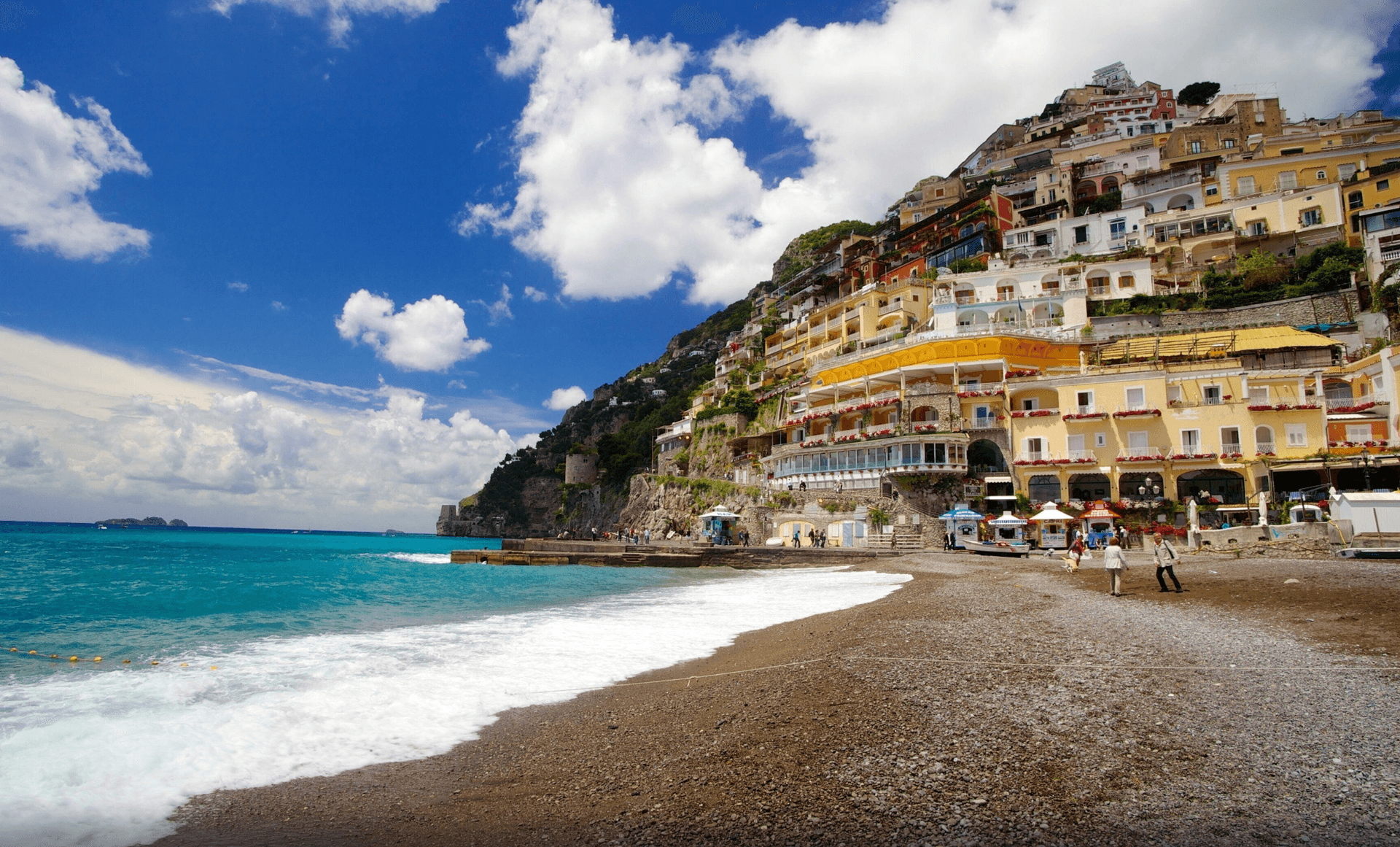
Positano
Province: Salerno · 30 m
The vertical village of the Amalfi Coast, terraced houses climbing four hundred meters from Spiaggia Grande to the Lattari ridge under a tiled Byzantine dome.
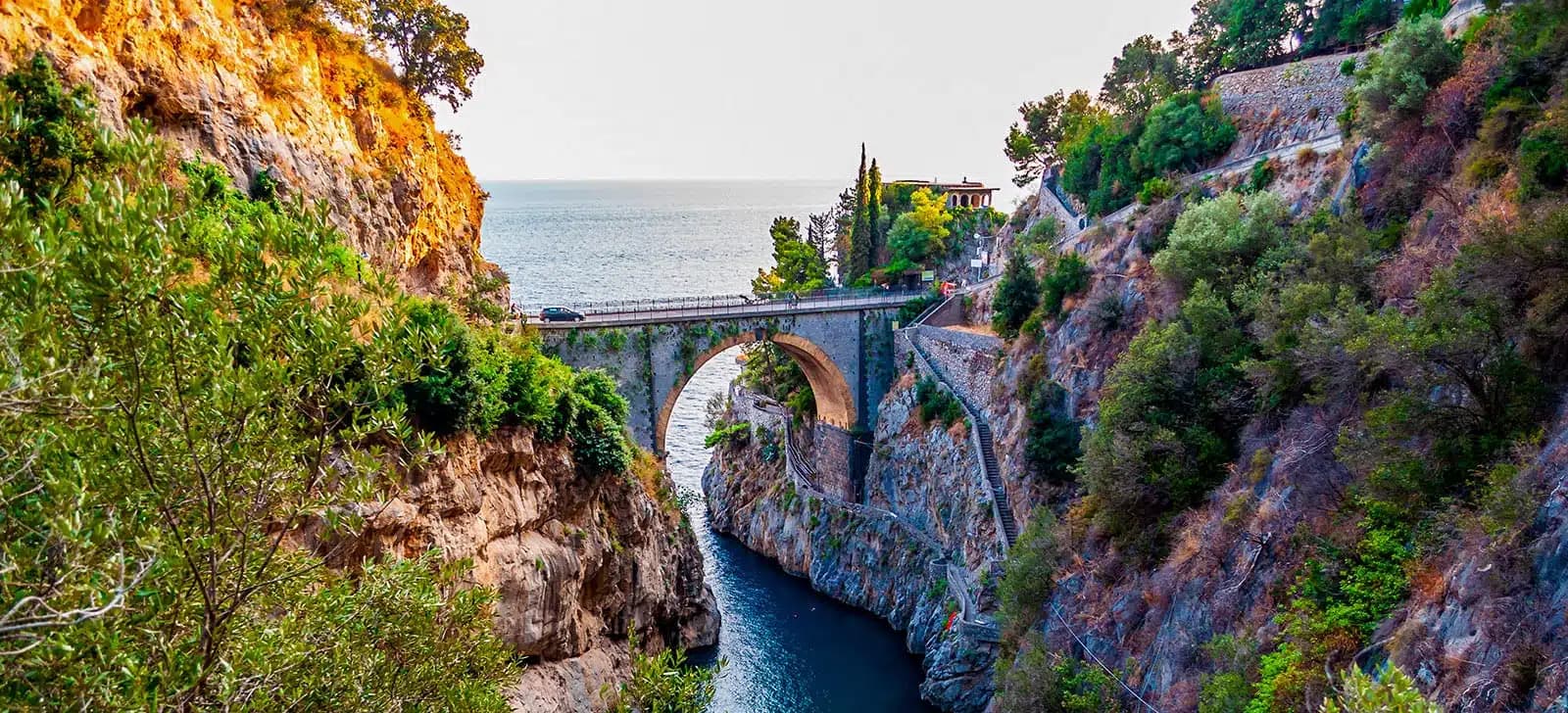
Furore
Province: Salerno · 300 m
The Amalfi Coast village with no piazza and no center, scattered on rock walls 300 meters above the only fjord in southern Italy.
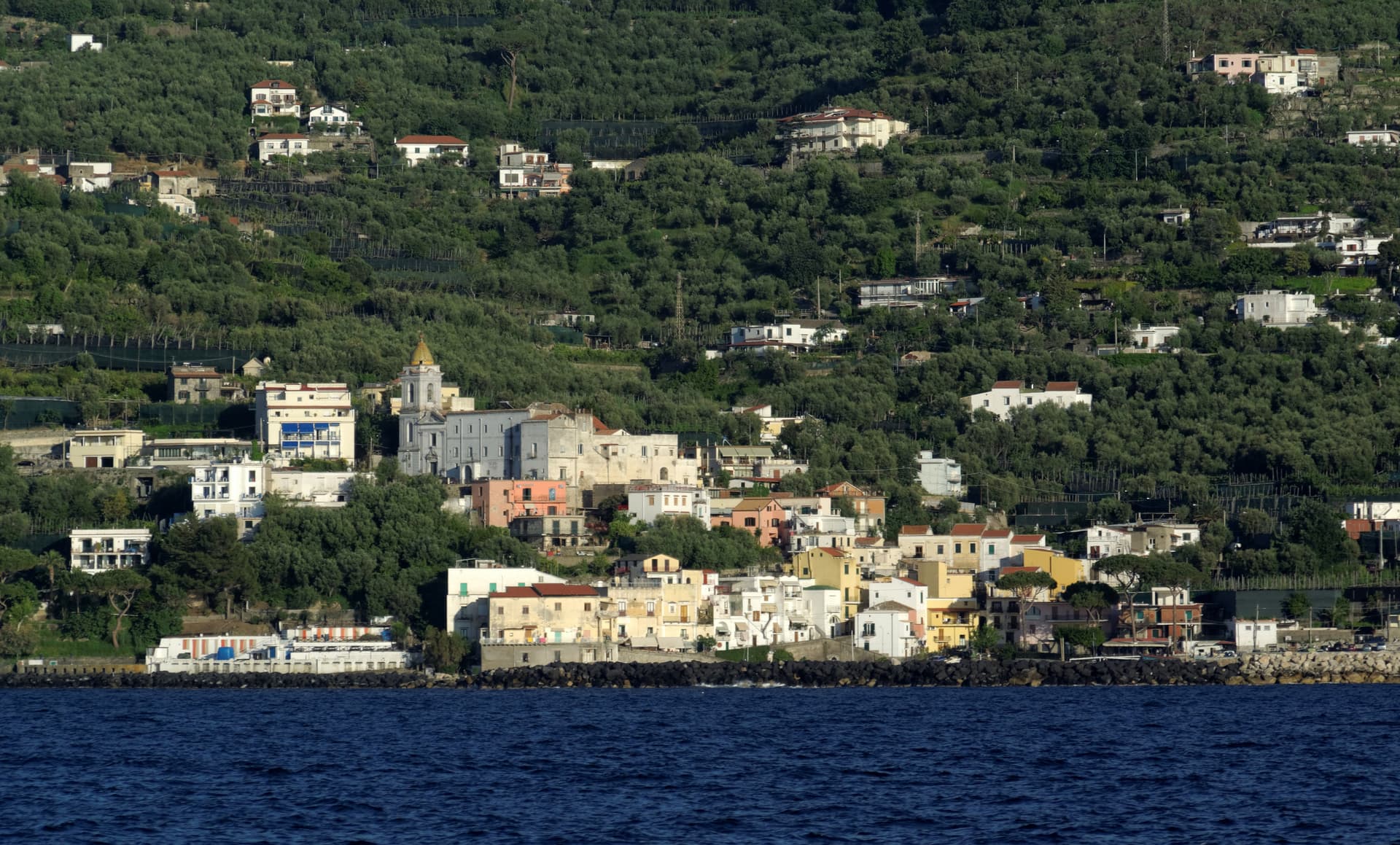
Massa Lubrense
Province: Napoli · 121 m
The Sorrentine Peninsula's largest commune by area, stretching from Sorrento across Punta Campanella to the Gulf of Salerno, Capri three miles offshore.
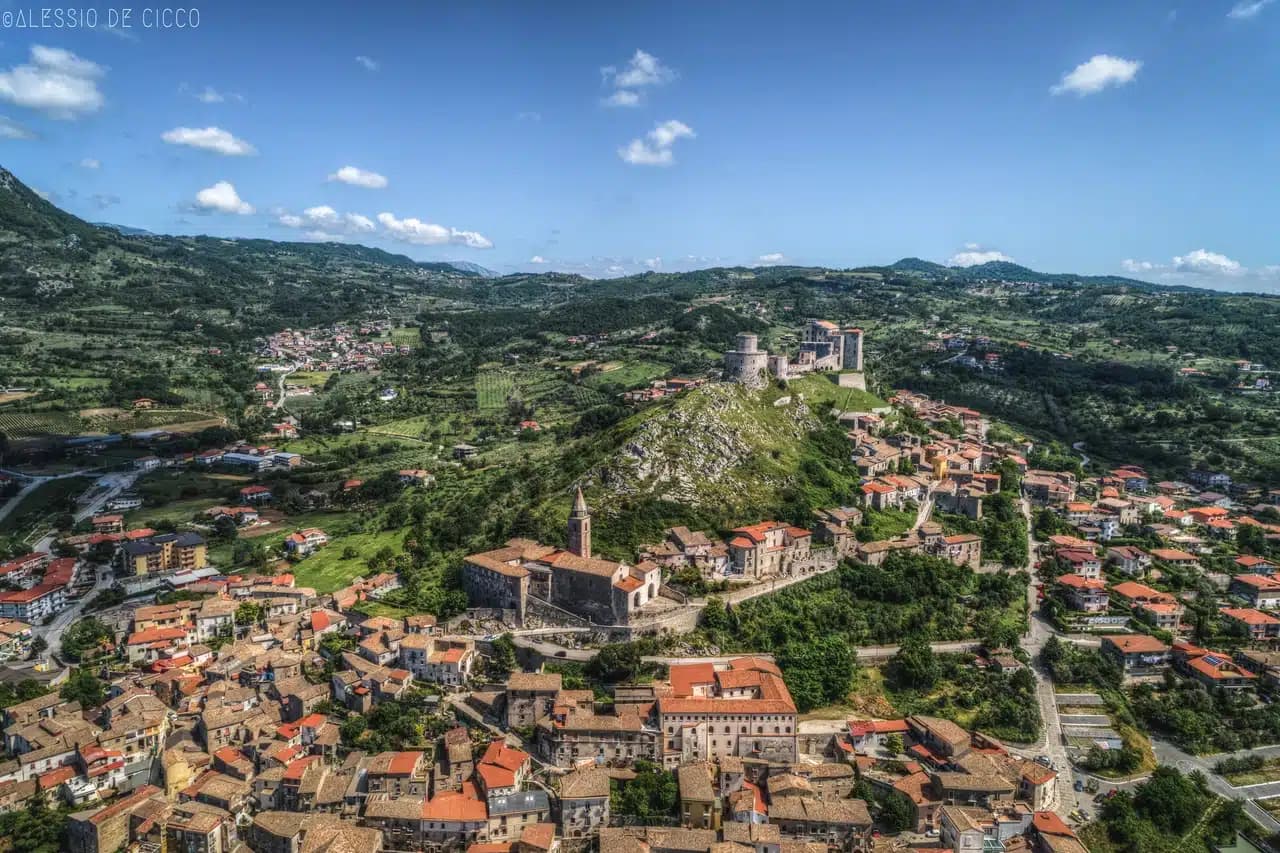
Montesarchio
Province: Benevento · 300 m
Ancient Caudium at 300 meters in the Valle Caudina, the Roman defeat at the Forche Caudine still attached to the name two thousand years later.
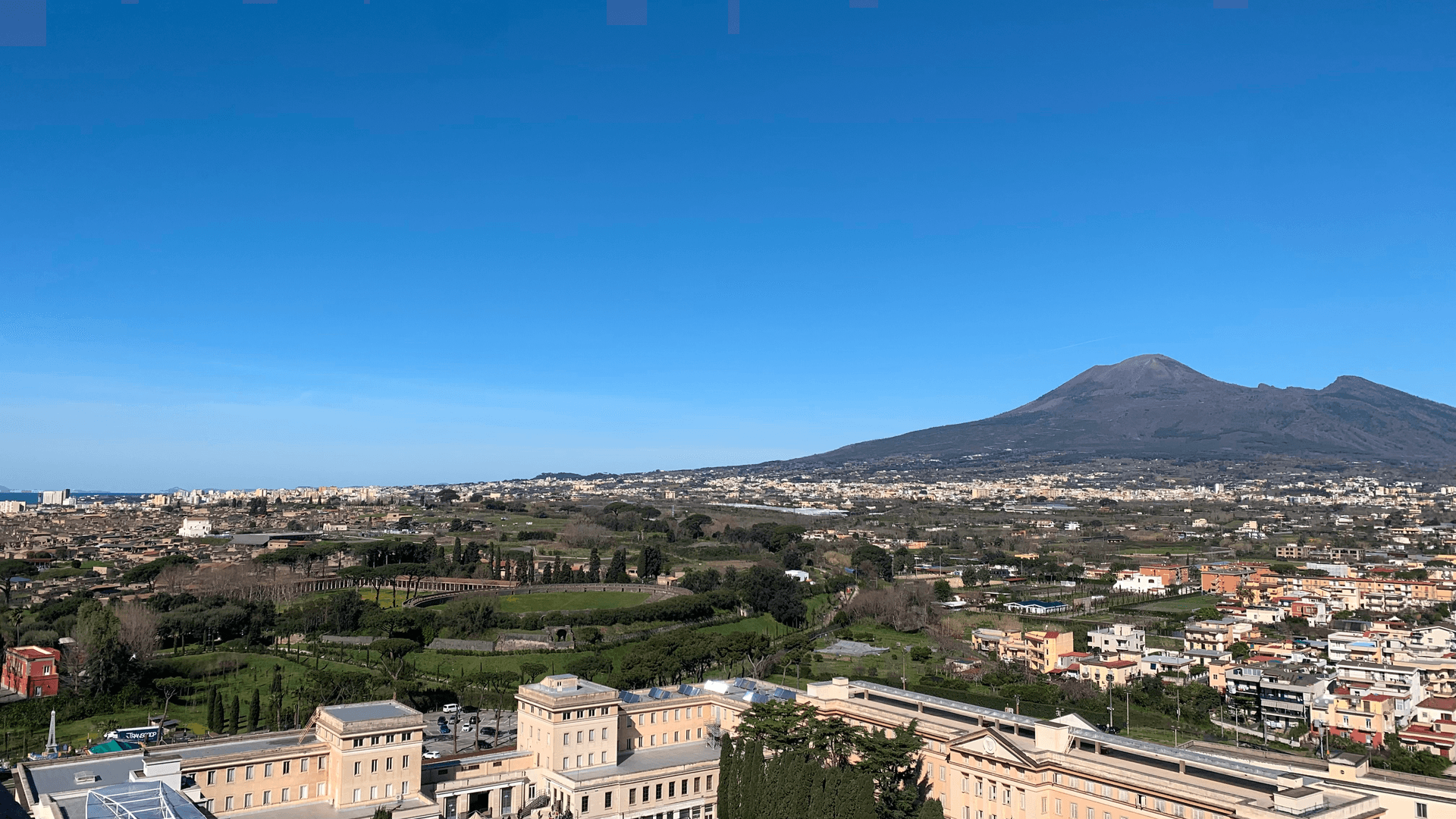
Pompei
Province: Napoli · 30 m
The Roman city buried by Vesuvius in 79 AD, dug back up since 1748, and a modern town around Bartolo Longo's 1876 sanctuary.
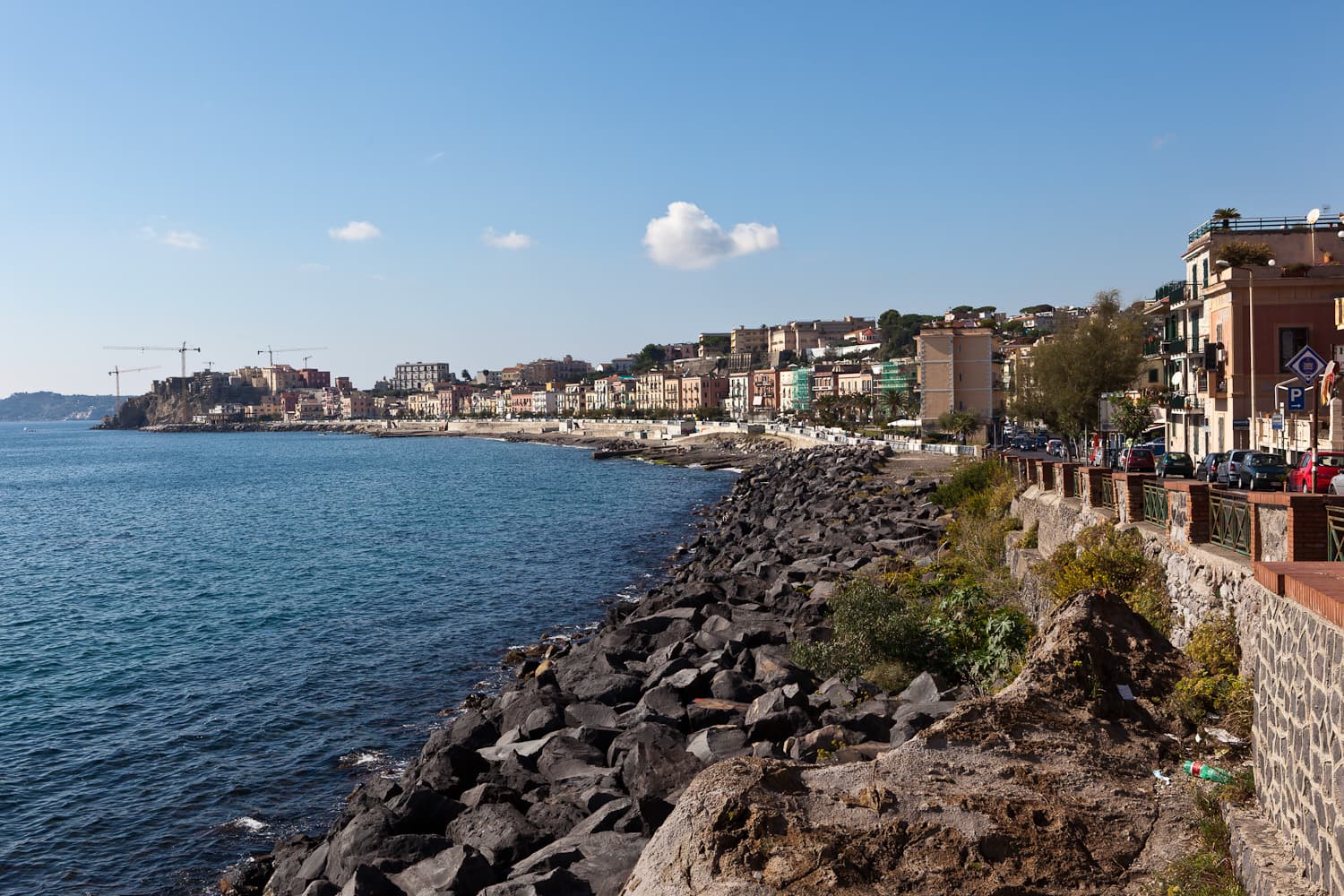
Pozzuoli
Province: Napoli · 28 m
A Roman port on the Campi Flegrei caldera, the Greek Dicearchia and Roman Puteoli, where the Macellum columns first proved bradyseism.
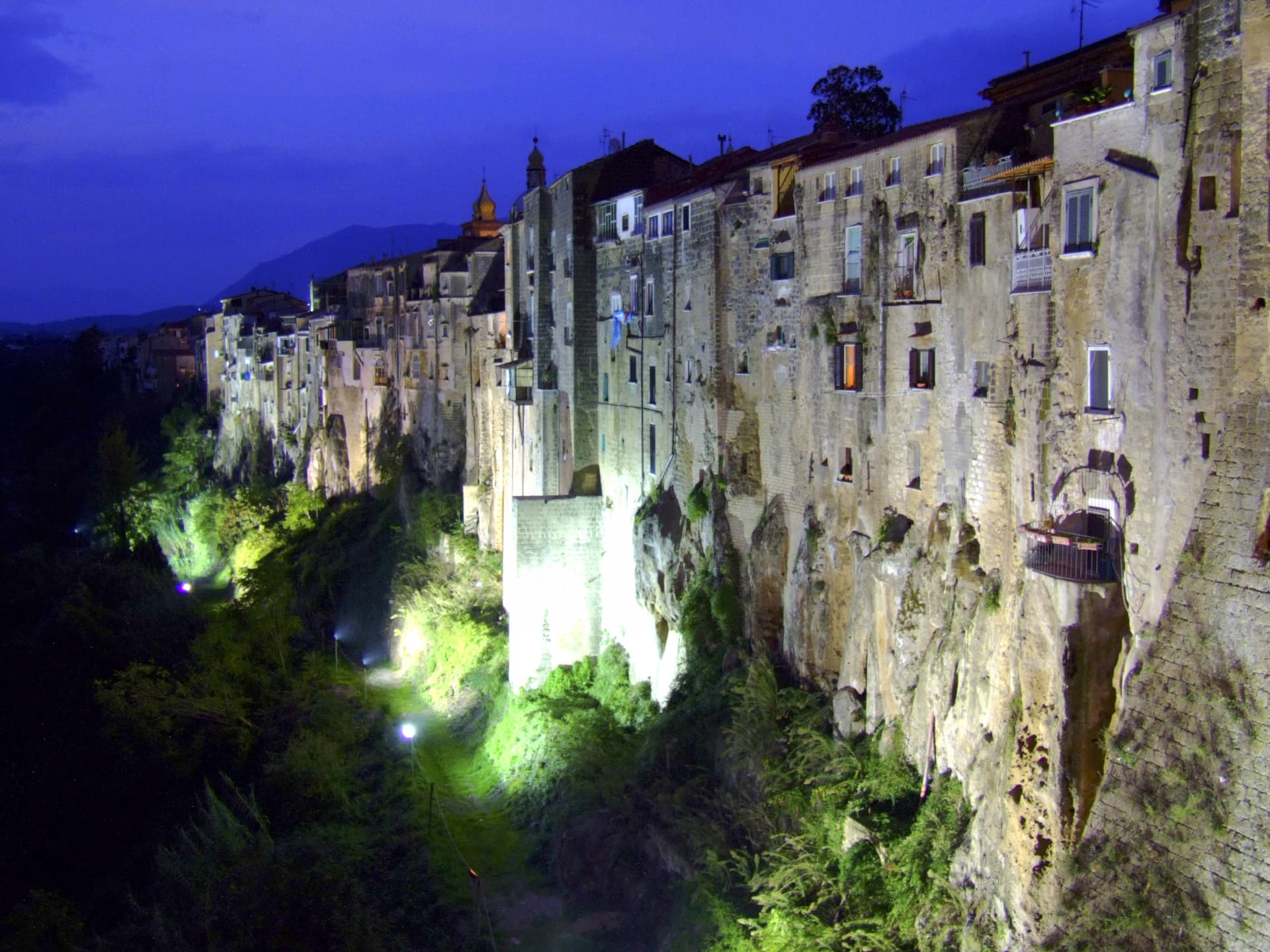
Sant'Agata de' Goti
Province: Benevento · 156 m
A medieval town built on a tuff cliff between two gorges, the houses standing flush with the edge over the Isclero river below.
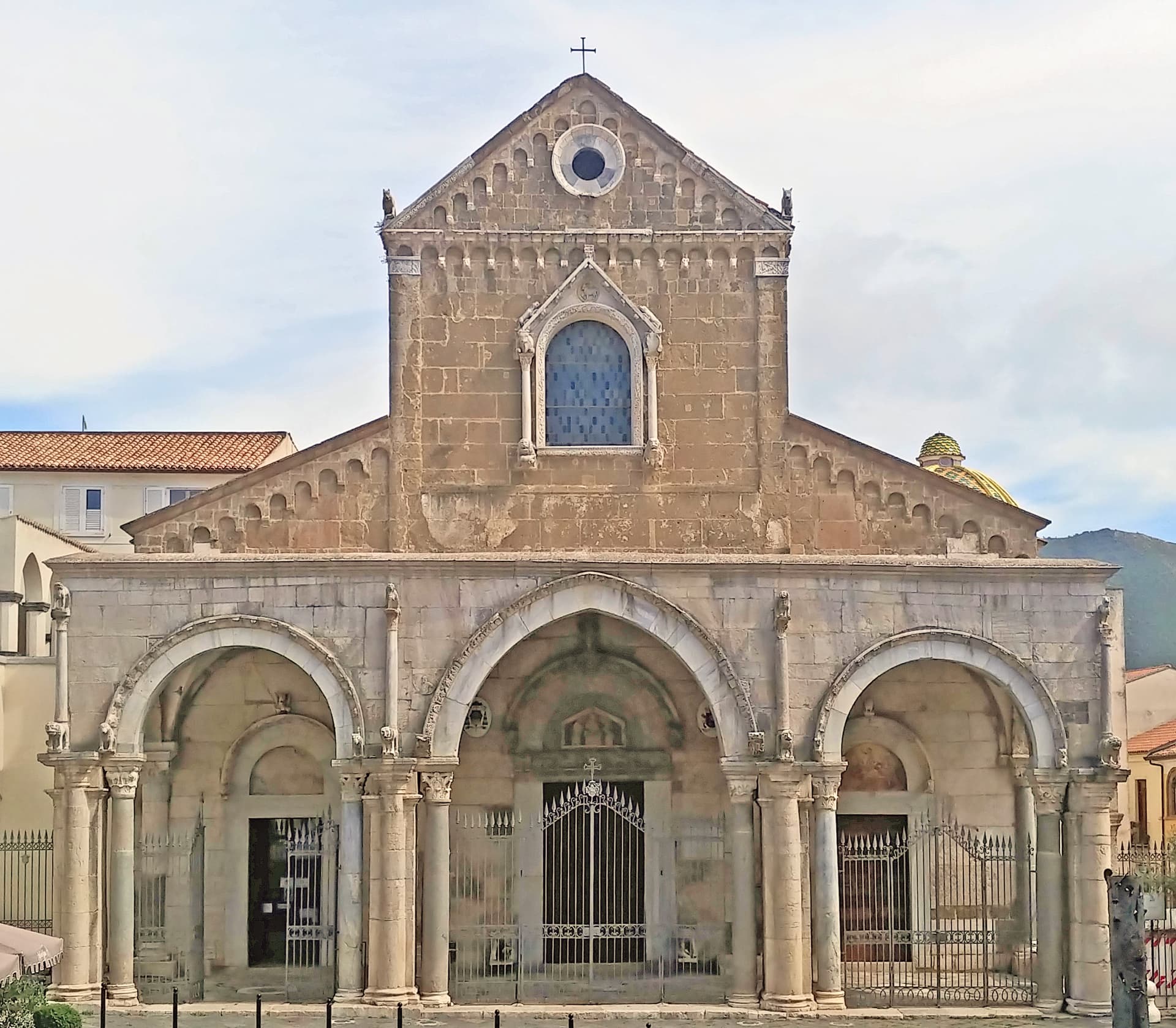
Sessa Aurunca
Province: Caserta · 203 m
Ancient Suessa Aurunca on the south slope of an extinct volcano, with a Romanesque cathedral of Cosmatesque mosaics built in 1103.
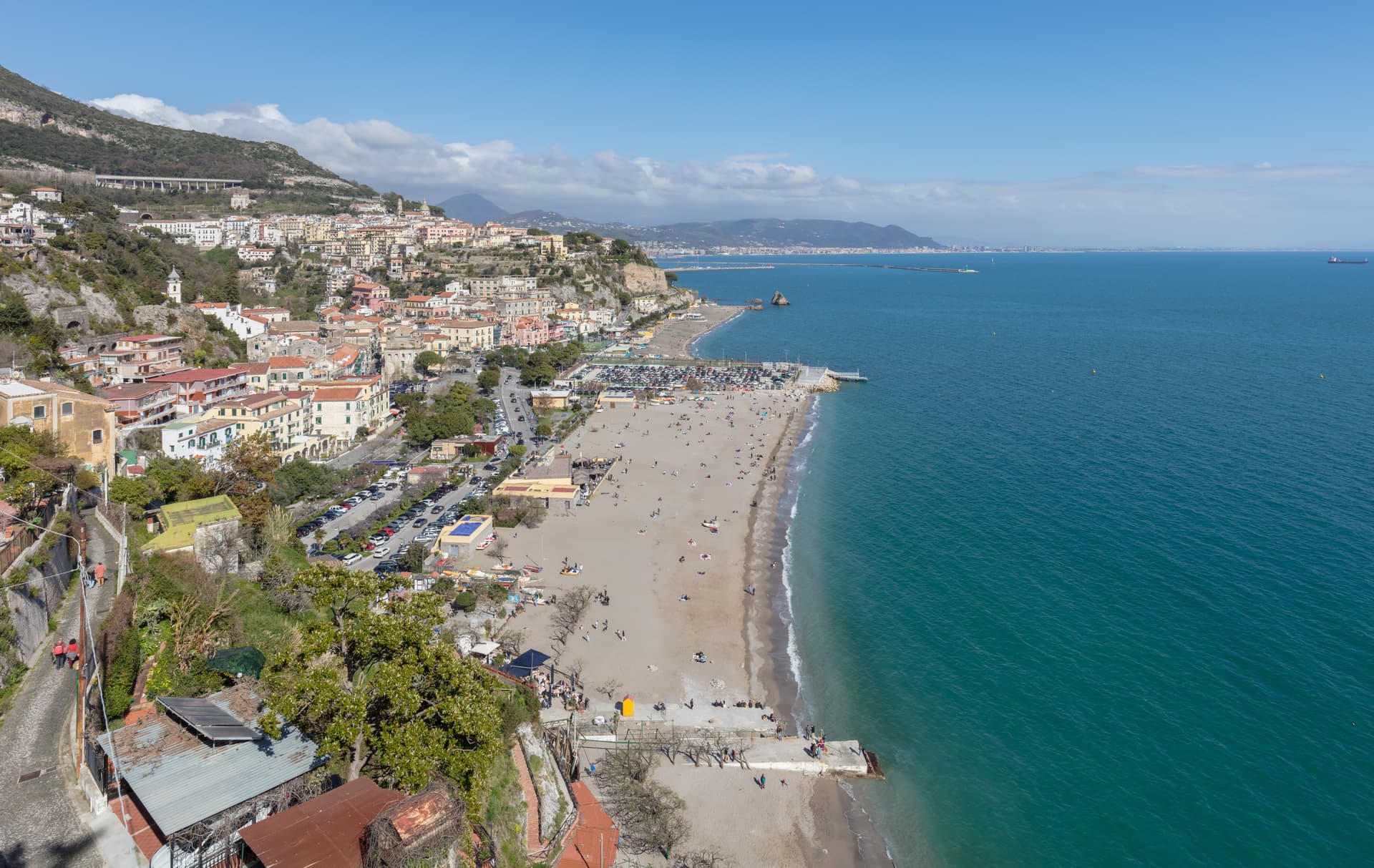
Vietri sul Mare
Province: Salerno · 80 m
The eastern end of the Amalfi Coast at 80 meters, the ceramics town since the fifteenth century, the gateway between Salerno and the cliff road.
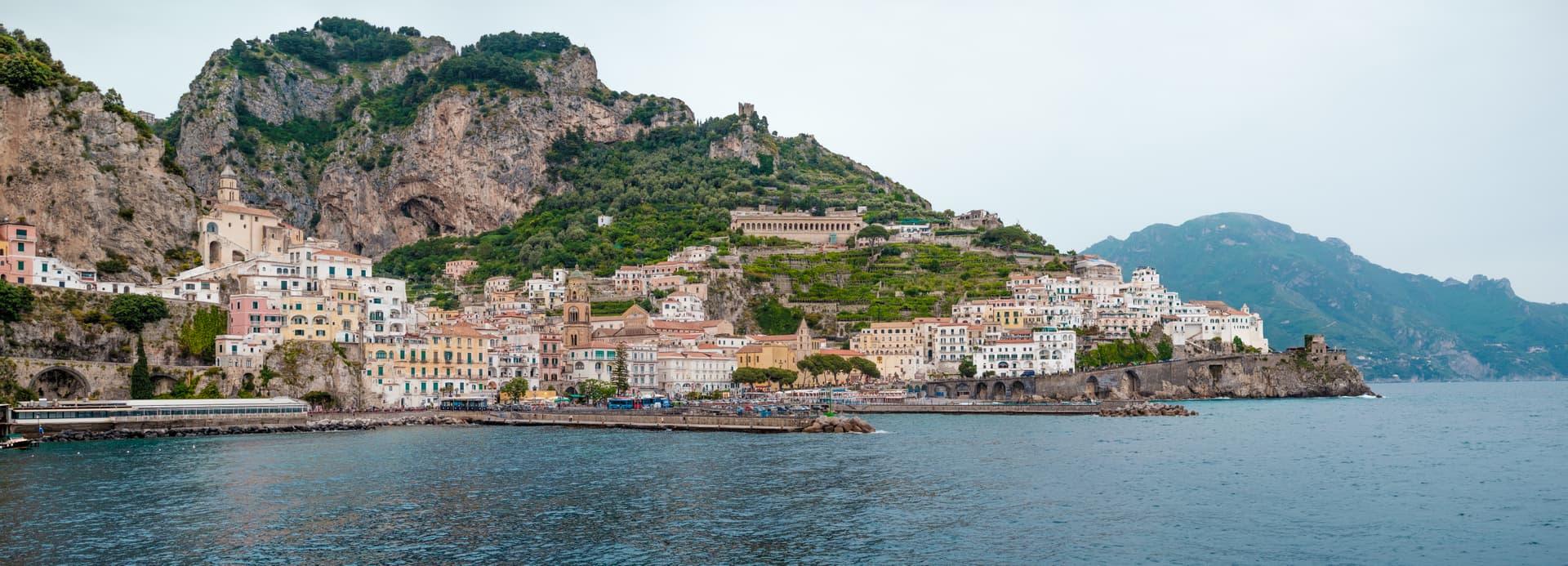
Amalfi
Province: Salerno · 6 m
The first Italian maritime republic and the coast it named, six meters above the sea between cliffs that close around the duomo's steps.
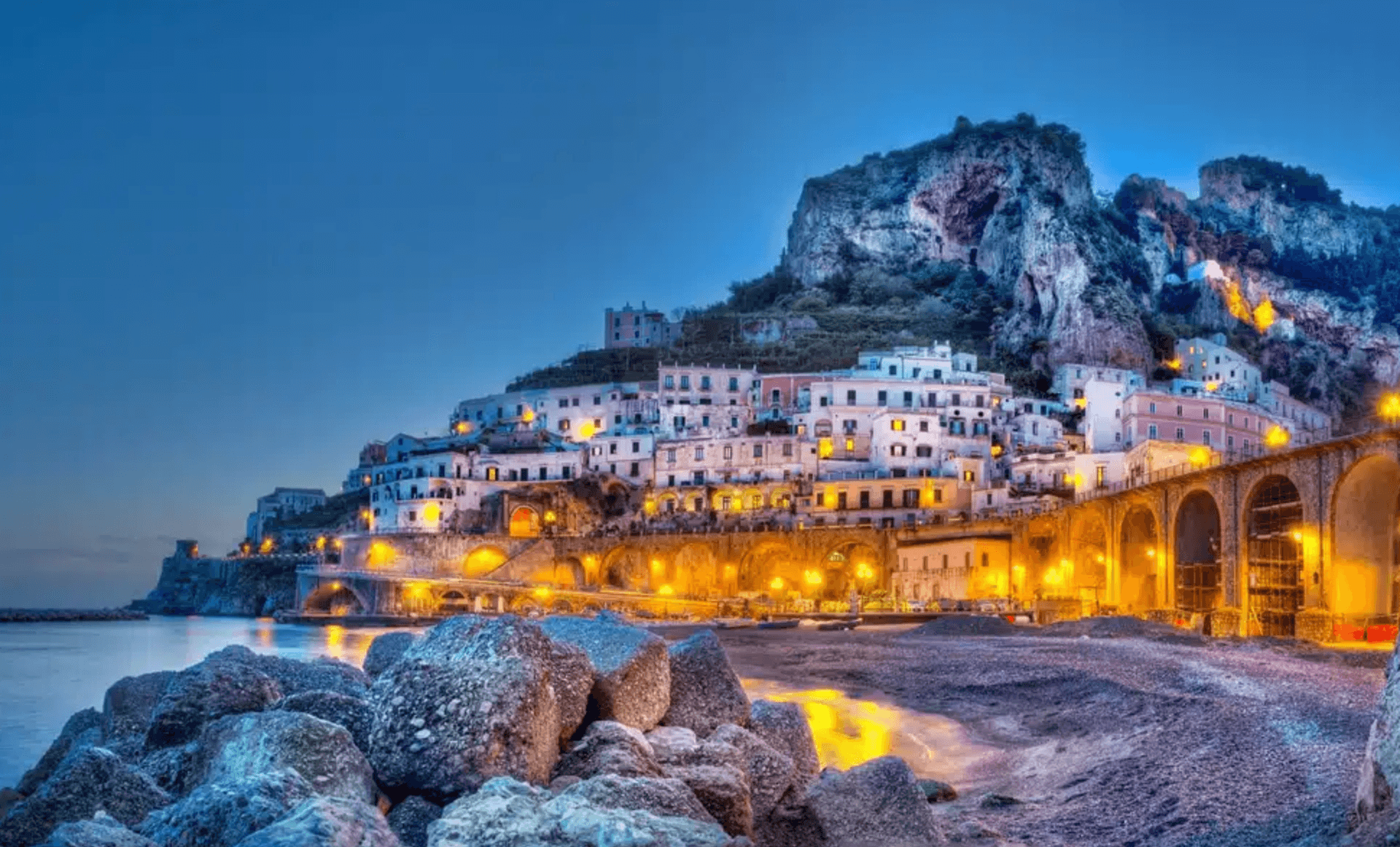
Atrani
Province: Salerno · 21 m
The smallest commune in Italy by area, twelve hectares of stacked houses where the Amalfi Coast pinches shut around a single piazza.
Bacoli
Province: Napoli · 30 m
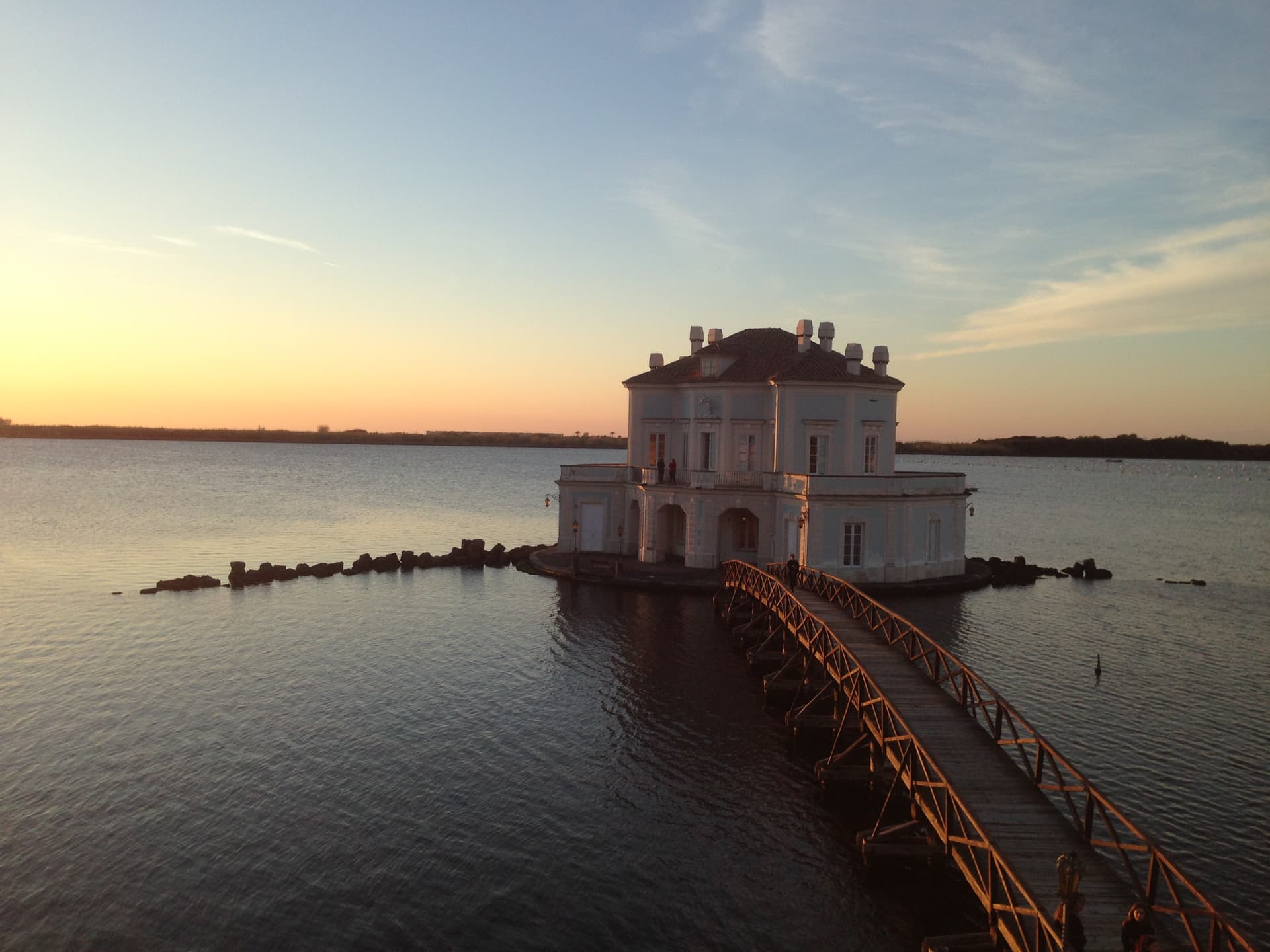
A Campi Flegrei town twenty kilometers west of Napoli, the Roman Bauli, where the Piscina Mirabilis fed the imperial fleet at Miseno.
Conca dei Marini
Province: Salerno · 138 m
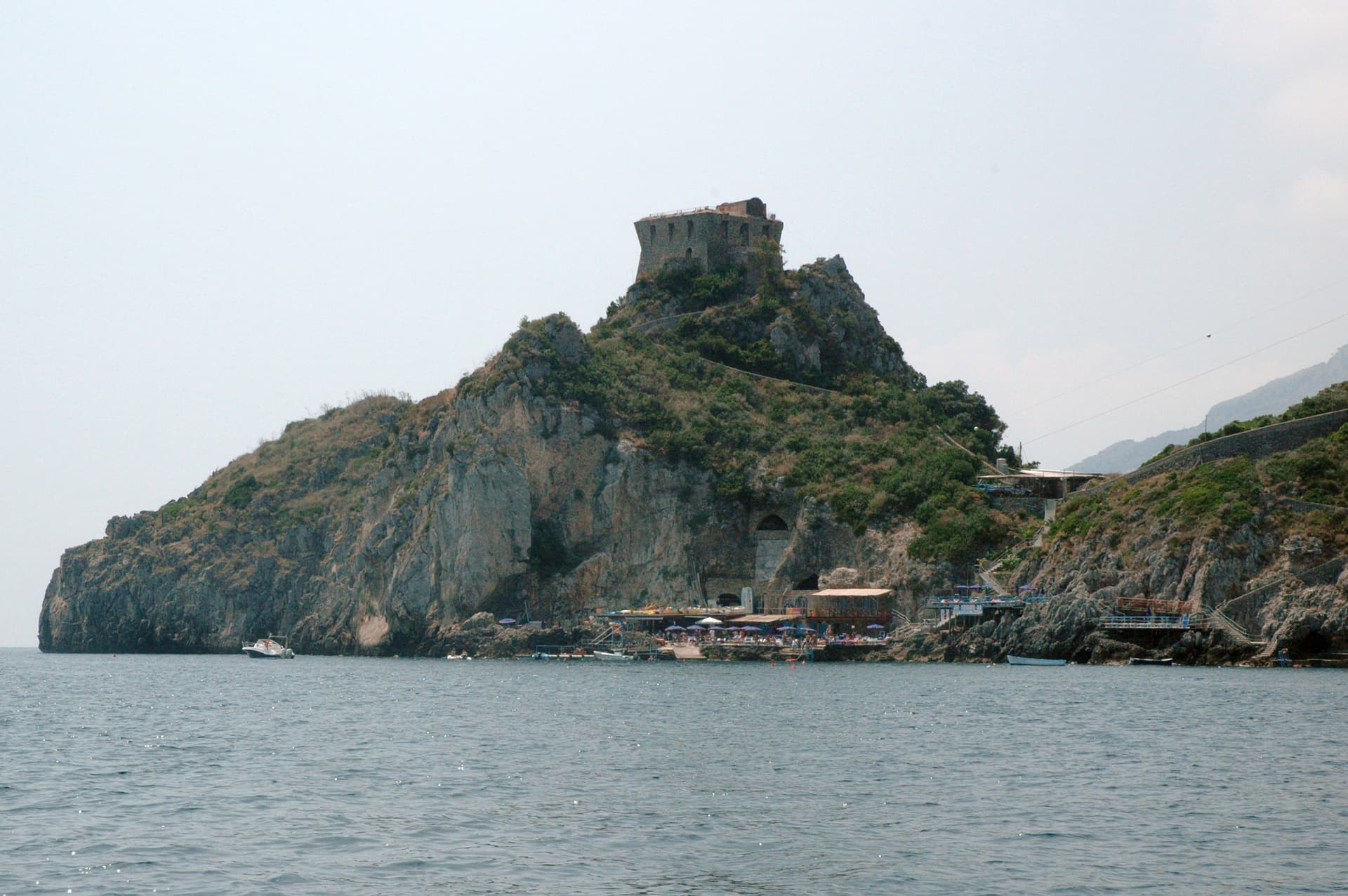
A coastal hamlet of 664 people on the Amalfi Coast, the birthplace of the sfogliatella Santa Rosa and home to the Emerald Grotto.
Maiori
Province: Salerno · 5 m
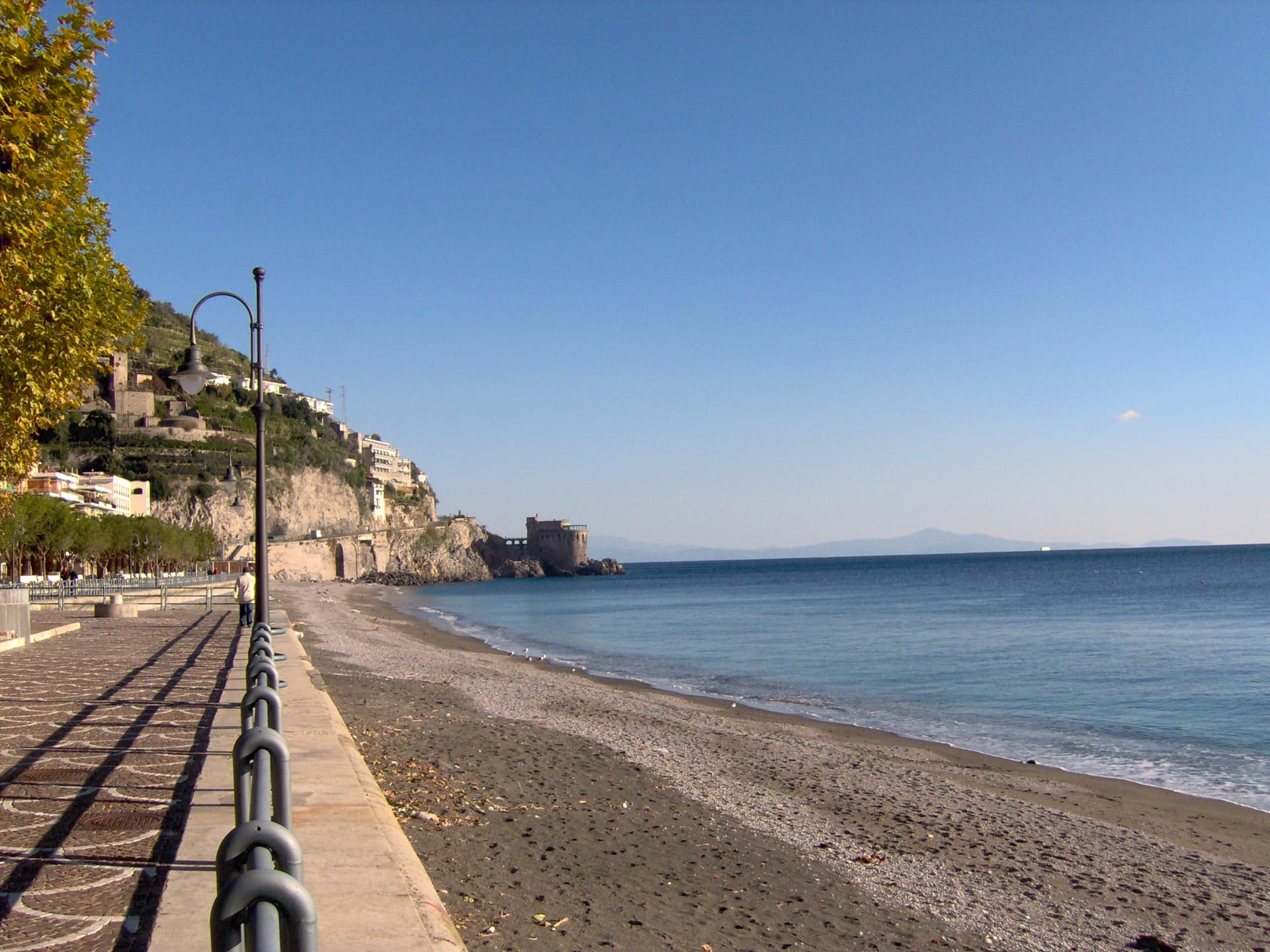
The Amalfi Coast town with the longest beach and a grid street plan, rebuilt after the 1954 flood took the medieval lanes.
Ravello
Province: Salerno · 365 m
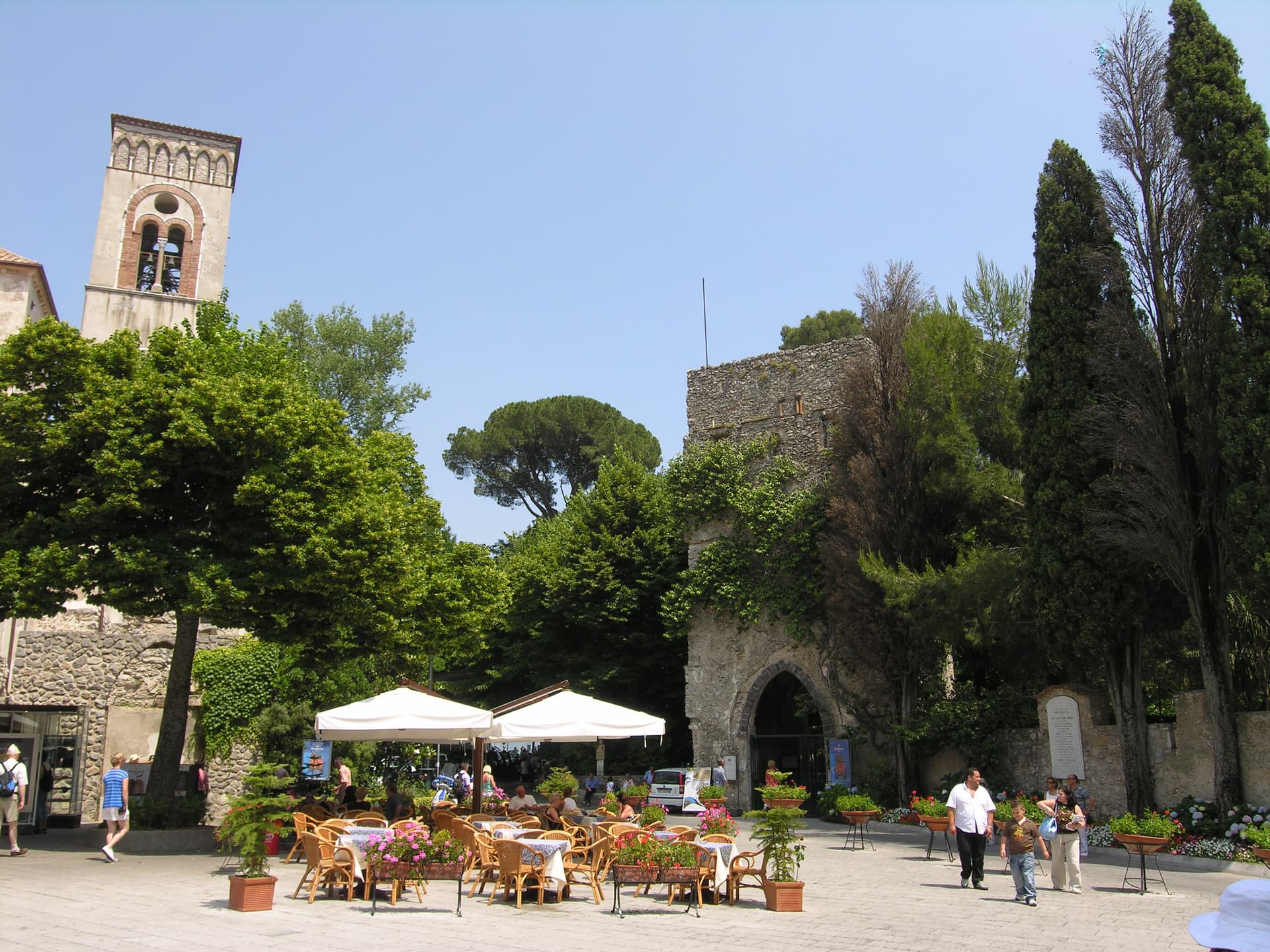
A ridge town 365 meters above the sea, where Wagner found Klingsor's garden in 1880 and the Ravello Festival has played his music since 1953.
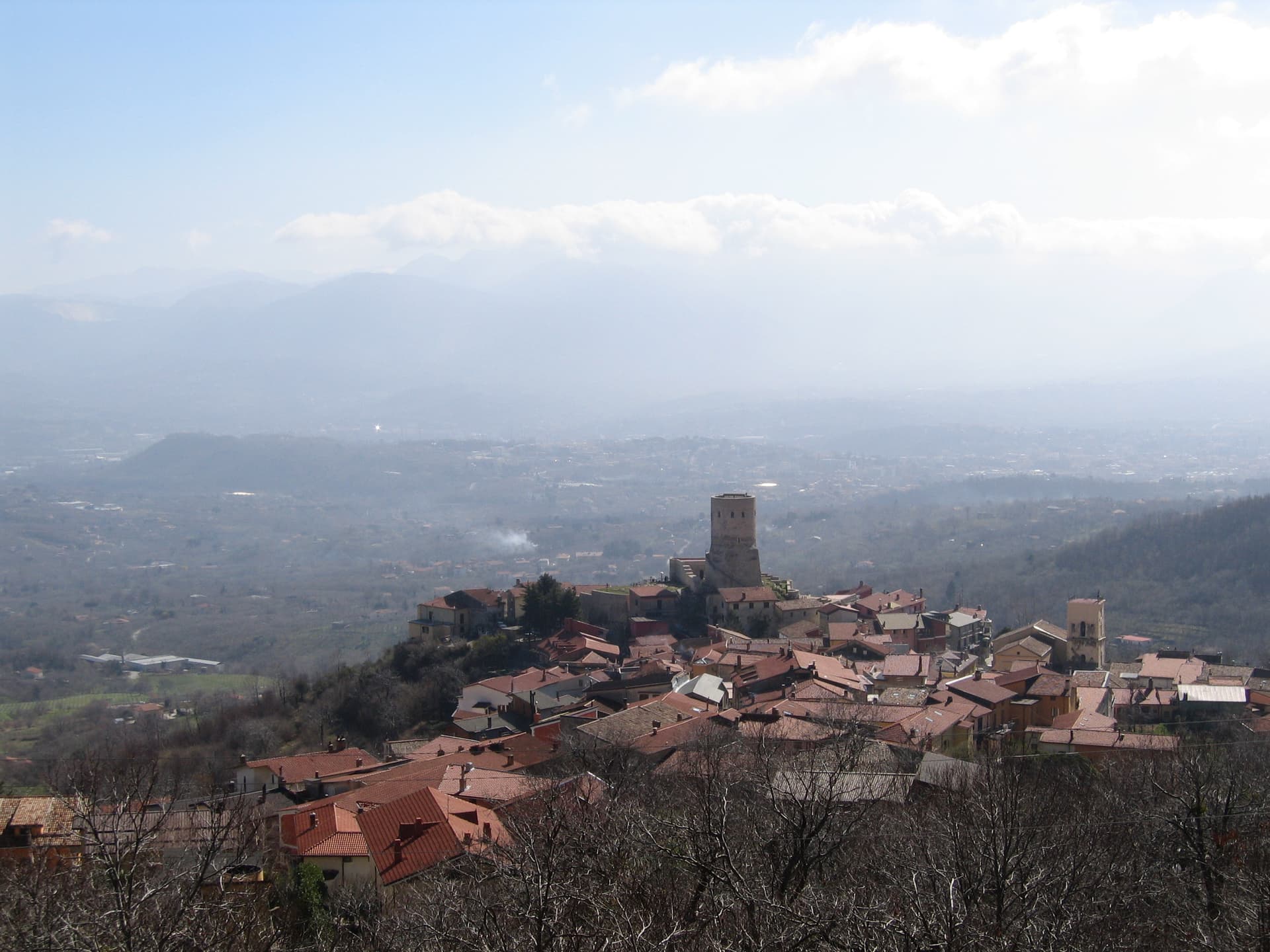
Summonte
Province: Avellino · 738 m
An Irpinia hill village at 738 meters on the slope of Monte Vallatrone, built around a 16-meter Angevin cylinder tower over the Partenio.
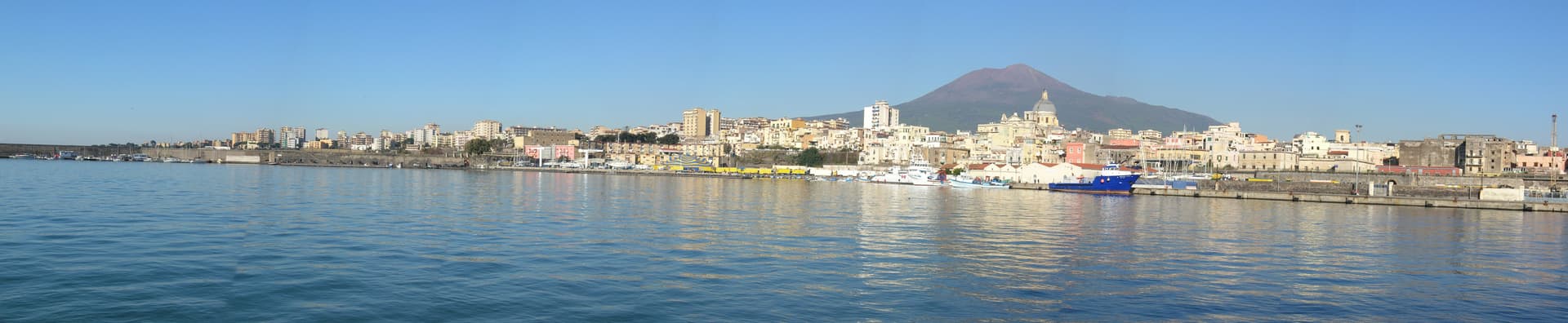
Torre Annunziata
Province: Napoli · 15 m
Capital of Italian pasta in the interwar period and home of the Roman Villa di Poppea, on the bay at the foot of Vesuvius.
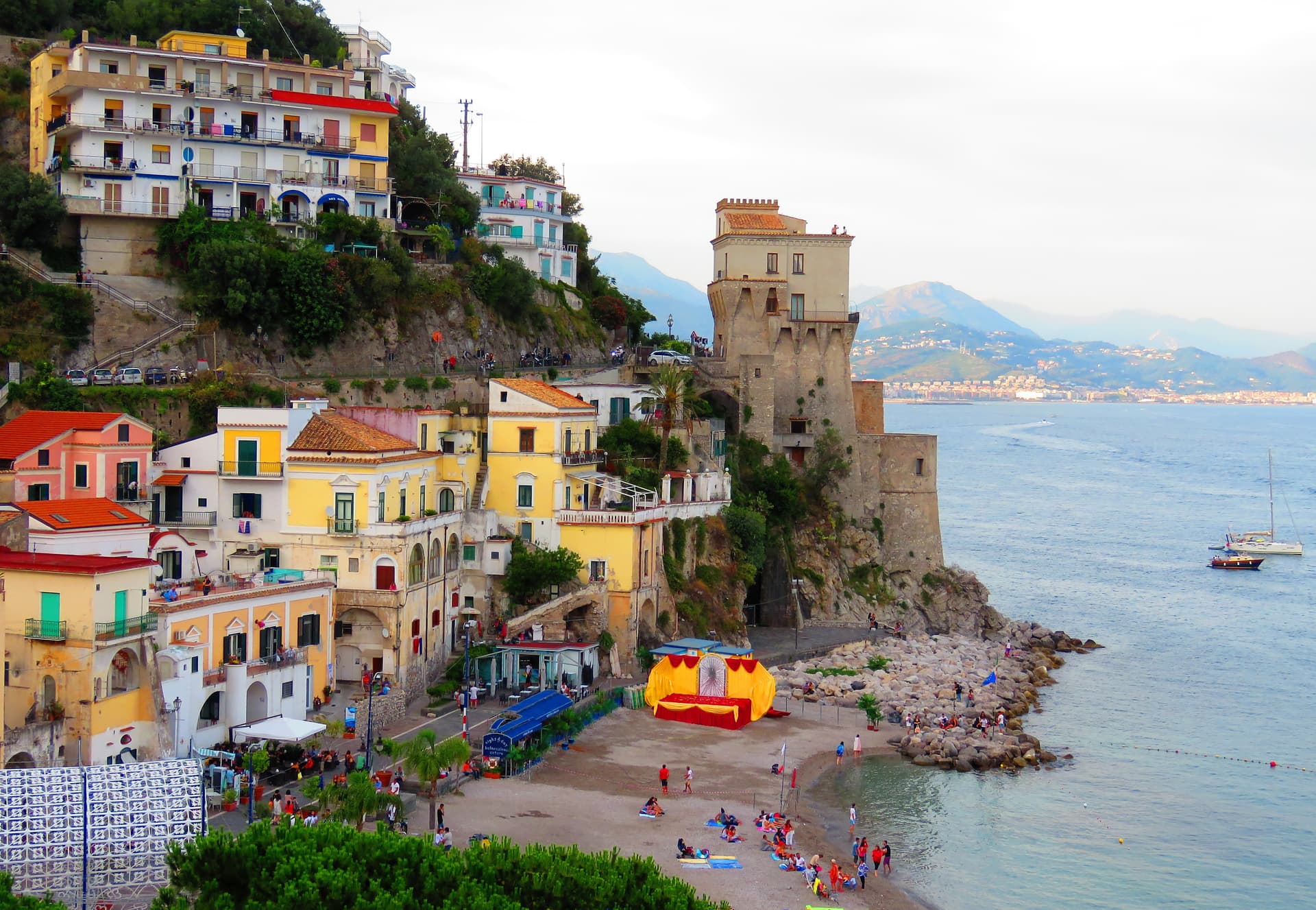
Cetara
Province: Salerno · 10 m
The Amalfi Coast's working tuna and anchovy port, where colatura di alici is still aged in chestnut barrels in the cellars behind the marina.
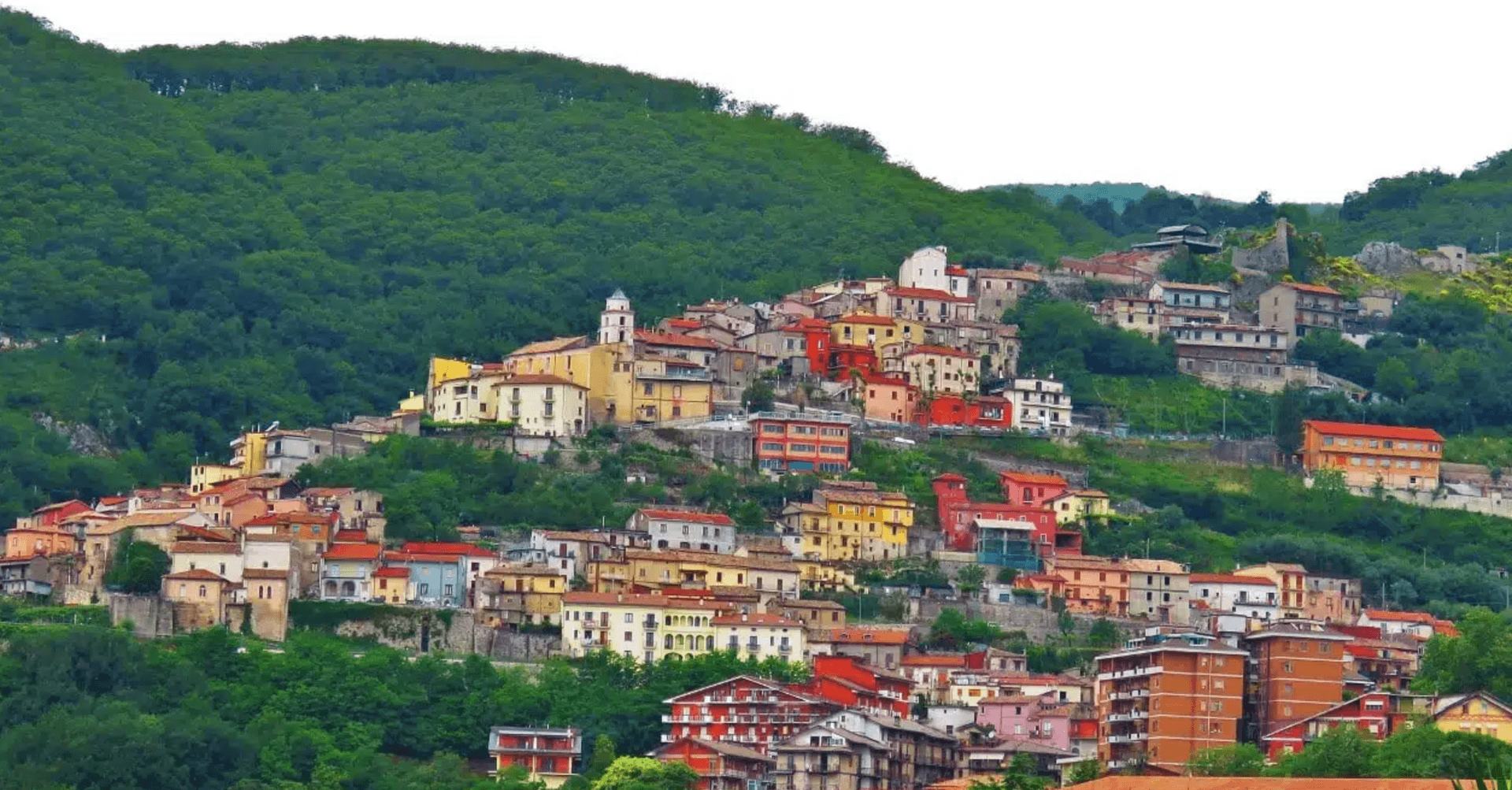
Mercogliano
Province: Avellino · 550 m
A 550-meter Irpinia town on the slope of Partenio, gateway to the Montevergine Sanctuary 1,270 meters above and its Black Madonna.
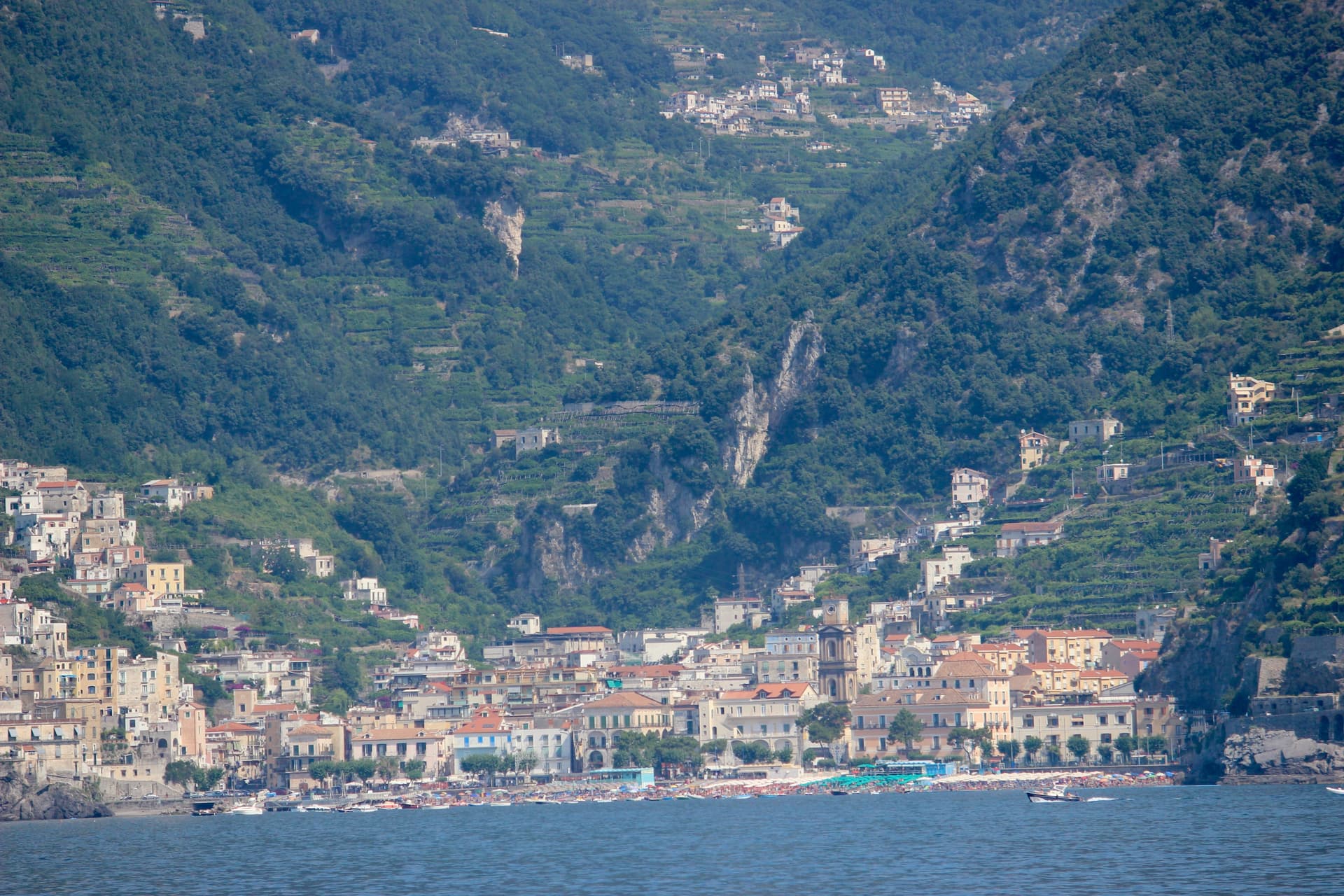
Minori
Province: Salerno · 13 m
The smaller of the two Rheginnae, where a first-century Roman maritime villa sits four blocks from the Tyrrhenian beach.
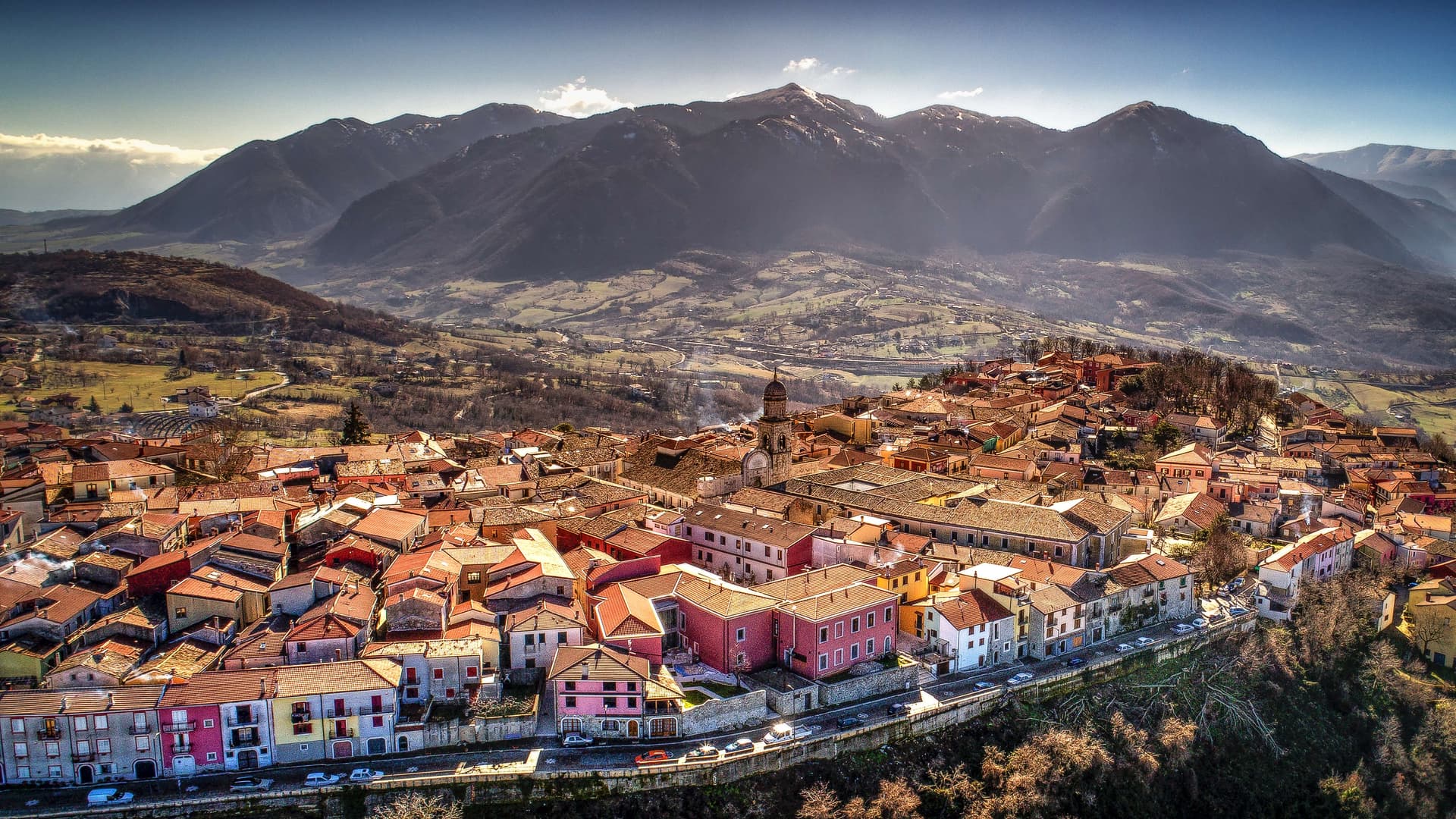
Nusco
Province: Avellino · 914 m
The Balcony of Irpinia at 914 meters, a ridge town between the Ofanto and Calore valleys, hometown of Prime Minister Ciriaco De Mita.
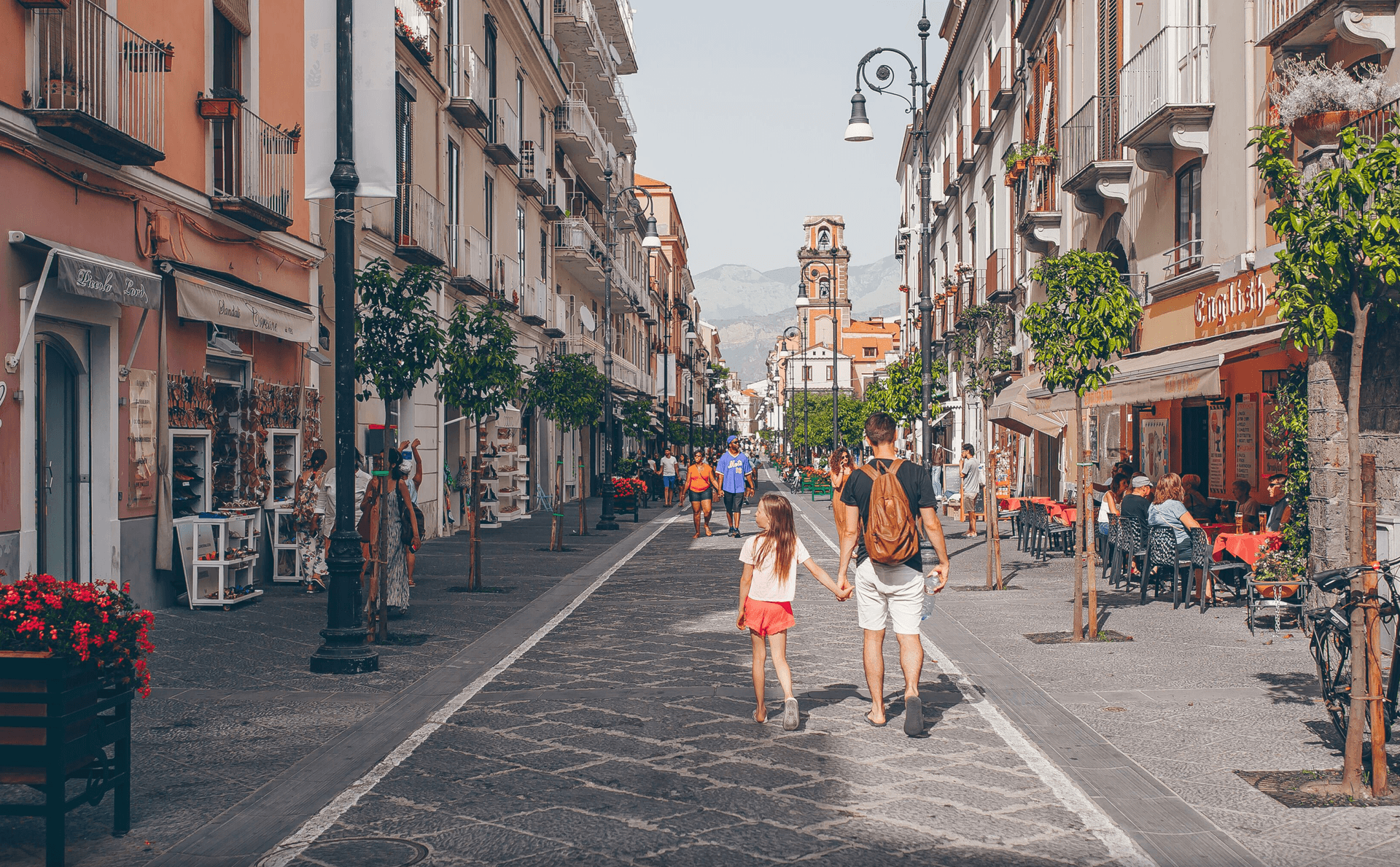
Piano di Sorrento
Province: Napoli · 96 m
The quieter Sorrentine plain four kilometers from Sorrento, autonomous since 1808, with prehistoric Gaudo pottery and a black-sand marina at the foot of the cliff.
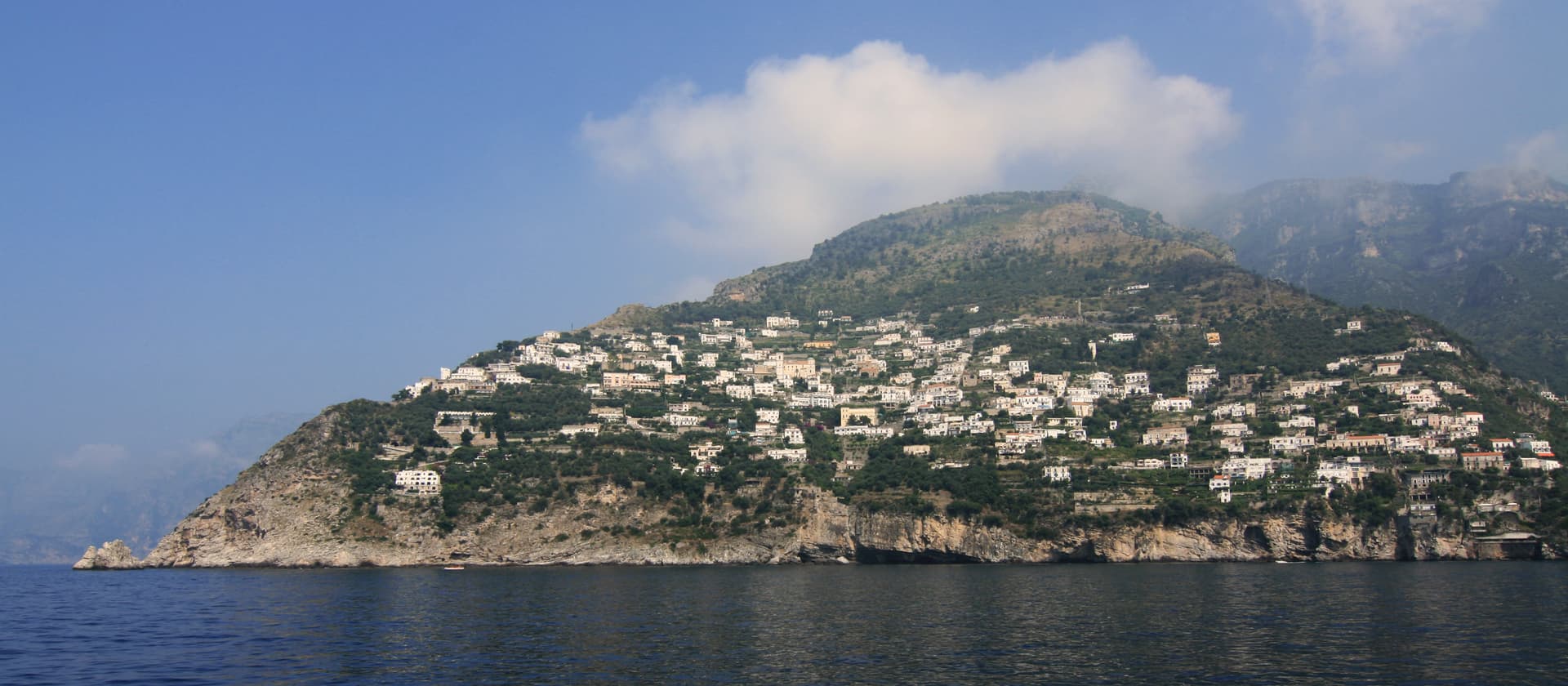
Praiano
Province: Salerno · 120 m
The Amalfi commune between Positano and Amalfi where the doges of the maritime republic kept their summer residences and the Path of the Gods starts.
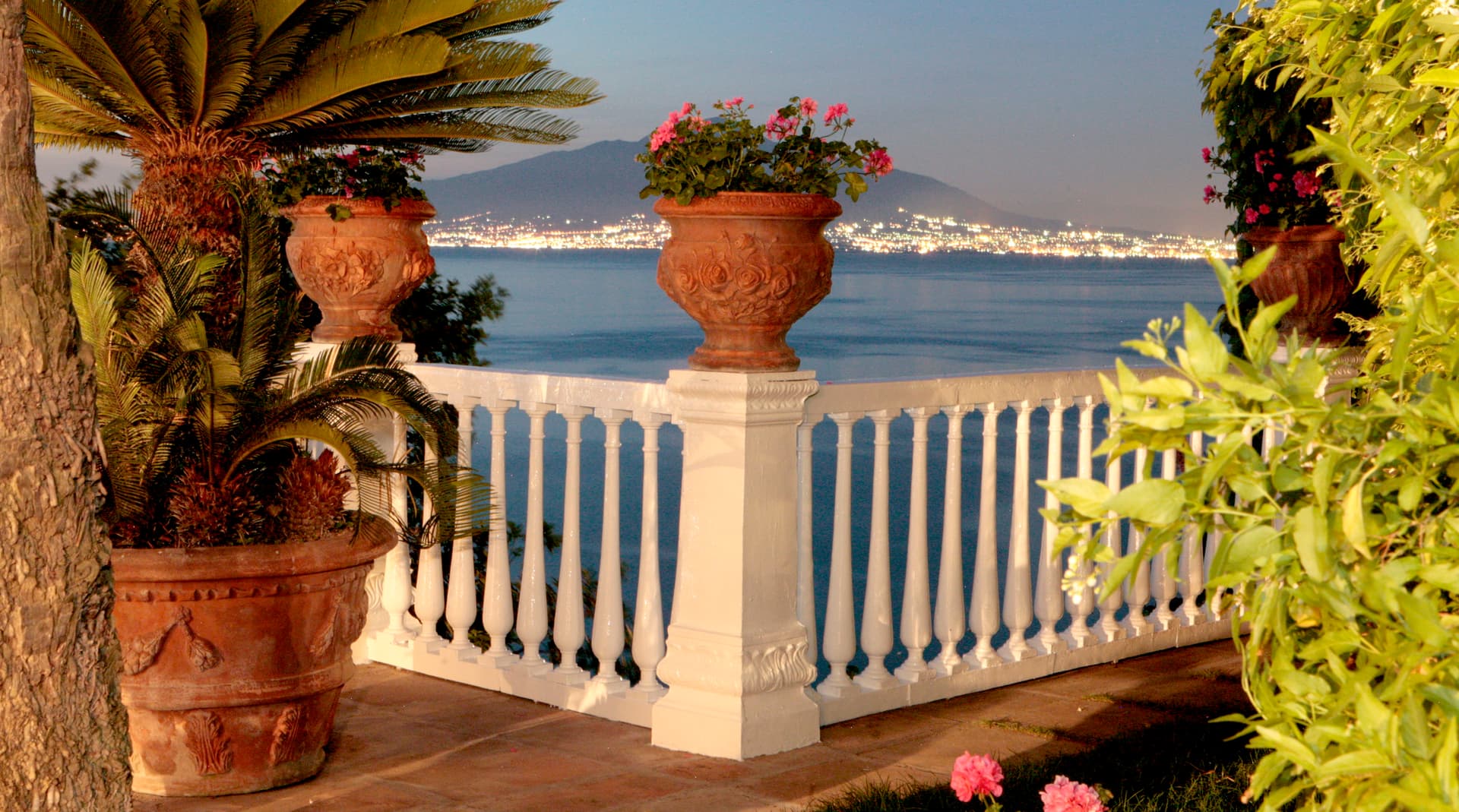
Sorrento
Province: Napoli · 50 m
The Roman Surrentum on a tuff cliff above the Bay of Napoli, birthplace of Torquato Tasso, sacked by the Turks in 1558.
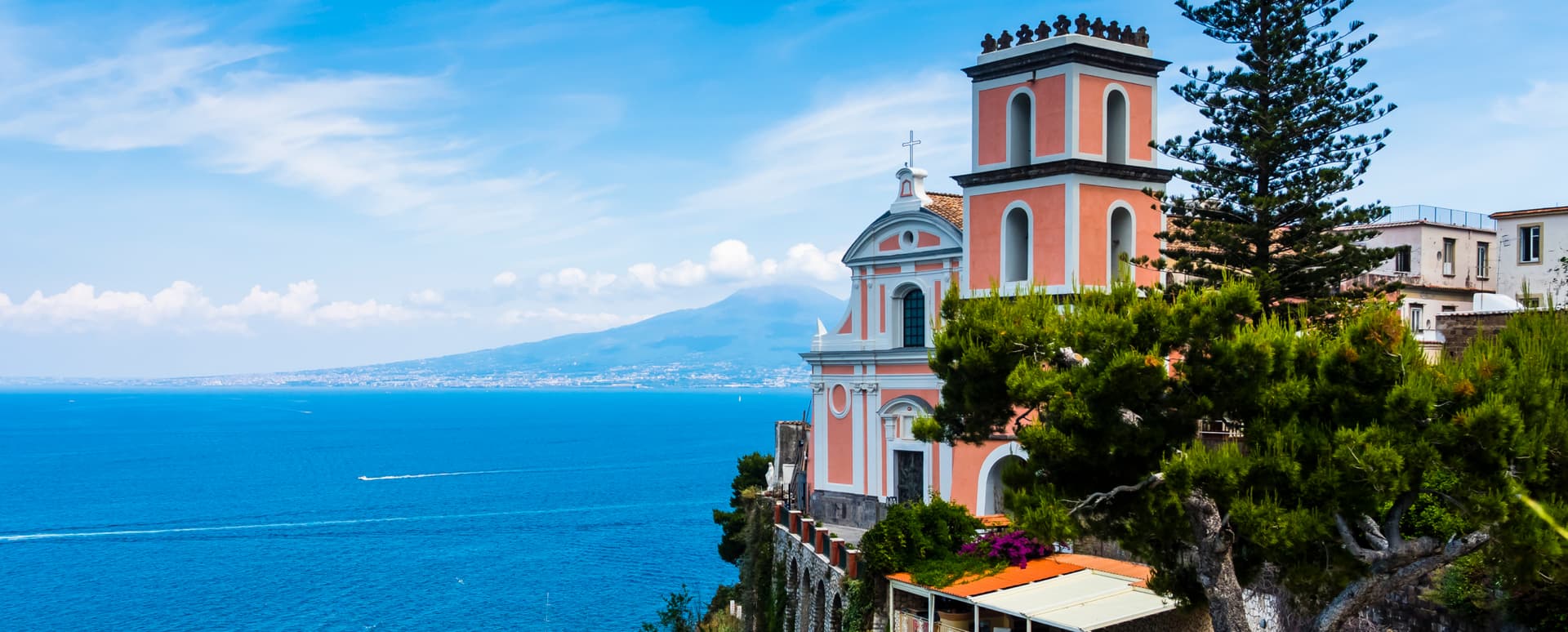
Vico Equense
Province: Napoli · 90 m
The northern gate of the Sorrento peninsula at 90 meters, the Roman Aequana, where Luigi Dell'Amura invented pizza al metro in 1930.
Subscribe — free
Get the best guides on hidden Italian towns.
One letter on Sundays. The week’s town, with the photo, the food, the festa. Free, by Peter & Sophia from Pietrasanta.
Substack sends a confirmation link to your inbox. The signup finishes when it’s clicked.
From elsewhere in Italy
Five more towns to discover
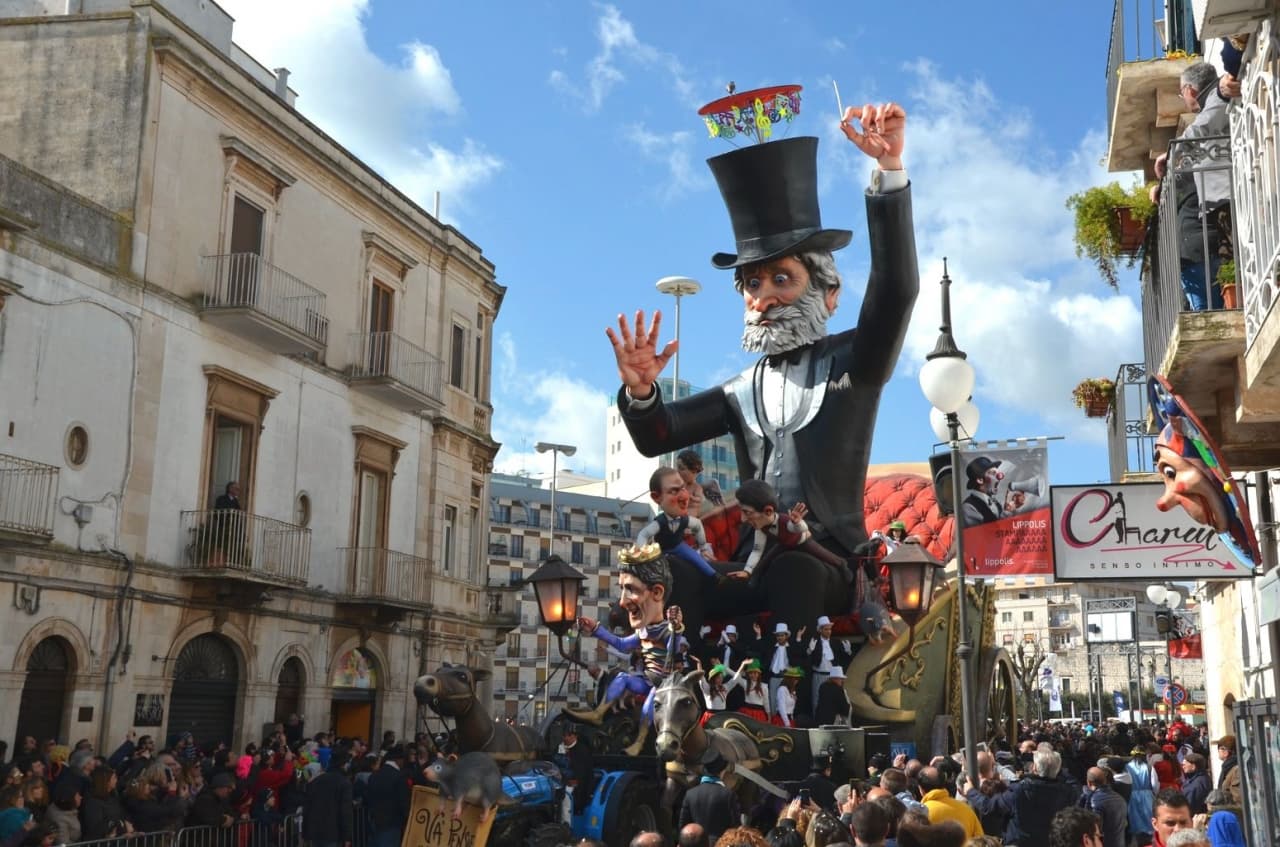
Putignano
Province: Bari
Europe's longest-running carnival — Putignano Carnevale has run continuously since 1394, with 631 years of cartapesta papier-mâché floats, a 26,000-resident Murgia town on the Bari–Lecce plateau, and the Grotta del Trullo karst cave inside the centro.

Pistoia
Province: Pistoia
Italy's nursery capital and the medieval Tuscan rival that gave its name to the pistol — a quietly extraordinary centro storico of zebra-striped Romanesque churches, Andrea della Robbia's polychrome frieze on the Ospedale del Ceppo, and Italy's Capital of Culture 2017, all 30 minutes from Florence by train.
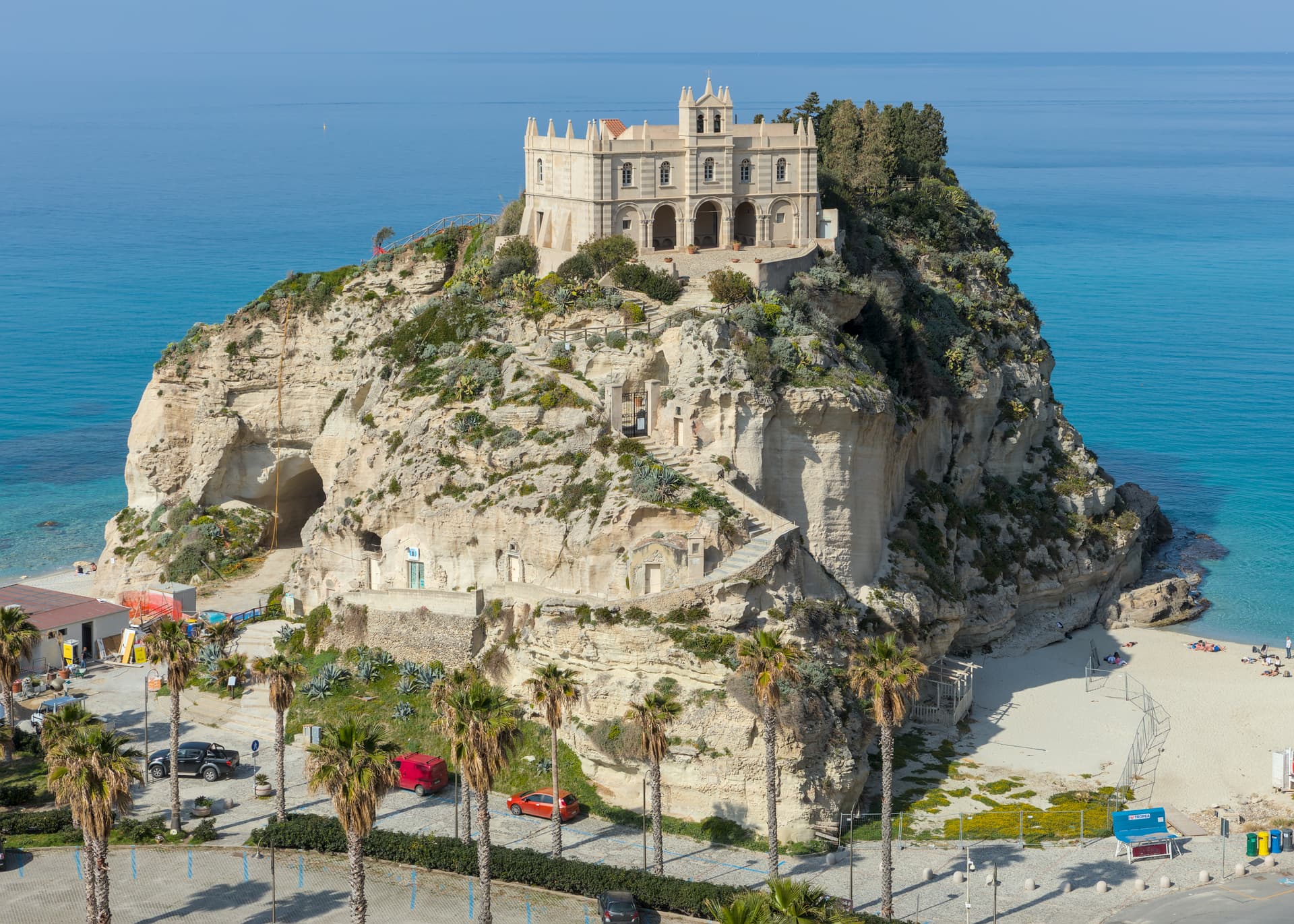
Tropea
Province: Vibo Valentia
Cliff town on a tufa headland over the Tyrrhenian Coast of the Gods, with a Norman monastery on a sea rock.
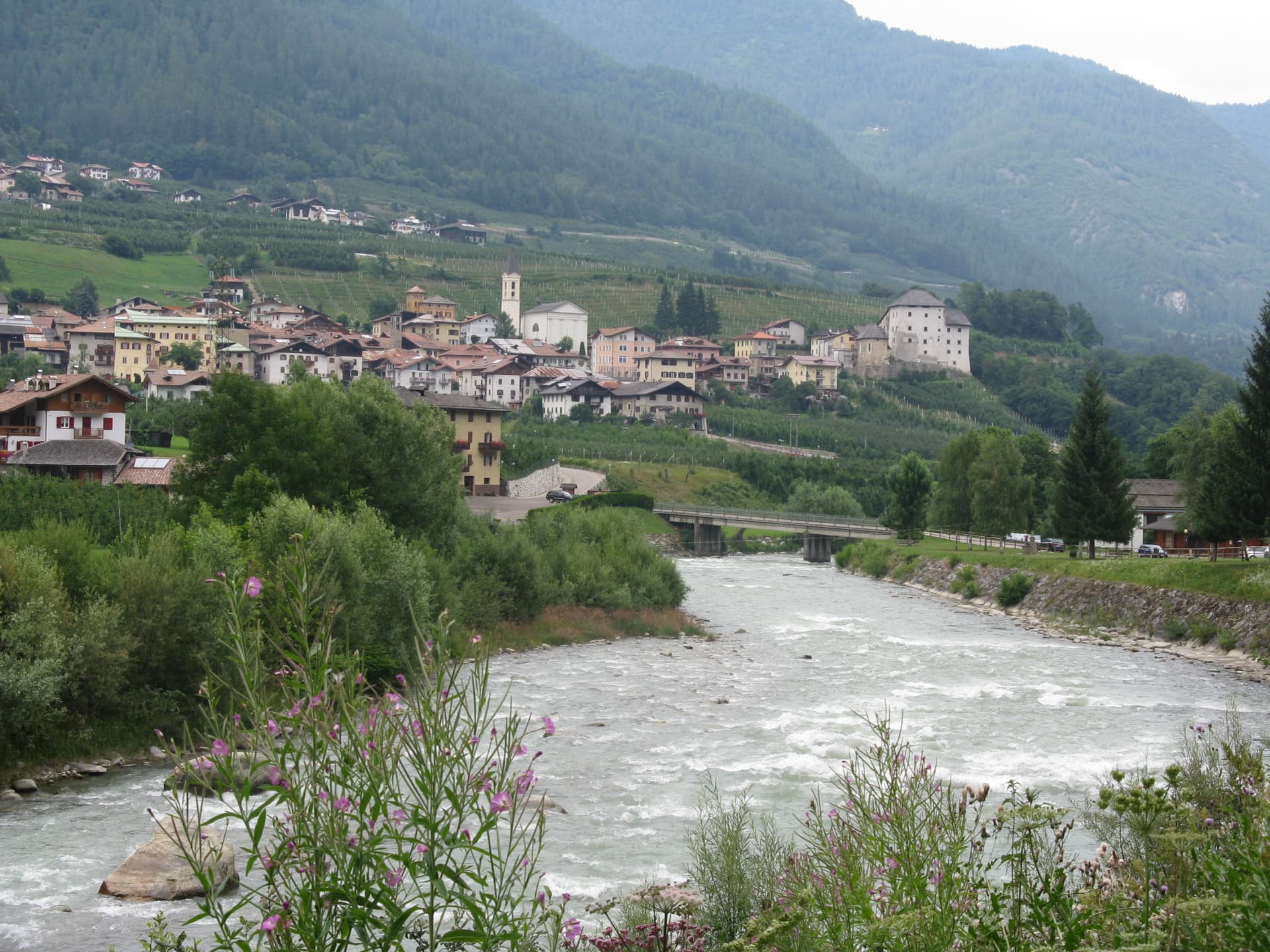
Caldes
Province: Trento
A scattered Val di Sole commune on the Noce, six hamlets gathered around a thirteenth-century tower-house castle that once belonged to the Thun family.
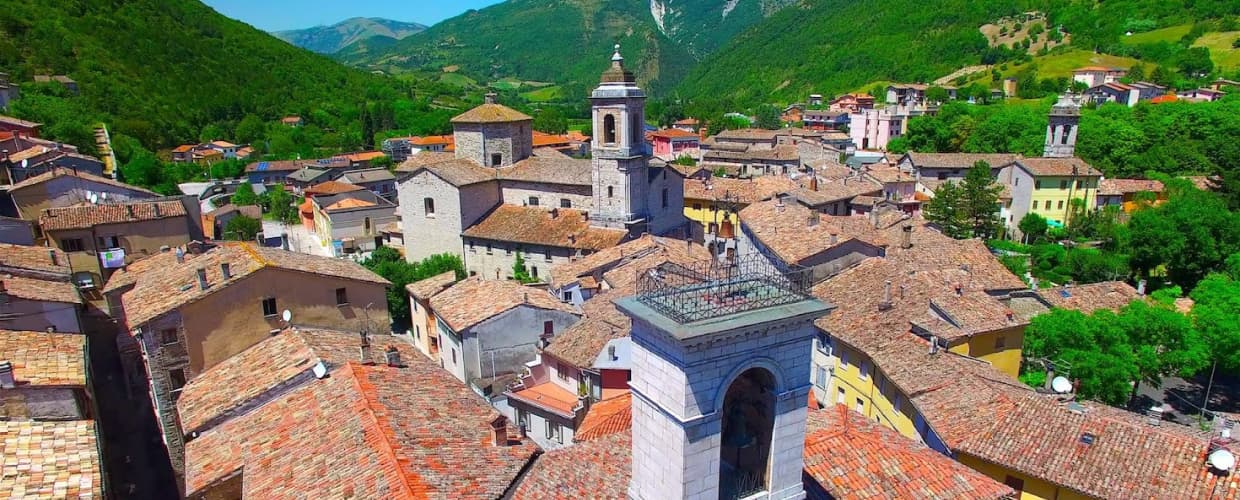
Cantiano
Province: Pesaro e Urbino
A border borgo at 374 meters under Monte Catria on the old Via Flaminia, known for the Good Friday Turba and the sour-cherry visciola harvest.